
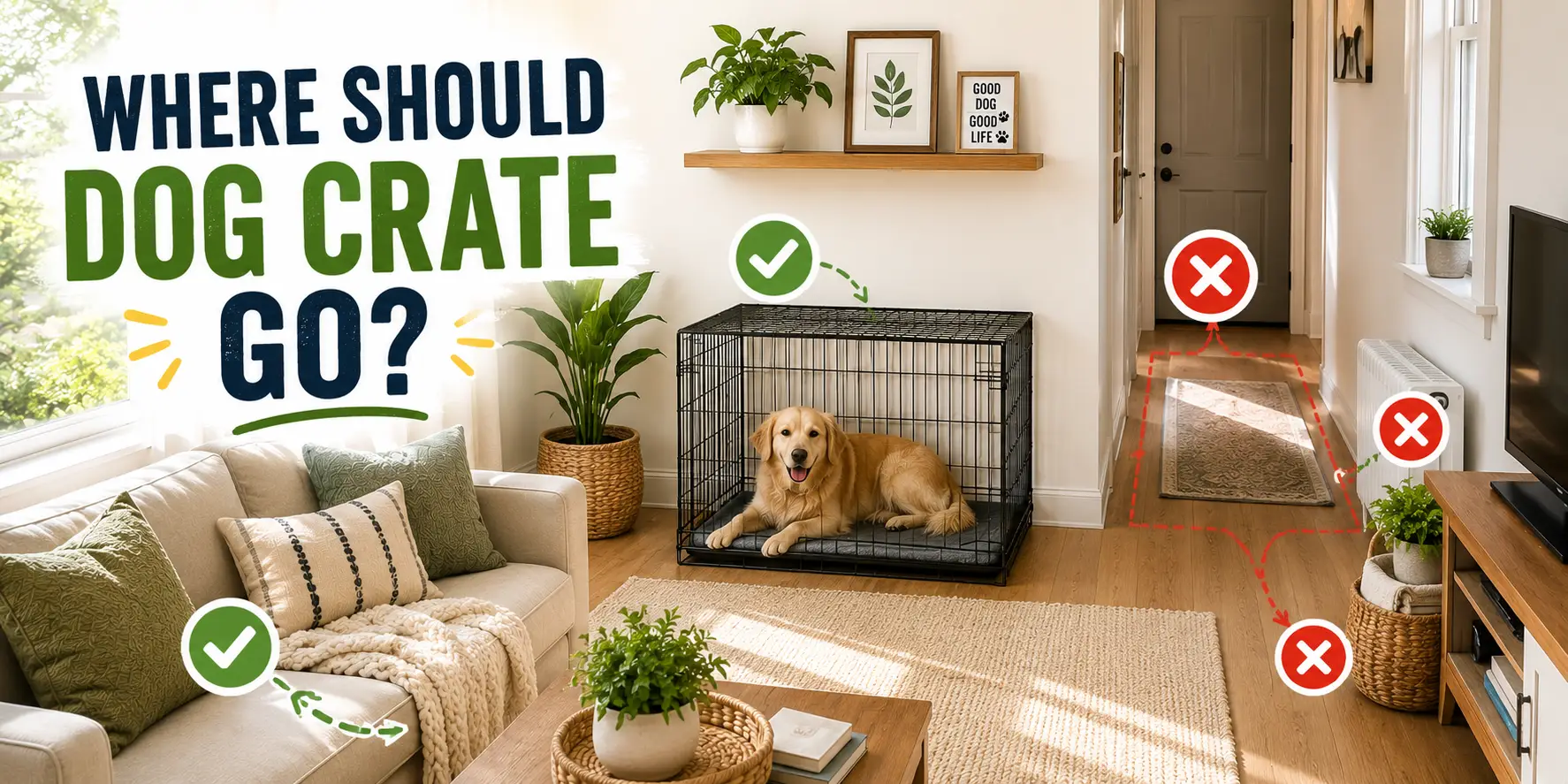

Most people buy the crate first and then figure out where to put it — which is not good.
You’ve already got furniture in most of the room, maybe a kid’s toys where the crate would fit best, and a dog that still needs a place to sleep.
A 48-inch crate in the right corner won’t bother you.
That same crate between the sofa and the TV stand is something you step around every single day.
Here are six spots that work in tight homes, what to measure before you pick one, and which crate types fit each situation.
Bedroom or Living Room?
For puppies and dogs you’ve just brought home, the bedroom is usually the better call.
When they can hear you at night, a lot of them stop popping up at every creak – they’re not alone in a separate room with nothing to go off of.
Adult dogs that are already comfortable in the crate can go in the living room.
They don’t need to be near you to feel okay, and the living room usually has more room for bigger crates.
In a small home it usually comes down to which room has a corner that doesn’t block a door or the main path through the house.
Space Around Dog Crate Matters
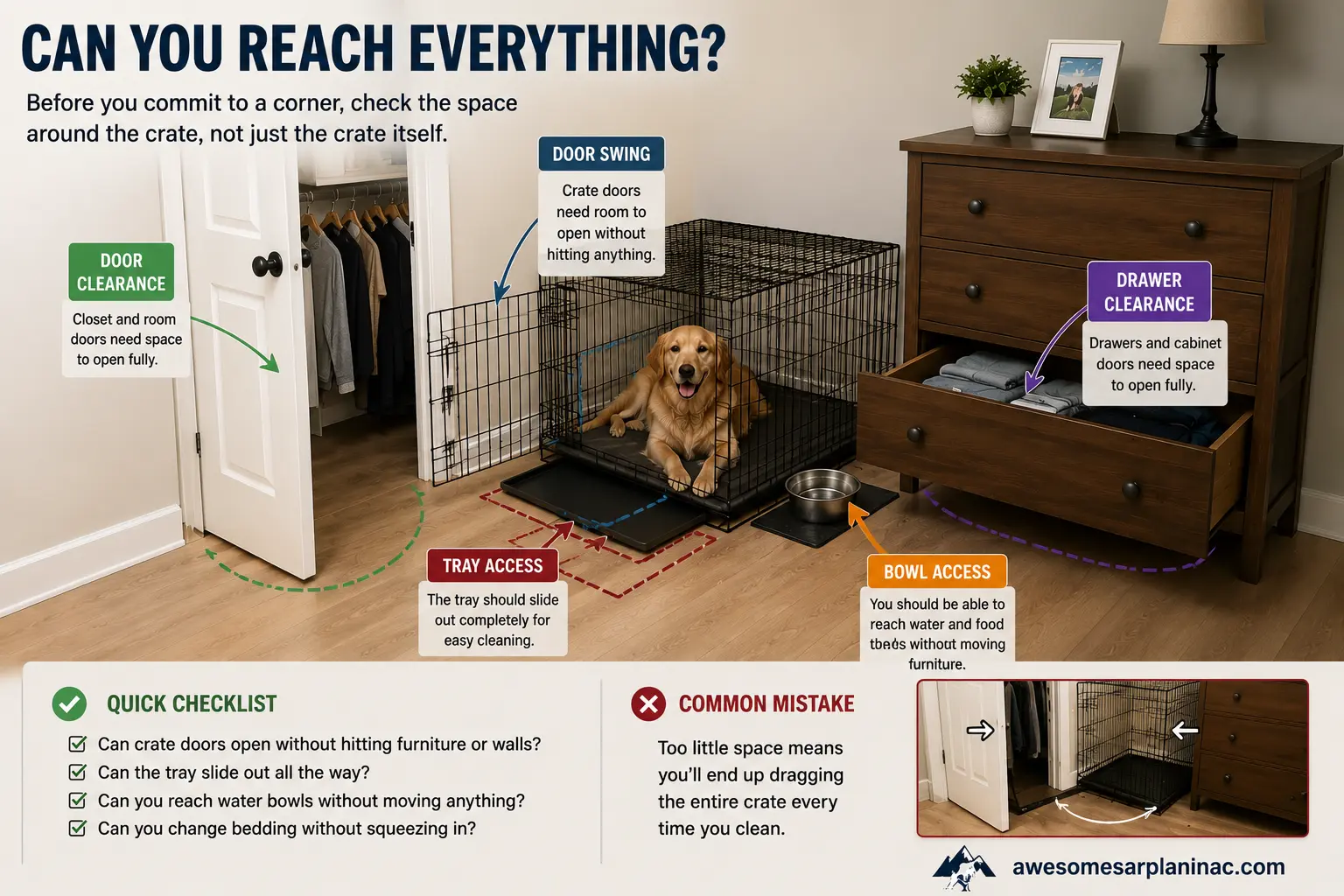
Most corner placement problems start because owners measure the dog crate and ignore everything around it.
Closet doors, dresser drawers, and cabinet doors need space to open.
The crate tray won’t slide out fully because a wall, dresser, or closet door blocks it. Instead of pulling the tray out, they’re dragging the entire crate across the floor every time it needs cleaning.
Nearby Doors Get Missed
Before choosing a corner, open every nearby door and drawer fully.
Then check:
- Can you open crate doors next to furniture?
- Can the tray slide out completely?
- Can you reach water bowls without moving furniture?
- Can you change bedding without squeezing between the crate and the wall?
Saving a few inches isn’t worth much if cleaning means moving the entire crate every time.
How Much Room Does a Dog Crate Actually Need?
Most people pick a spot by eye and order the crate. Then it arrives and it’s blocking the path to the back door, or the door swings into the wall, or they can’t pull the tray out without moving the whole thing.
Measure the actual spot first (length, width, and what’s in front of it) then order.
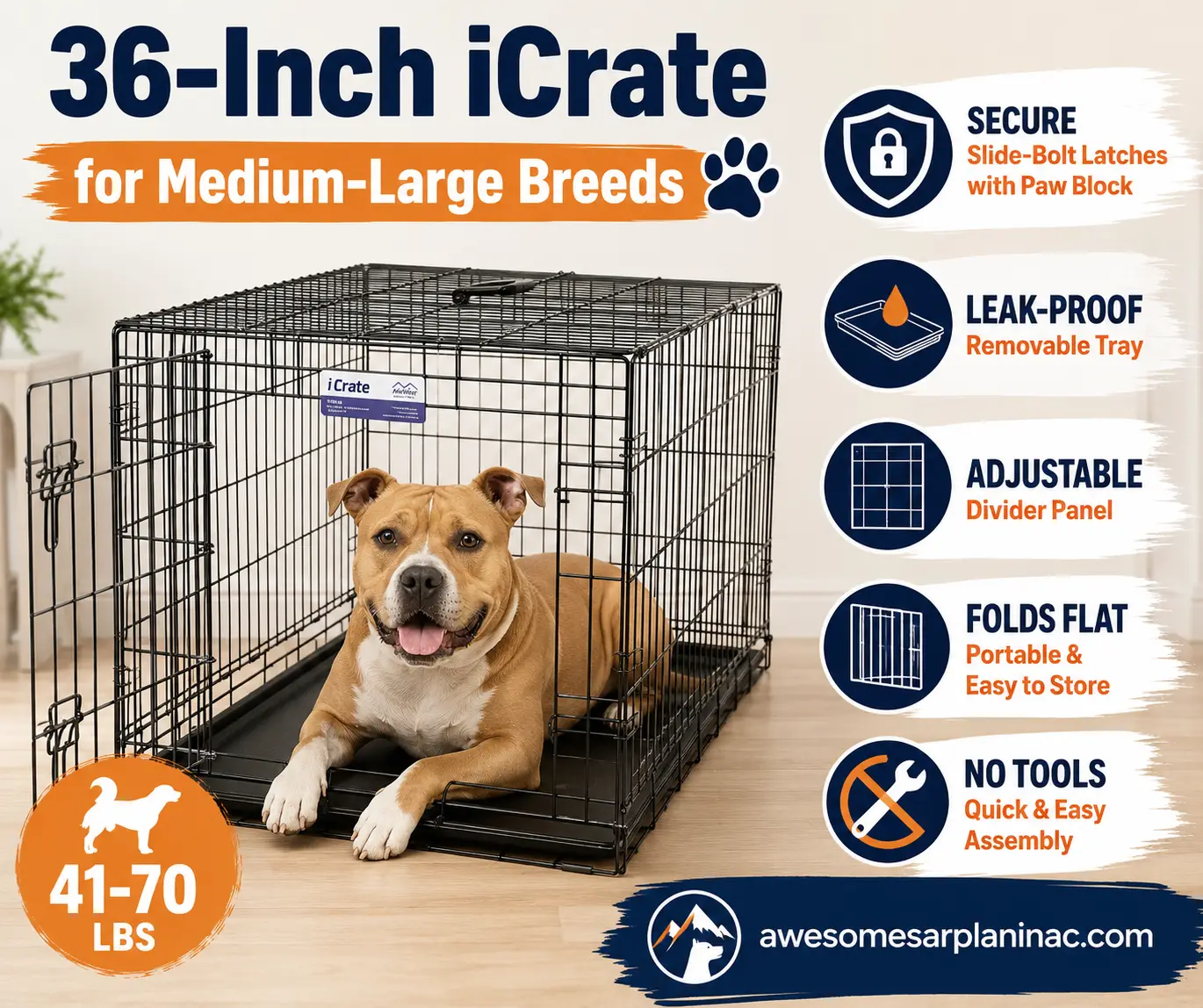
The table below uses MidWest iCrate dimensions since they’re the most common wire crate sold in the US. Other brands run close, so check the exact specs before you buy.
Dog weight | Crate size | Actual L × W | Where it fits |
|---|---|---|---|
11–25 lbs | 24 inch | 24 × 18 inches | Nightstand height (fits almost anywhere) |
26–40 lbs | 30 inch | 30 × 19 inches | Bedroom corner, hallway alcove |
41–70 lbs | 36 inch | 36 × 23 inches | Living room corner, behind the sofa |
71–90 lbs | 42 inch | 42 × 28 inches | Under stairs, corner with no doors nearby |
90–110 lbs | 48 inch | 48 × 30 inches | Corner with extra floor space |
One thing most people miss until after the crate arrives: the plastic tray.
On MidWest wire crates it slides out through the front – you need enough room in front of the crate to pull it all the way out without tilting it.
When you’re picking the spot, make sure the front of the crate faces open space, not a wall or a sofa leg.
Where NOT to Put a Dog Crate – 4 Mistakes to Avoid
A lot of these only become obvious a few weeks in – when the bedding smells off, the dog keeps getting up, or you’ve stubbed your toe on the corner for the second night in a row.
Next to a radiator or baseboard heater
South Carolina Fire Safety says to keep pets at least 3 feet from any heat source.
A wire crate pushed right up against a baseboard heater leaves the dog nowhere to go – they can move to the far side panel, but that’s it.
Under a window with afternoon sun
The metal bars on a wire crate absorb heat in direct sun – the dog ends up lying against hot metal without a way out of it.
Plastic crates are worse; they stay warm long after the sun moves off them.
Walk your room between noon and 3pm and see where the light actually lands before you pick a spot.
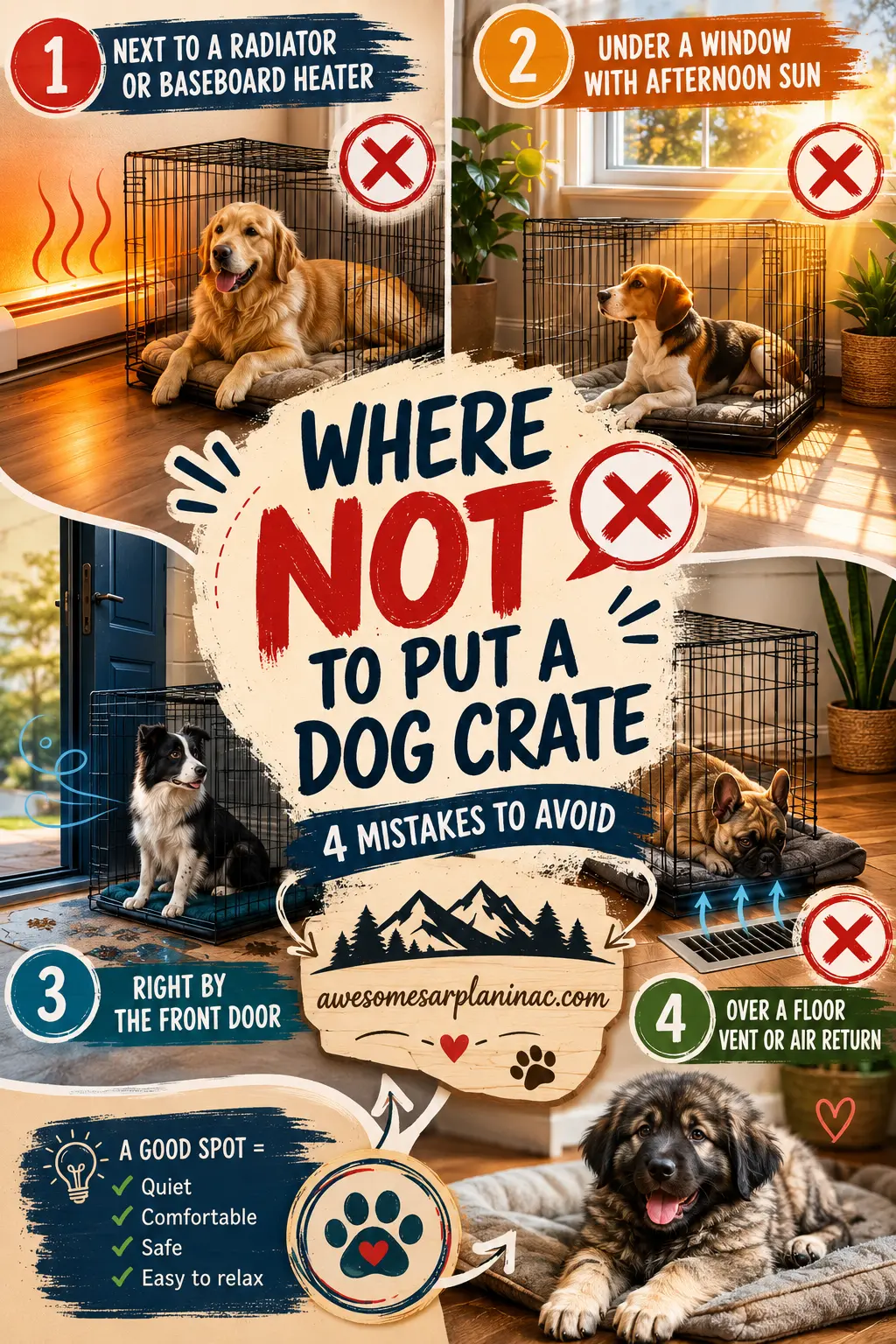
Right by the front door
Everyone coming in brings cold air, mud, and wet shoes through the same spot where the crate sits.
On top of that, the dog barks at every person walking past outside because the door is right there.
Over a floor vent or air return
The crate sitting over a heating or cooling vent means the dog gets “hit with air” they can’t move away from. Dry heat for hours in winter, cold air in summer.
Preventive Vet lists vents right alongside radiators as spots to avoid. Moving the dog crate a foot in either direction solves it.
6 Space-Saving Dog Crate Spots in a Small Home
Six spots that work in tight homes – with what to measure, which crate type fits, and what trips people up after a few weeks.
1. Under the Stairs – Easiest Win in Small Homes
Under-stair spaces are dead zones in most small homes – low for standing, impractical for furniture, and rarely useful for storage.
The dog crate fits best here, while the sloped ceiling on the high side adds extra cover.
Measure the height at the lowest point of the opening before buying anything.
A standard 42-inch crate stands 30 inches tall – you need at least 32 inches of clearance at the door opening for the frame.
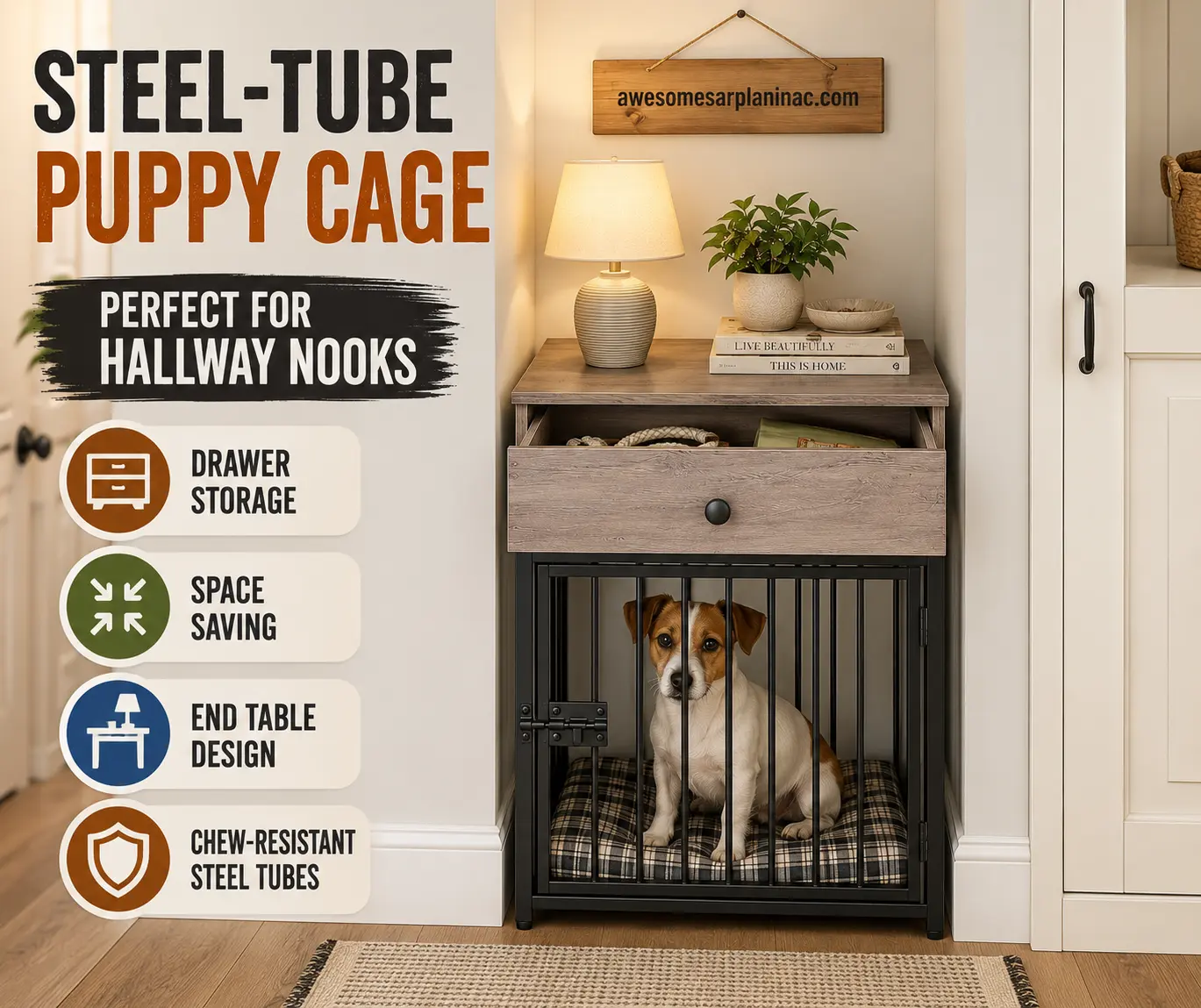
2. Hallway Nook
Most hallways have at least one recessed section or alcove where a coat closet sits.
A 12-to-18 inch recess is enough to push a small or medium crate partially into the wall and out of the way.
Dogs that aren’t anxious in the crate anymore do fine here – the hallway is quieter than the living room.
The problem you’ll notice after a few weeks: hallways get vacuumed the least.
Dog hair piles up under and around the crate fast, and the tight space makes it harder to clean than an open corner.
3. Behind the Sofa
If your sofa doesn’t sit flush against the wall, there’s usually 8 to 18 inches of dead space behind it.
That gap fits a medium wire dog crate – especially if the sofa runs along the long wall. The dog is in the main room and can hear everything.
Don’t use a solid-sided crate here. The sofa already “limits airflow” on one side, and a solid-sided crate on top of that gets warm fast. Stick with wire.
Also put a thin non-slip mat under the crate – on hardwood it slides around when the dog shifts at night and the scraping wakes light sleepers.
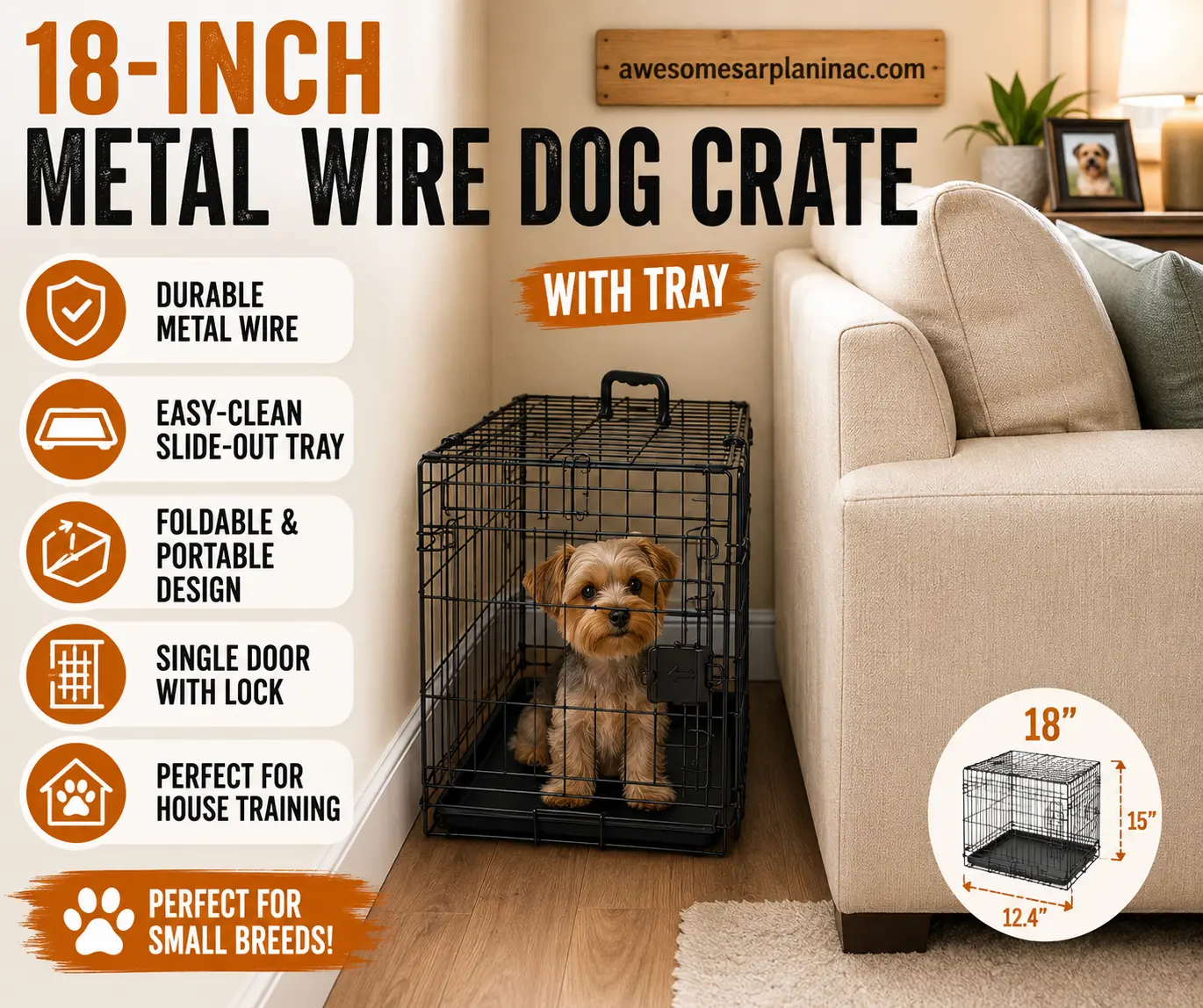
4. Bedroom Corner – Best for Puppies and Anxious Dogs
This is the most useful spot for any dog in the first few months.
The puppy in a bedroom corner often settles at night faster than one in other room – they can hear you breathing, you move around, familiar sounds from a few feet away.
It doesn’t work for every dog, but it’s worth trying first.
Bedroom corners are almost always taken by the bed or a dresser, so measure from the wall to the nearest piece of furniture on both sides before buying.
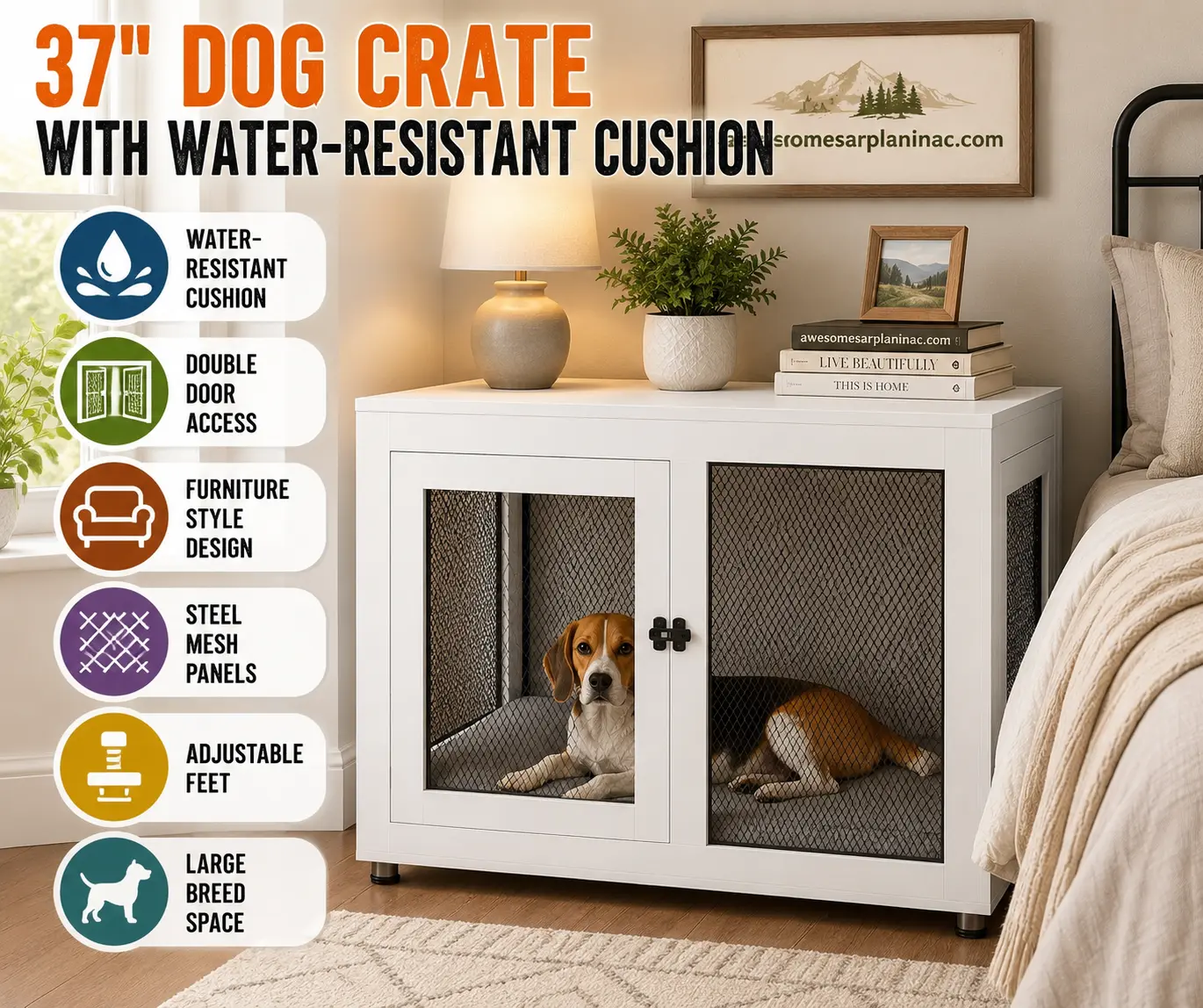
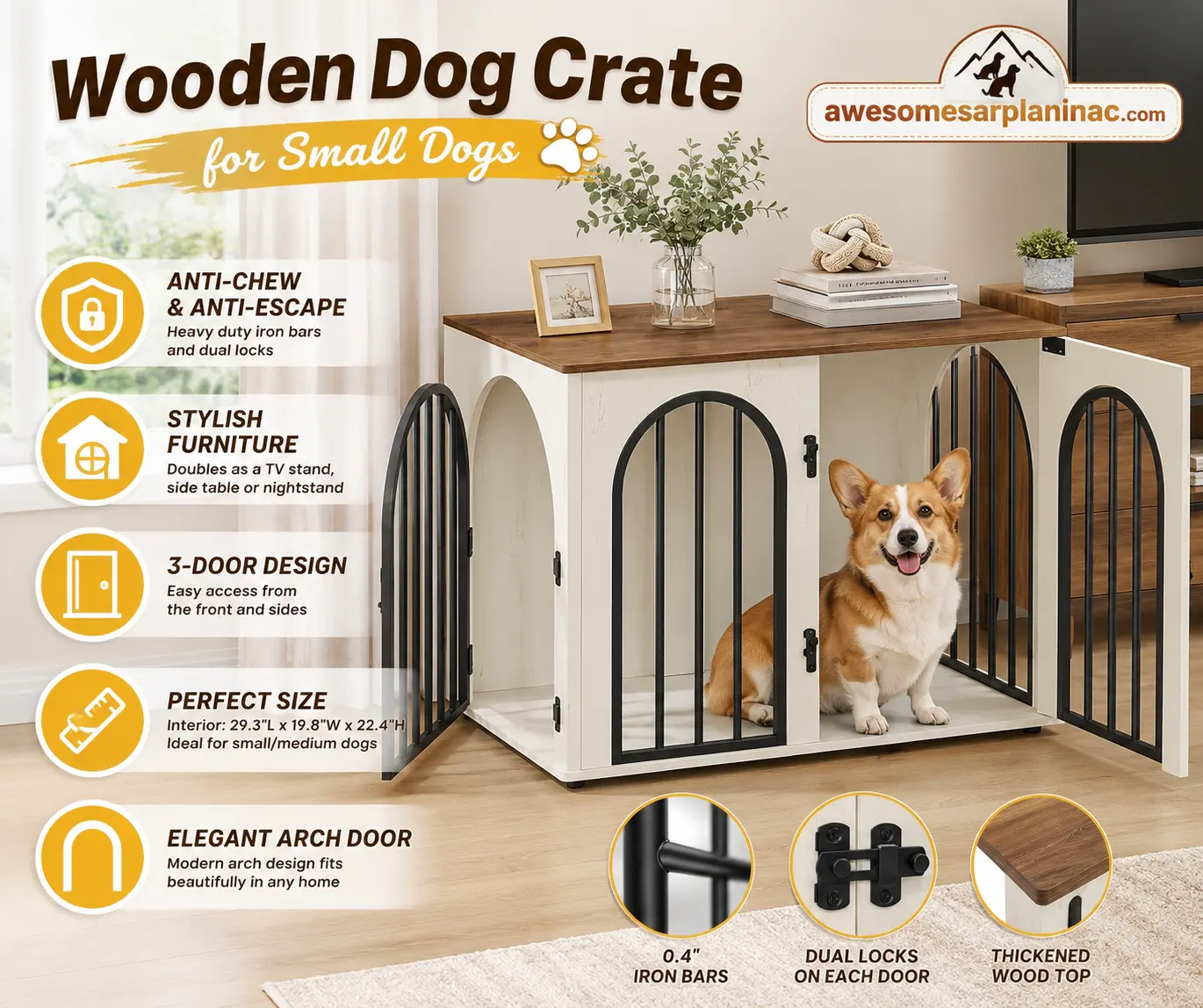
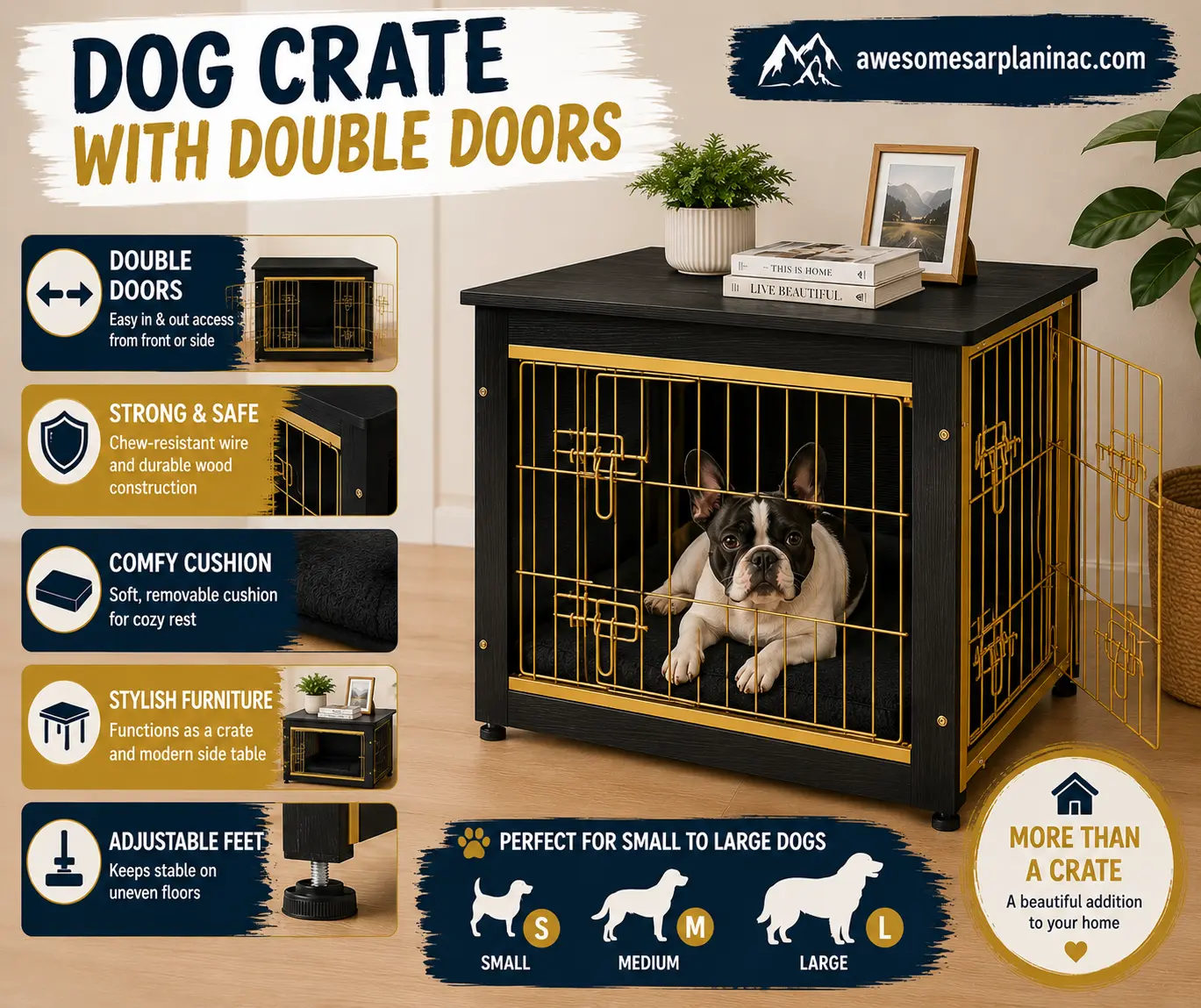
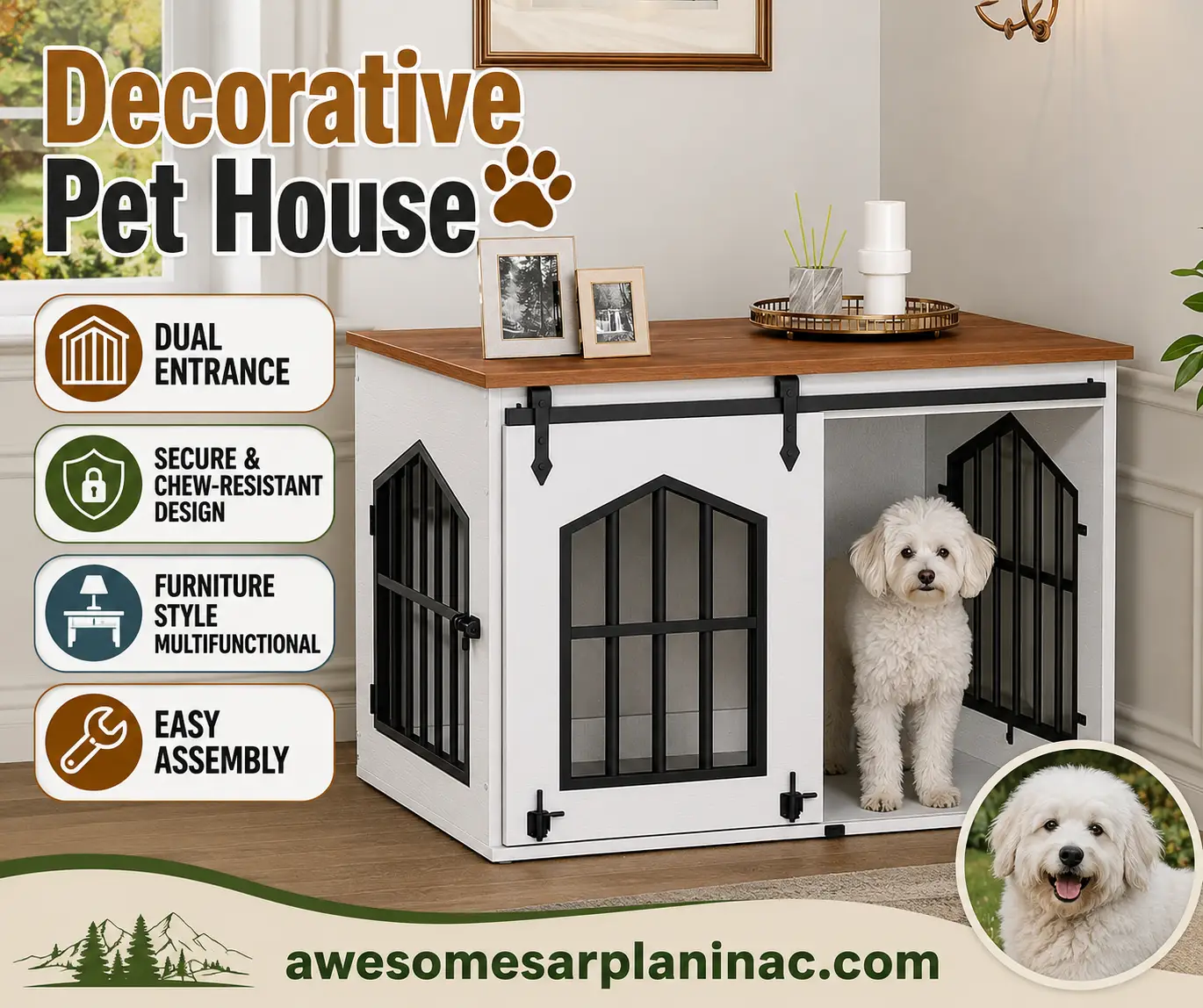
5. Furniture-Style Dog Crate Instead of a Side Table
The main reason to get a wooden dog crate in a small home is that it replaces a piece of furniture instead of adding to it.
It goes where a nightstand would go – your lamp, phone, water glass sit on top, and the dog sleeps underneath.
Worth knowing before you buy: most wooden crates aren’t built for dogs that chew.
6. Foldable Crate for When You Need the Space Back
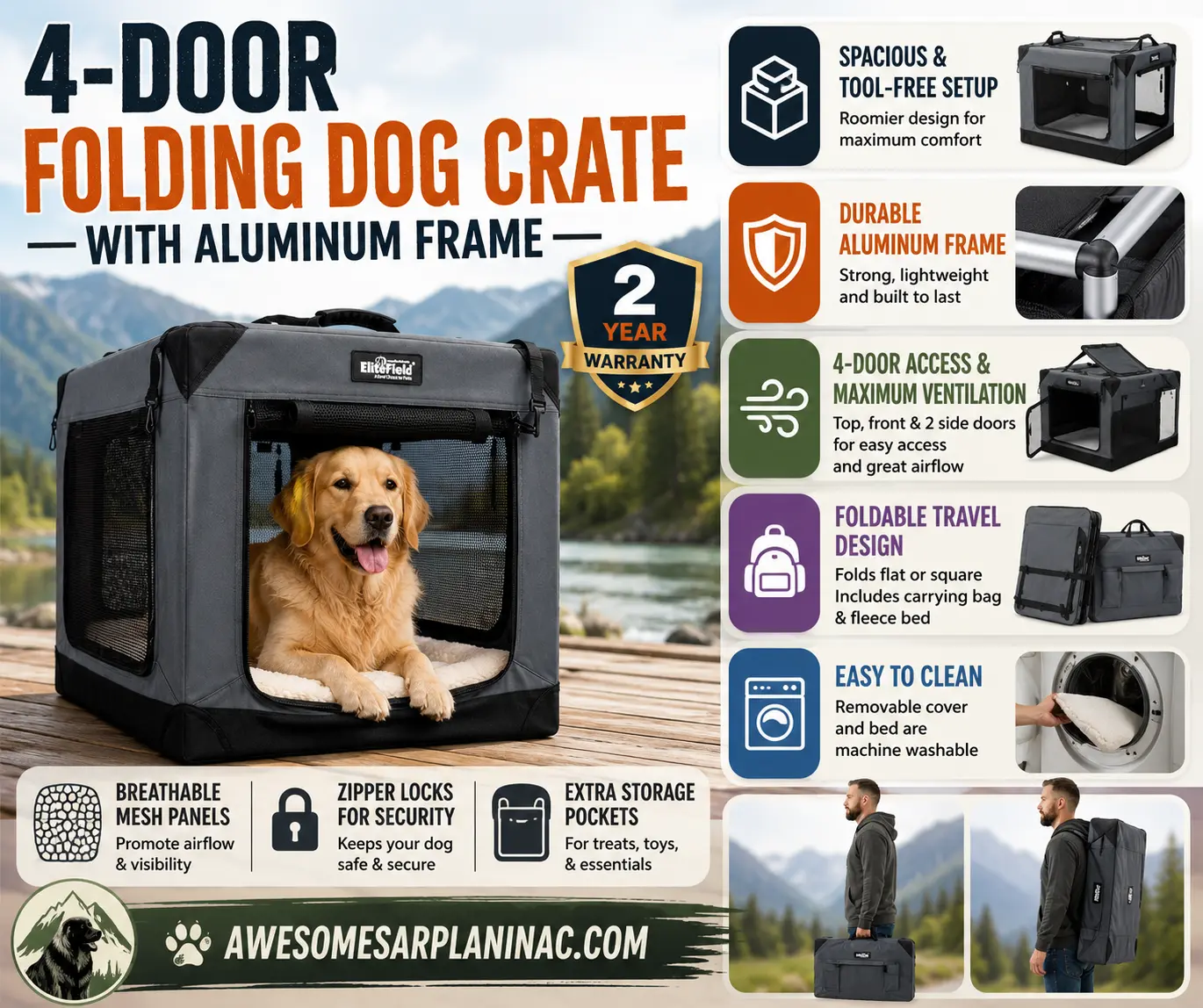
If you have guests regularly or just need the floor back on weekends, the wooden dog crate isn’t going to work. There are three options that actually fold down:
Wire fold-flat – the most common for home use. Goes flat in under a minute, slides behind the sofa or into a closet. Works for most dogs, easy to find, reasonably priced. The downside is weight – a 42-inch wire crate runs around 25–30 lbs.
Soft-sided fabric – lightest option, folds down smallest, easiest to carry. Fine for well-balanced dogs that are already crate-trained and don’t scratch or chew at the walls.
Collapsible aluminum – Heaviest of the three but nearly indestructible. Built for dogs that destroy wire and fabric crates. Folds flat and meets airline guidelines if you ever need that. More expensive, but you buy it once.
What Size Dog Crate Do I Need for a Small Home?
Nose to base of tail, then floor to top of head while the dog is standing — add at least 4 inches. That’s straight from MidWest’s own iCrate listings.
Then mark off that size on your floor with masking tape and check it against where doors swing and where you walk before you order.