
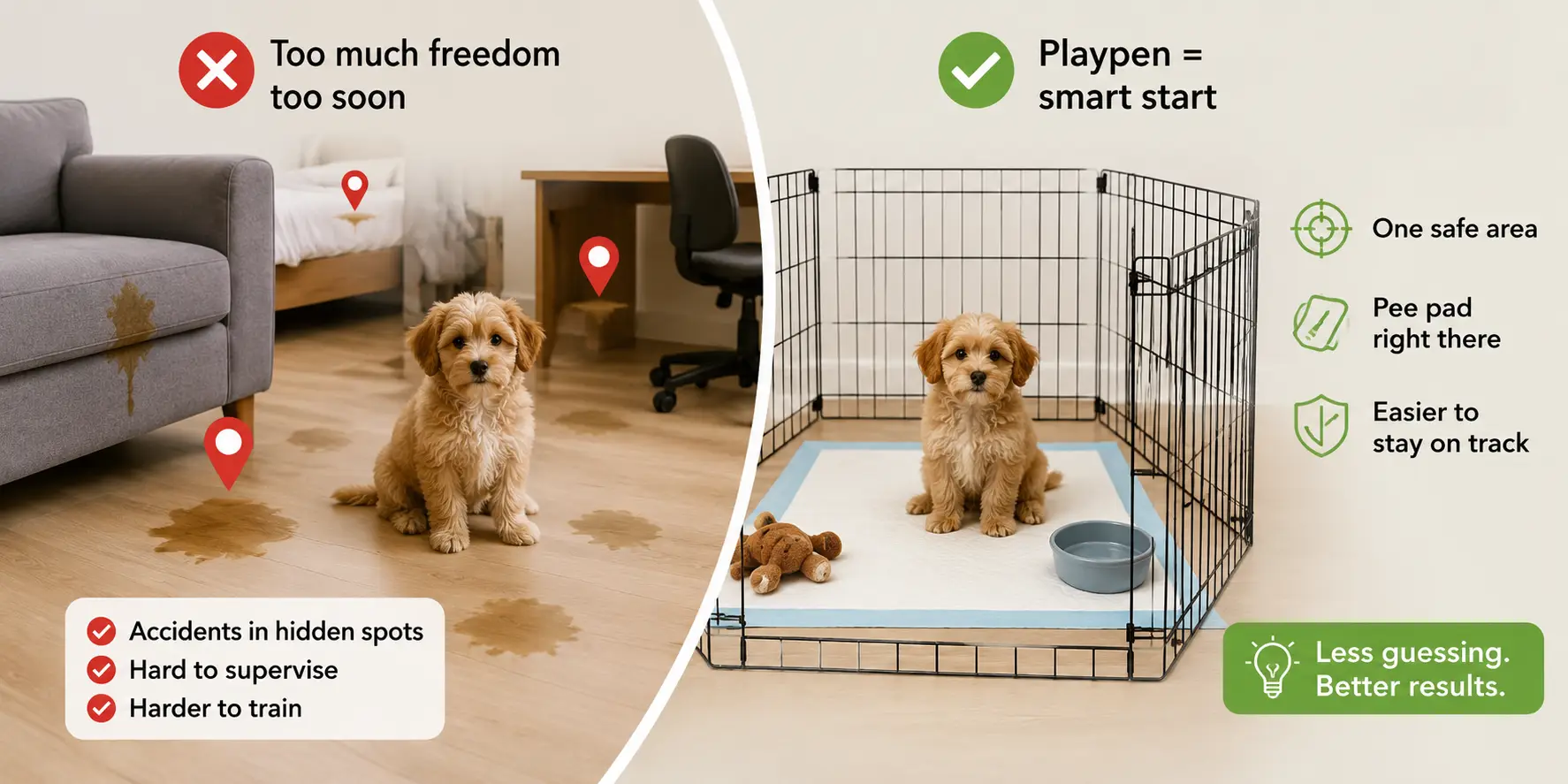
Most small breed owners figure out pretty quickly that giving their dog free run of the house before potty training is a bad idea.
You find spots behind the couch, under the desk, in the bedroom corner – and you weren’t even there when it happened.
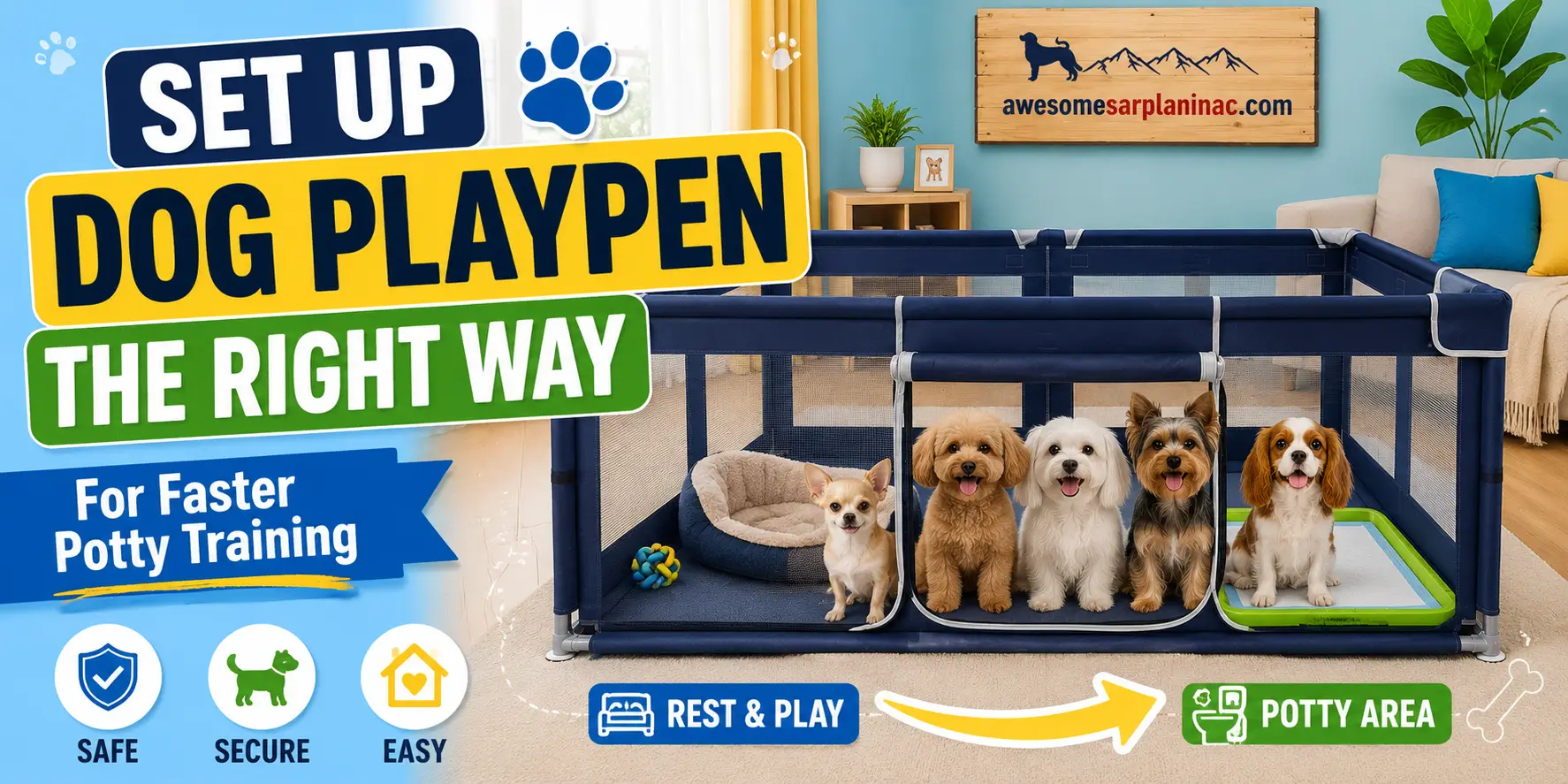
A playpen keeps your dog in one area where the pee pad is right there in front of them.
It won’t do the work for you, but it stops the guessing game of where they went while you weren’t watching.
Yorkies, Chihuahuas, Pomeranians – Not the Same Problem
These breeds may all need the playpen, but each one gives owners a different headache during potty training.
Many Yorkies are energetic and can be stubborn during training. They’ll use the pee pad fine for a few days, then start going in a different corner.
This isn’t specific to Yorkies – giving a puppy too much space too soon can lead to inconsistent potty habits, regardless of breed.
Chihuahuas learn the pad location fast but need rewards to keep using it.
Stopping treats too early can slow down how well the habit sticks – positive reinforcement needs to continue until the behavior is clearly consistent, not just good for a few days.
Pomeranians are sensitive to routine changes.
Some handle alone time fine; others get stressed, and that can show up as accidents even after weeks of going correctly.
Keeping the crate or bed inside the pen rather than in a separate room can help.
Right Pen Size for Small Breeds
Too much room works against you during early training. A small dog in a large pen may pick one corner to go in and a separate corner to sleep (and the pad gets ignored completely).
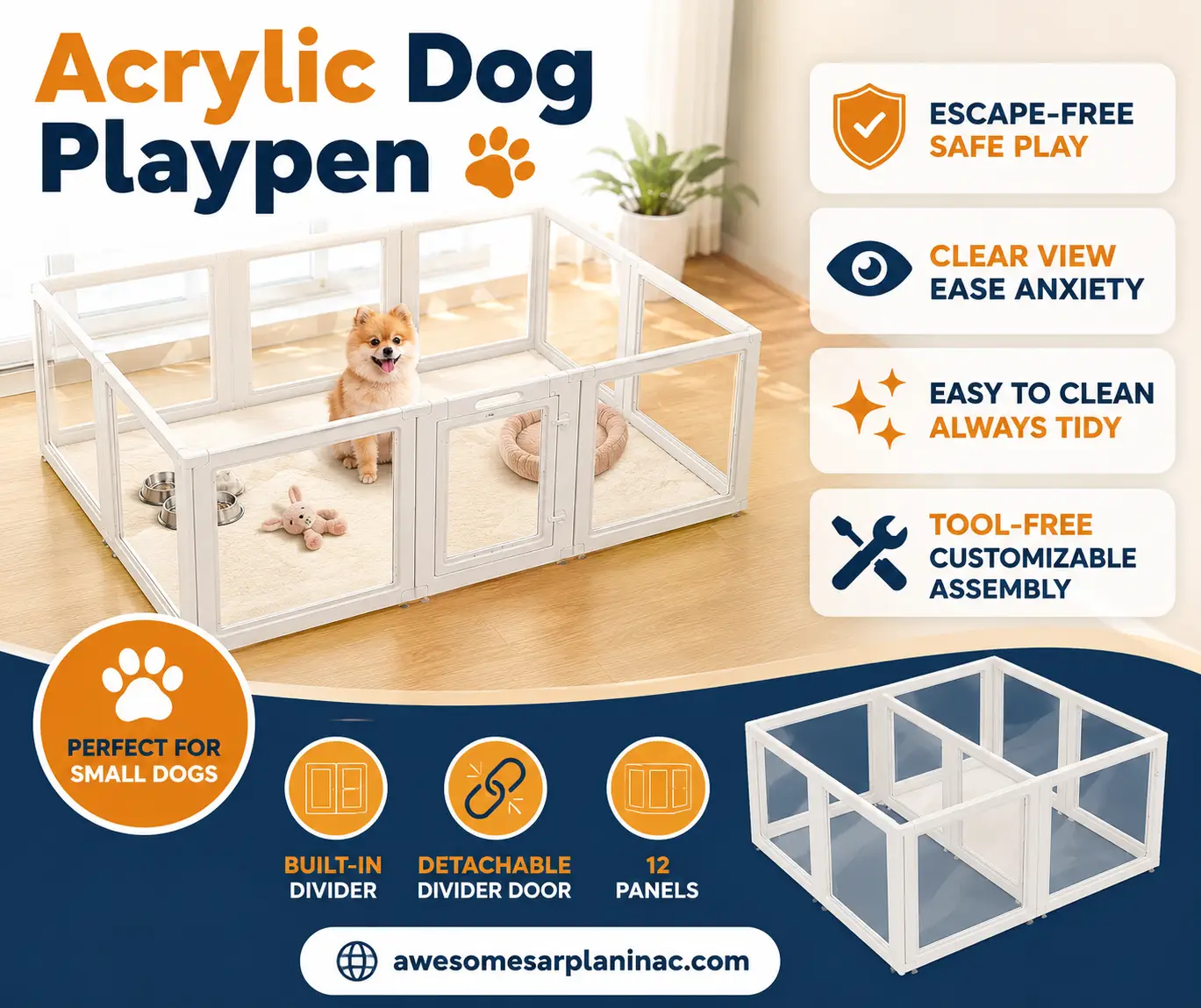
For most breeds under 10–12 lbs, a smaller starting pen tends to work better than a large one.
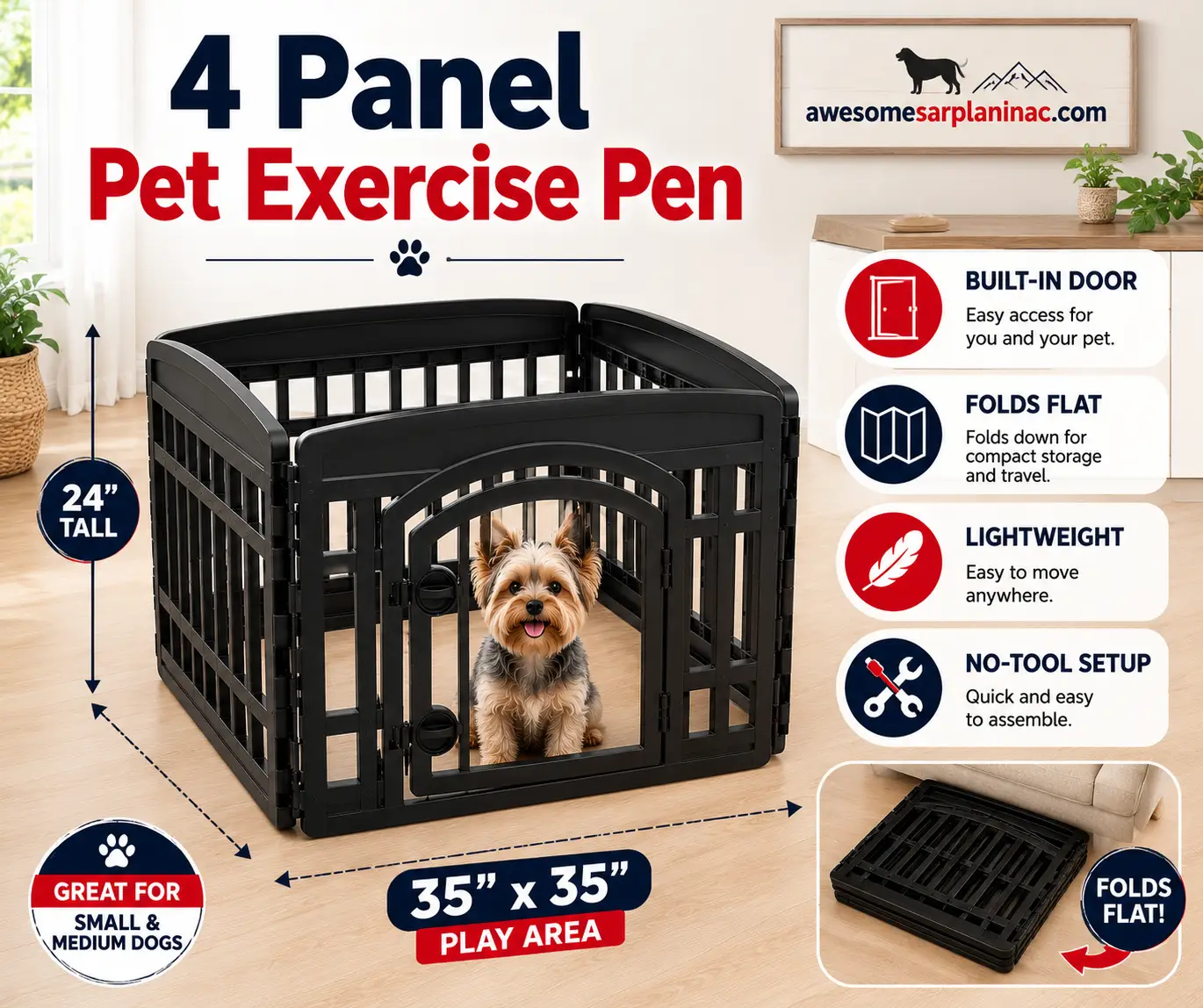
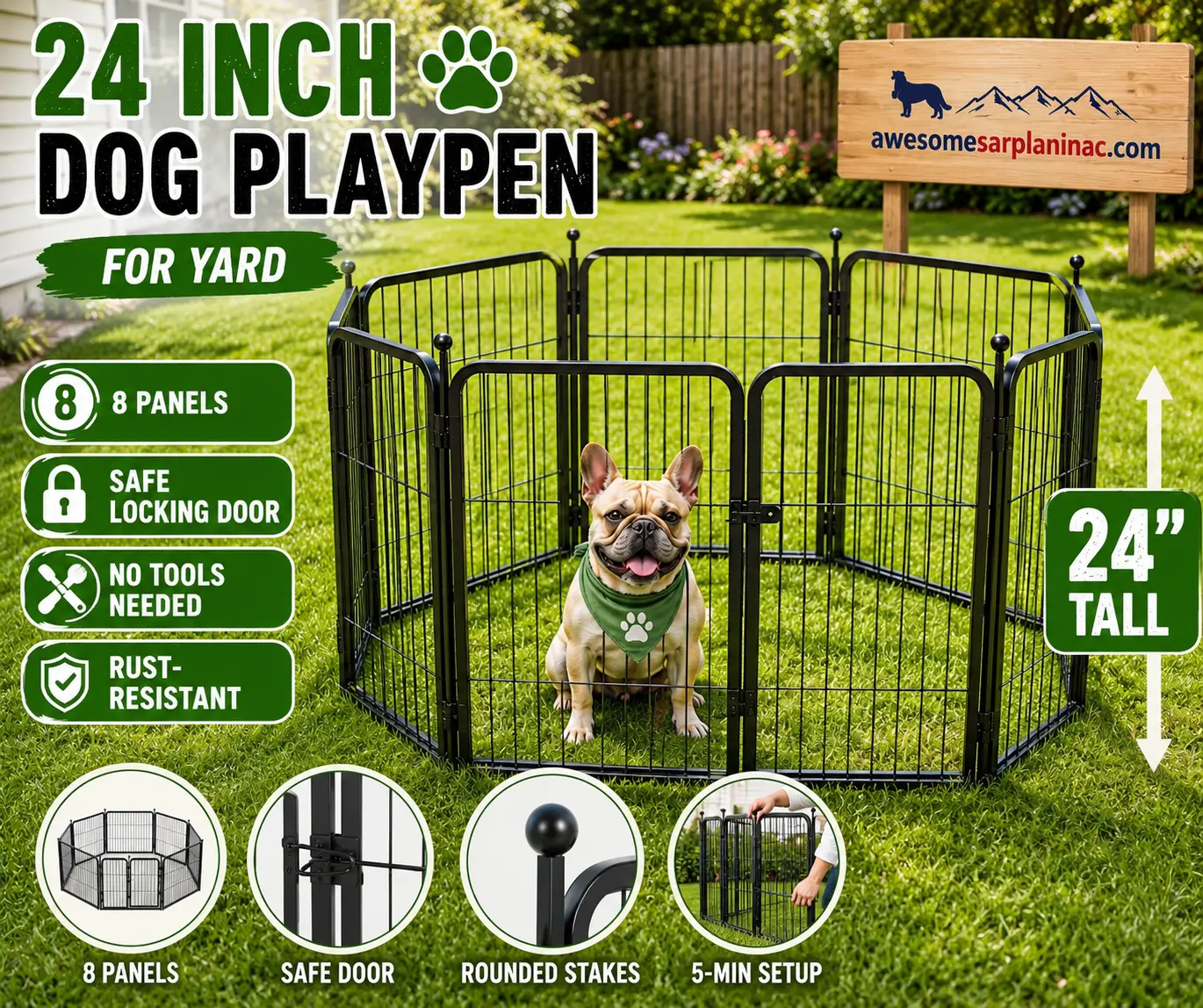
The exact panel count depends on panel dimensions, whether the crate goes inside, and how your room is laid out – but the general idea is to keep the space tight enough that there’s room for the crate or bed, a water bowl, and one pee pad, without a lot of extra floor space.
- 24-inch panel height works for most small breeds, though very active or athletic dogs may clear it.
- Keep the space just big enough for the essentials.
Expand the space once your dog is using the pad reliably.
Sleeping Area and Potty Area – Keep Them Separate
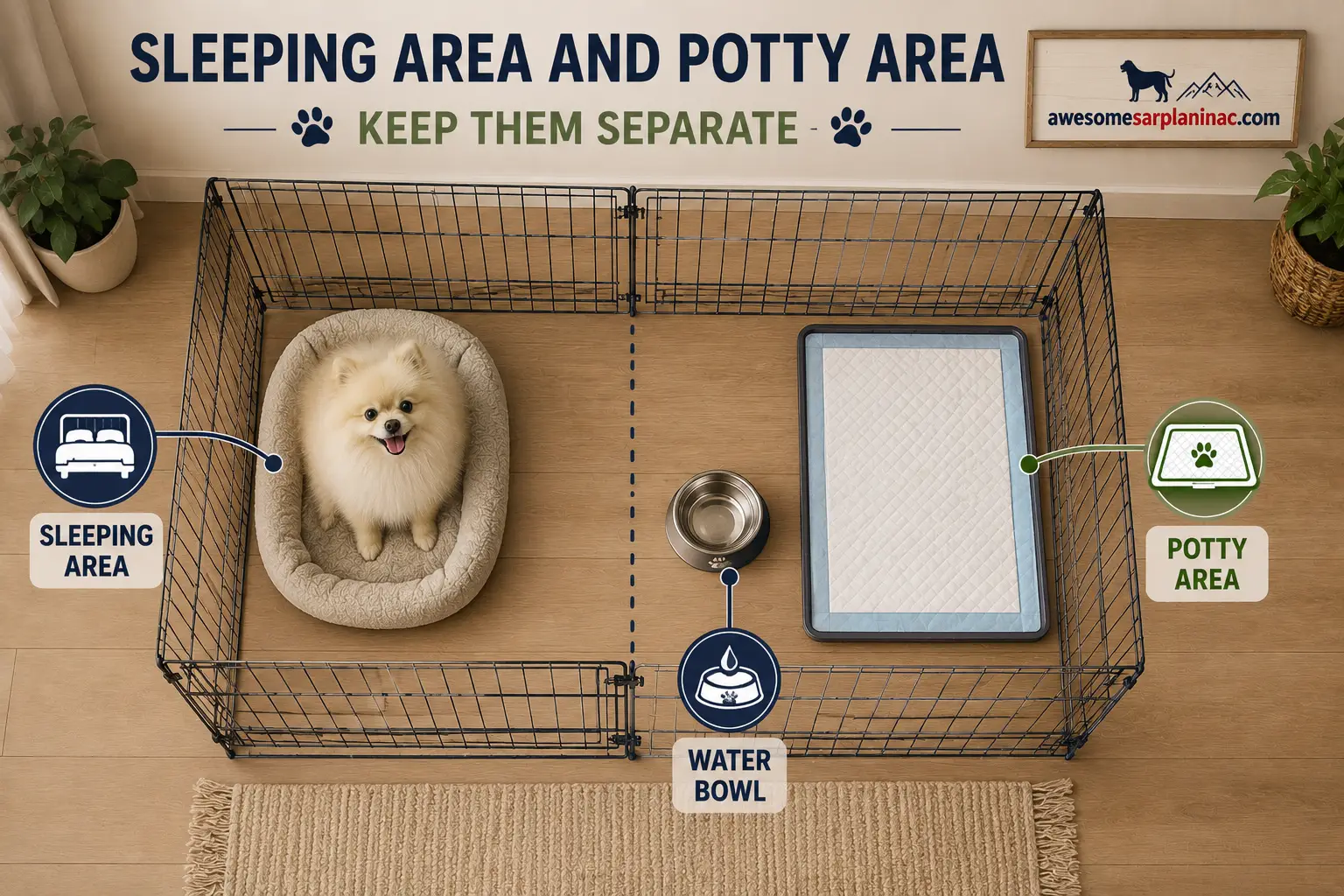
Split the dog playpen into two sides:
- One side – crate or a flat dog bed
- Other side – pee pad or grass tray
Most dogs prefer not to soil the areas where they sleep or eat. When the pen is small enough that these two areas are on opposite ends, it becomes easier for the dog to associate the pee pad with the correct potty area.
A clearly defined sleeping area and potty area can make potty training more consistent.
Pee Pad vs. Grass Tray
Pee pads are cheaper and easier to start with. Many brands include a scent attractant designed to encourage use.
One thing that catches people off guard after a few weeks: some dogs start chewing or shredding the pad edges before or after going, which makes cleanup messier.
A flat plastic pad holder with corner clips can keeps the pad in place.
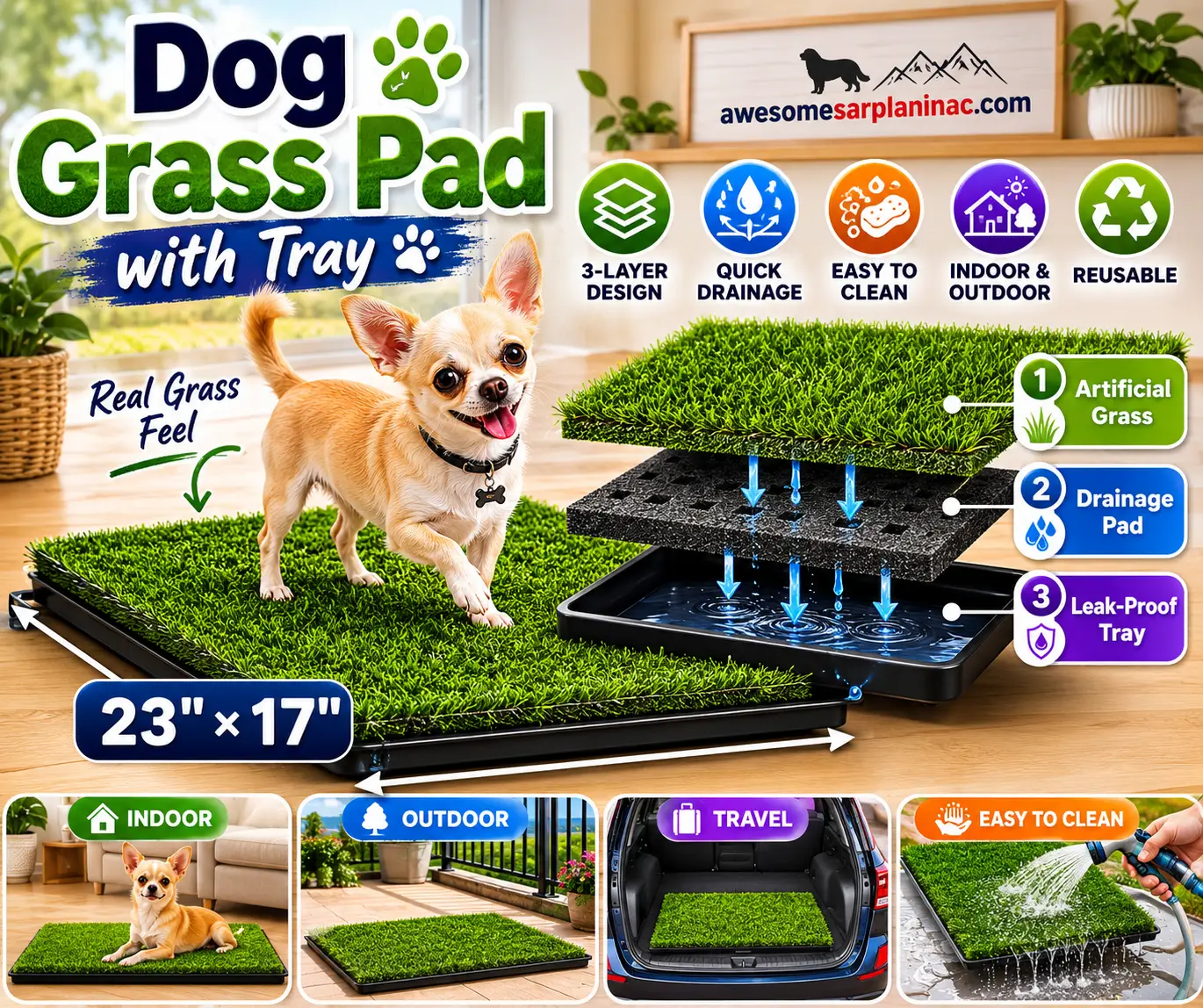
Grass trays – artificial turf sitting over a drip tray – take more upfront effort. Most are easy to rinse and clean.
Some owners prefer them when planning a transition to outdoor potty training, since the surface more closely resembles grass than a standard pee pad.
Crate Inside the Dog Playpen
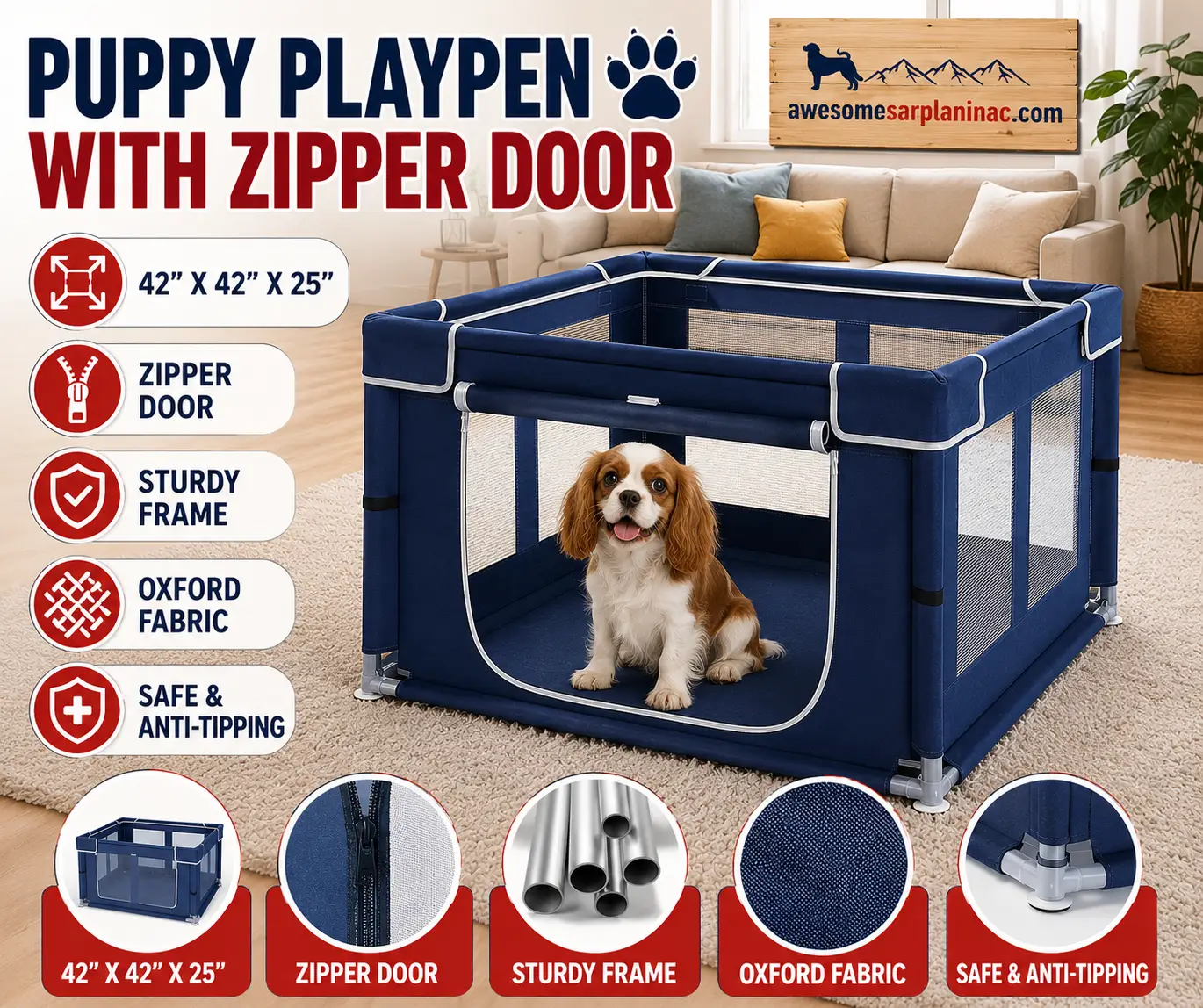
One common setup that works well for many owners: put the dog crate inside the pen with the door open during the day.
The dog has a clear spot to rest on one side and the pad on the other, and can move between the two freely without needing you to open anything.
At night, close the crate door after the last potty break, and open it first thing in the morning before anything else.
This won’t work for every dog or every situation, but it’s a practical starting point that keeps the rest and potty areas separated without taking up extra floor space.
Floor Protection Under the Pen
Urine wicks under the pad edge and soaks into the floor underneath.
On hardwood, lingering odors may make the area more attractive as a potty spot for the dog long after you’ve cleaned the surface.
Many household cleaners get rid of the smell people notice but may not eliminate the compounds dogs can still detect.
Ammonia-based cleaners are generally not recommended because their scent can resemble urine to some dogs and may encourage them to revisit the same spot.
An enzymatic cleaner is the better option for “any miss” outside the pad.
For the floor under the pen:
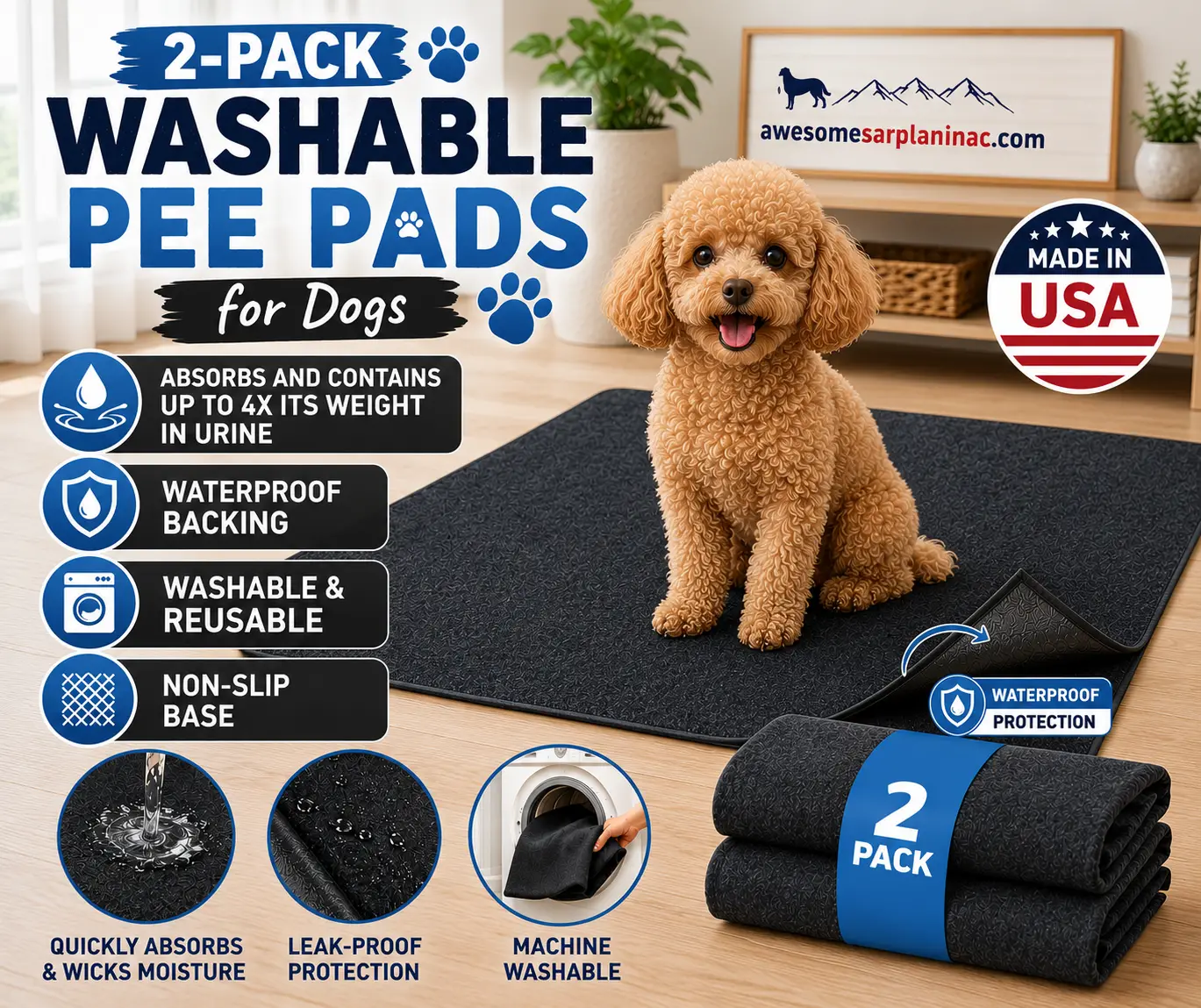
- Drymate Dog Playpen Mat – goes under the entire pen, machine washable, helps protect the floor from leaks and pad-edge misses.
- Waterproof vinyl mat from any home goods store – does the same job for less money.
Biggest Potty Training Mistakes with the Dog Playpen:
- Pen too large – the dog may start using different areas of the pen instead of using the pad.
- Moving the pad – pick a corner and leave it there; changing locations can slow progress.
- Cleaning misses with ammonia-based products – the smell can resemble urine to some dogs; an enzymatic cleaner is a better choice.
- Food or water bowl right next to the pad – most dogs prefer not to eliminate near their eating area; keep the bowl on the opposite side.
- Pulling the pen too soon – some small breeds may need several months before potty habits become fully reliable; giving them more freedom too early often leads to more accidents.
How Long Can Small Breeds Stay in the Pen?
A rough guide based on age:
- Under 3 months: 2 hours
- 3–4 months: 3–4 hours
- 5–6 months: 4–5 hours
- Adult small breed: often able to go 4–6 hours between potty breaks
The AKC recommends a regular routine for potty breaks. Dogs learn faster when potty breaks follow the same schedule each day.
When to Take the Pen Down
Don’t rush it. The pen comes down when your dog is using the pad and accidents have become rare – not just after a good few days in a row.
Start by giving them a slightly larger area of the room. Then a gated room.
Then the full house – one room at a time.