
You already have a patio with a grill, a couple of chairs, maybe a side table. Then you add a dog house, and suddenly it’s taking up more room than you expected.
It looks out of place, blocks the way to the back door, and makes the whole space feel tighter.
A modern dog house tucked into the right corner doesn’t get in the way. A bad one is something you end up stepping around every time you head outside.
Here’s what really matters when you’re picking a patio dog house – size, material, placement, and why most big-box options just don’t get it.
What “Modern” Actually Means for a Patio Dog House
Walk into any big-box pet store and half those dog houses look like they belong in a 1998 backyard. Dome shapes. Bright plastic. Chunky proportions.
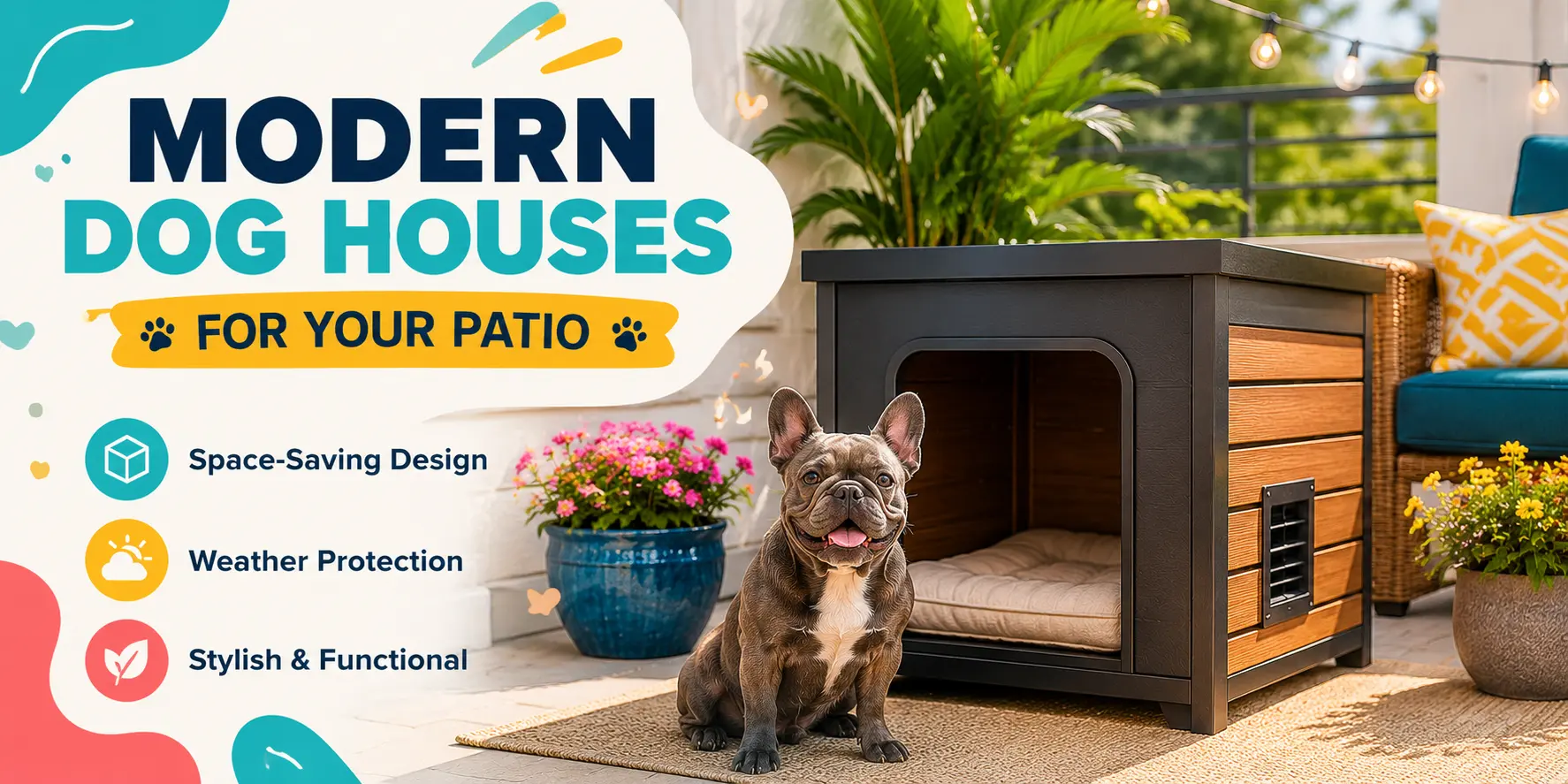
Modern means something specific when it’s sitting on your patio — low profile, clean roofline, materials that don’t look rough after one rainy season.
It means the house blends into the rest of your outdoor space instead of sticking out every time you walk through the door.
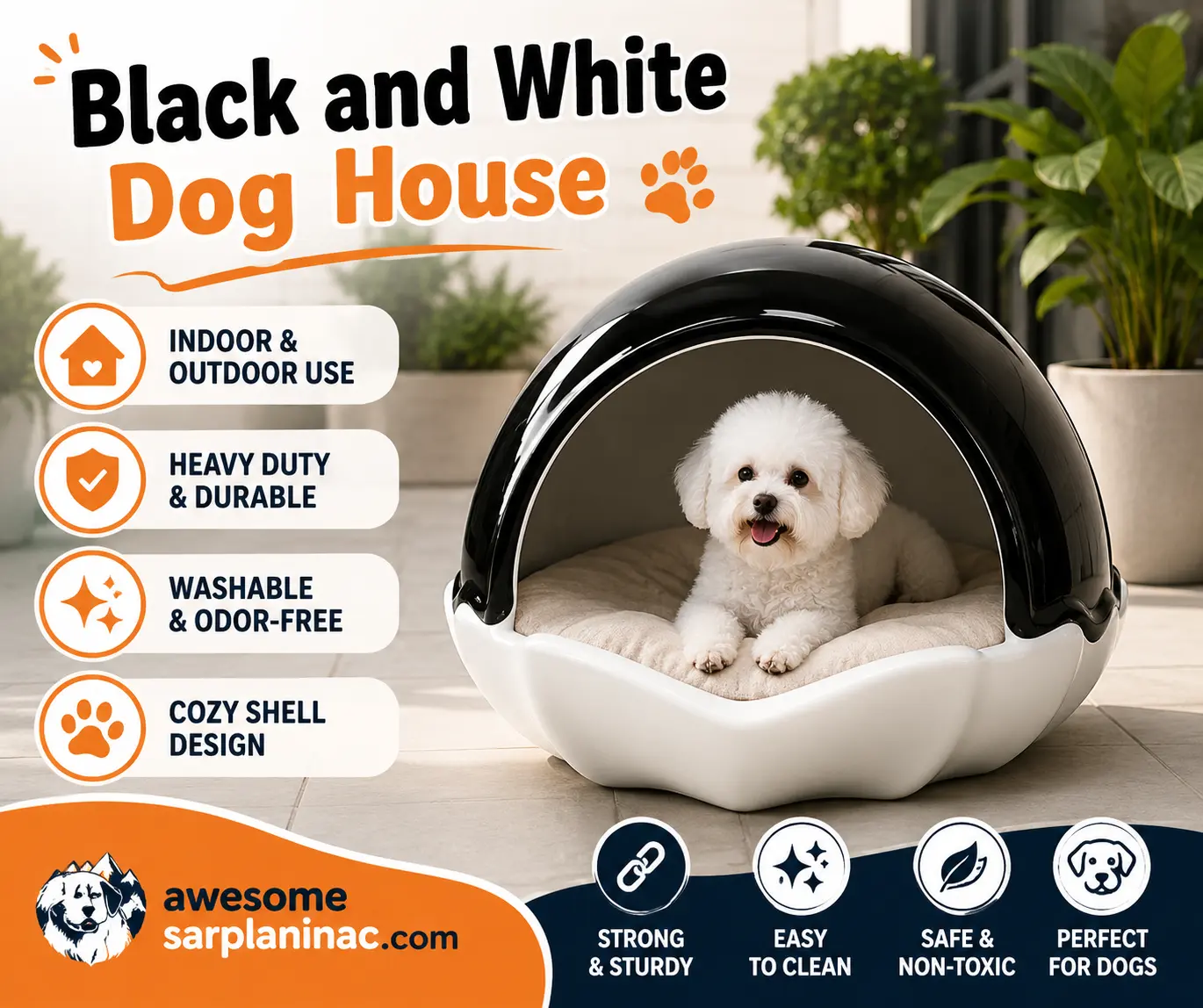
Budget plastic houses are the most common mistake on patios. The cheaper the plastic, the faster the color dulls in the sun, the roof seam starts holding water instead of shedding it.
The bigger issue in summer is that any dog house sitting in direct afternoon sun with no ventilation can get uncomfortably hot inside. Plastic with no vents and a dark finish makes that problem worse faster.
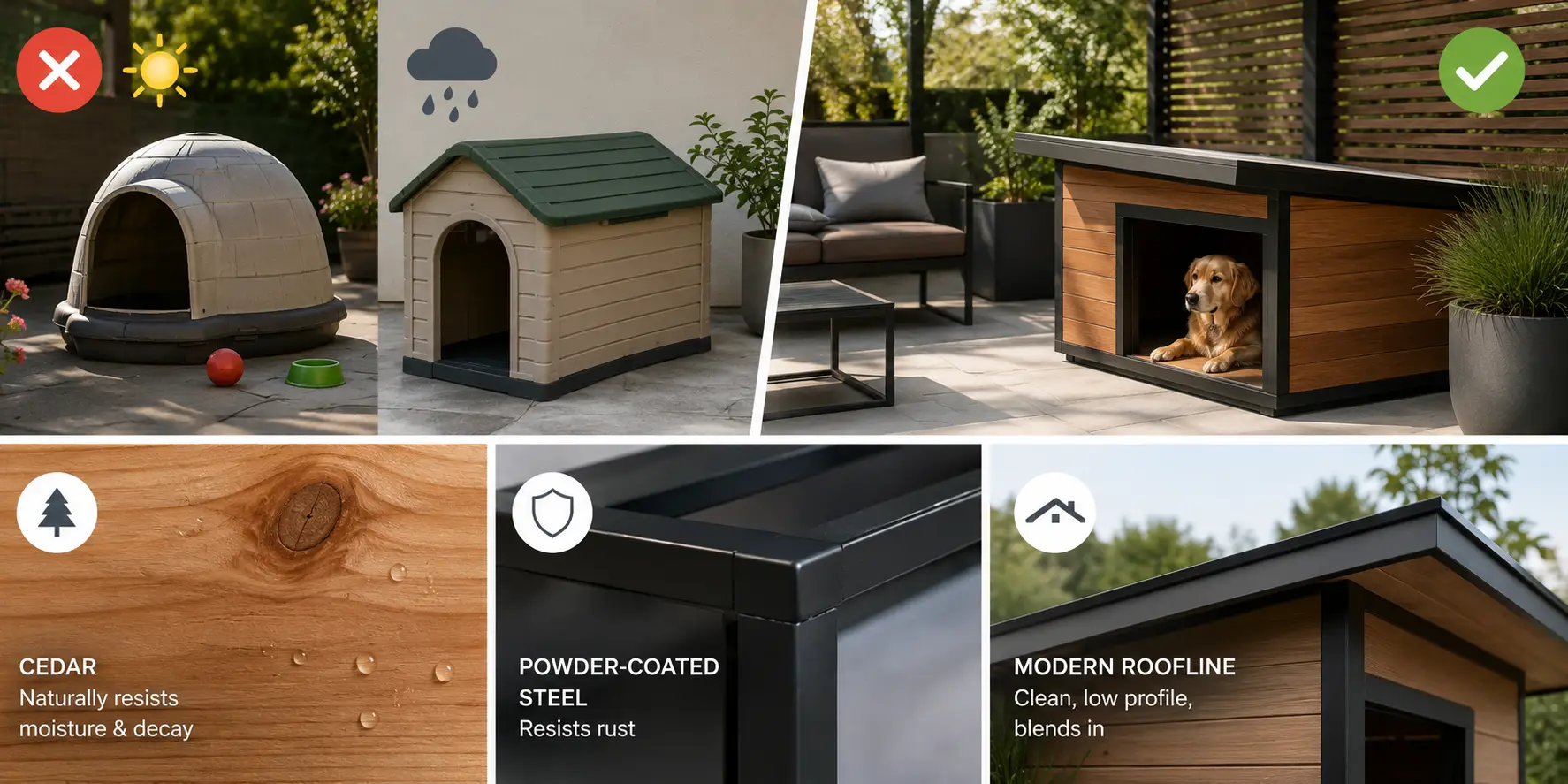
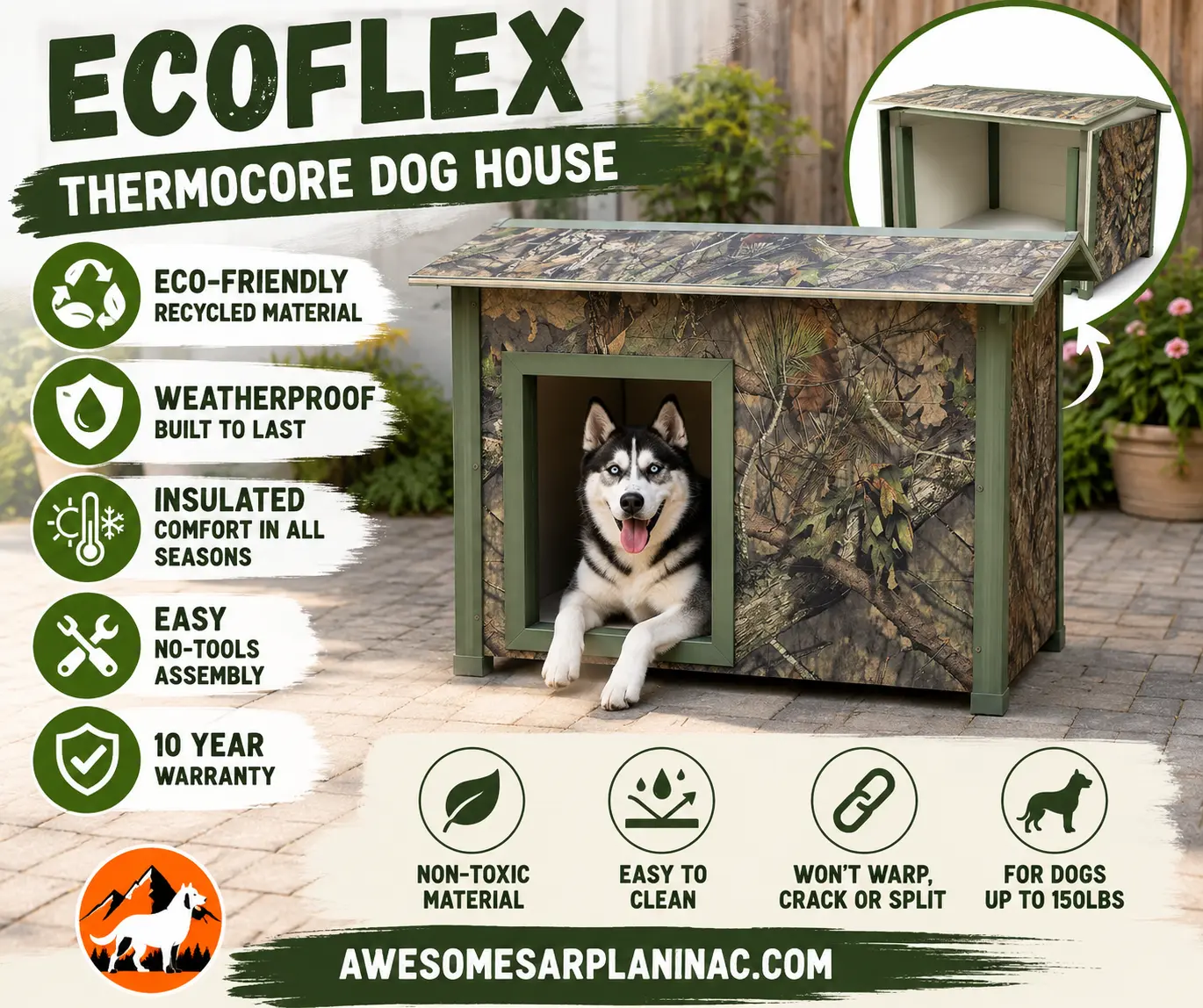
Wood handles patio conditions better when it’s the right species and finished properly. Cedar doesn’t need resealing every season the way pine does – the natural oils in the heartwood push back against moisture and rot on their own.
A slanted or shed-style roof fits modern patios well because that same roofline shows up on contemporary outdoor furniture and pergolas.
A dome or classic A-frame reads more traditional depending on what else you’ve got out there.
If your patio furniture runs more toward metal and matte finishes than warm wood tones, powder-coated steel frames are worth a look – a quality powder coat resists rust well and keeps that cleaner, minimal look.
Size First – Everything Else Is Secondary
Measure the patio space before you order anything.
Then measure your dog: tip of nose to base of tail, floor to top of head while standing. Add 4 to 6 inches to each.
That’s the interior size you need.
The house has to let your dog stand up fully, turn around in a complete circle, and lie stretched out.
Dog weight | House size label | Typical interior length | Typical interior height |
|---|---|---|---|
Up to 45 lbs | Small/Medium | ~33–34 in | ~22–23 in |
45–70 lbs | Large | ~40–41 in | ~27–28 in |
70–95 lbs | X-Large | ~45–46 in | ~31–32 in |
95 lbs+ | XXL | 48 in+ | 33 in+ |
Dimensions based on verified commercial dog house listings. Always check the specific product’s listed interior measurements – exterior dimensions are always larger. Tall, lean breeds like Greyhounds or Dobermans may need a taller house than their weight category suggests.
Wood vs. Plastic vs. Metal – What Actually Holds Up Outside
The real difference between materials only shows after a few weeks of outdoor use (not on the price tag).
Material | Weather resistance | Maintenance needed | Realistic lifespan |
|---|---|---|---|
Cedar | Naturally rot-resistant; heartwood oils resist decay without sealing | Low - no sealing required to survive outdoors, but a UV sealant every few years preserves color | 15-20+ years |
Douglas fir | Moderately durable heartwood; good water resistance | Needs outdoor sealant every 1–2 years to prevent moisture uptake at joints | 10-15 years |
Pine (untreated) | Poor - absorbs moisture readily without treatment | Needs weatherproofing from day one; annual maintenance | 5-8 years |
Plastic | UV exposure causes yellowing and cracking; seams trap moisture | Low | 3-5 years |
Cedar is the best choice for most patios. The heartwood contains naturally occurring compounds such as thujaplicins and thujone that help resist fungal decay and many wood-damaging insects. Untreated cedar turns silver-gray over time.
A coat of exterior oil or UV sealant every few years keeps it looking better and extends its life. Use stain if you want to keep the original warm color.
Douglas fir is a good second choice. It generally resists moisture better than most construction-grade pine, and its heartwood holds up well outdoors. It needs an outdoor sealant every year or two. Without it, moisture gets into the joints over time.
Pine is the weakest of the three for untreated outdoor use. It needs weatherproofing from day one. Without it, it wears down faster than fir or cedar.
After the first heavy rain, many owners notice this: if the dog house sits flat on the patio, water can pool underneath. Raising the house 2–3 inches improves drainage and airflow, which greatly reduces moisture buildup.

Where to Put a Dog House on a Patio
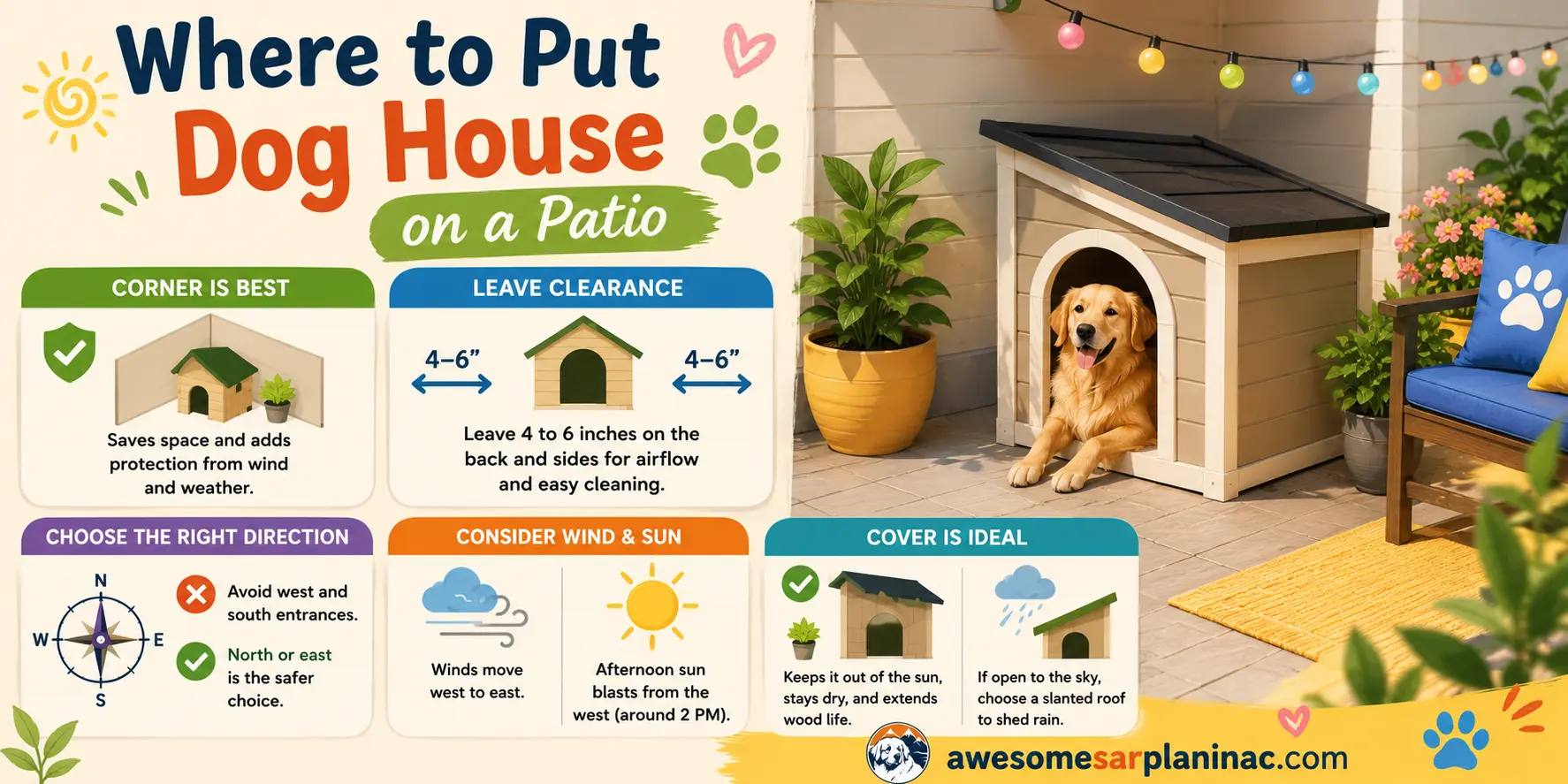
Tucking it into a corner is almost always the smartest move. Two walls of the house are protected from wind and weather, the open patio area stays clear, and the whole space feels bigger instead of cluttered.
That said, don’t push the house flush against the wall or fence. The gap behind it traps wet leaves, bugs, and debris – and you won’t know it until you’re back there cleaning.
Leave 4 to 6 inches of clearance on the back and sides so air can move and you can actually get in there to clean.
Before you decide which way to point the entrance, figure out where your patio actually sits.
Once you know your layout, keep the entrance away from the west and south if the space gives you that choice.
In the US, storms and prevailing winds move west to east, so a west- or south-facing entrance takes the full hit of weather year-round, and in summer, afternoon sun blasts straight into the opening from about 2 PM on.
North or east is the safer choice.
Patios with an overhead cover are ideal. The dog house stays out of the sun, the wood finish lasts longer, and you don’t have to do much extra to maintain it.
If your patio is open to the sky, a slanted-roof model sheds rain better than a flat or dome-style house and should be the default pick.
Keeping a Dog House Cool in Summer
Sun on a roof pushes the interior well past comfortable, even with ventilation.
Dogs don’t cool themselves by sweating through their skin – they rely on panting.
A few things that actually help:
- Ventilation openings – Models with a dedicated side vent panel are worth the extra cost.
- Roof color – Light or natural wood roofs reflect heat.
- Elevation – A 3-inch gap under the floor improves airflow and
reduces heat transfer from hot patio surfaces.
One thing worth knowing about frozen bottles inside the dog house: depending on the humidity, a cold surface in warm air can build up condensation and dampen the bedding underneath it.
Wrap the bottle in a towel to cut that problem down.
Cold Weather
How much “cold your dog handles” depends on coat type, age, and health – not just size.
Double-coated breeds like Huskies or Sarplaninacs can stay comfortable at temperatures well below freezing in an insulated dog house.
Short-coated breeds are generally “more sensitive” to cold and need more protection at lower temperatures.
There’s no single cutoff temperature that applies to every dog. Know your breed, watch for shivering, tucked posture, or reluctance to go back outside – those are the real signals the dog house isn’t keeping up.
The door flap is a major heat-loss point on any dog house. A thicker, double-layer vinyl replacement flap cuts cold air infiltration noticeably and runs about $10 to $15.

Do Modern Dog Houses Need Ventilation?
Every dog house needs it.
Most dogs cool down by panting. Inside a closed house in summer the air heats up fast.
One vent on the side or rear wall is enough – as long as it’s on the opposite side from the entrance.
For XL houses built for dogs over 70 lbs, one vent on each side works better.
Vents that open and close are worth the extra cost.
One House for Patio and Indoors?
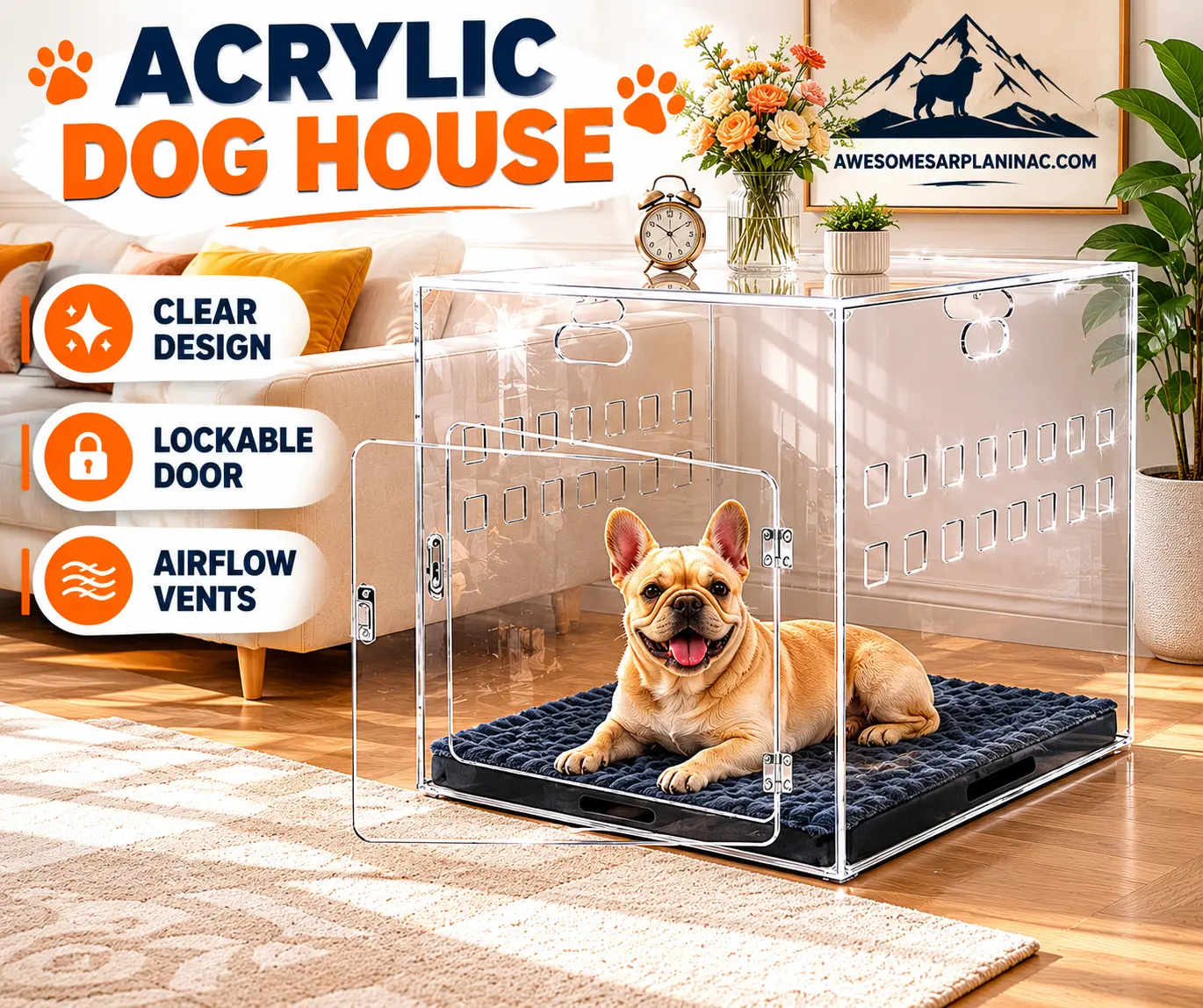
If you want something that works on a covered porch and blends into a living room, a furniture-style dog crate is usually the best option.
The top surface serves as an end table, the dog goes underneath, and it blends in with the rest of your furniture instead of sticking out like a wire cage in the corner.
Standard outdoor wood houses don’t fit that bill – 40 to 54 inches long, asphalt roof, rough wood panels. That’s outdoor furniture!
One thing to know: furniture crates aren’t weatherproof. MDF warps when it gets wet – joints start pulling apart within a season. Covered porch or indoors only.
Cleaning and Maintenance
The first few weeks are easy. After a couple of months, dirt, fur, and moisture pile up quickly.
The floor takes the most abuse: mud, leaves, fur, and wet paws.
Pine and untreated fir need occasional sealing or staining to protect against moisture. Most of the time, that means a fresh coat every one to two years, depending on the weather.
Check metal hardware (hinges, latches, vent covers) for rust. Wipe them down at the start of each season and spray them with silicone or rust inhibitor.