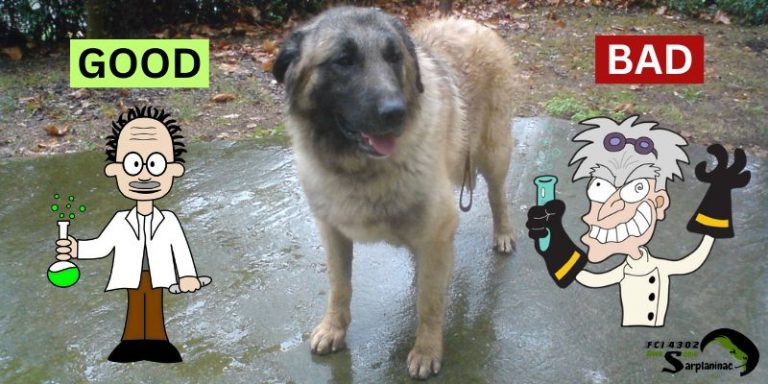
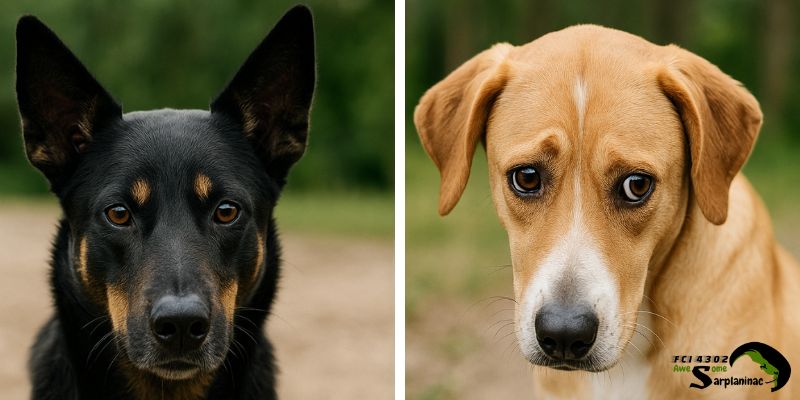

This is a topic that trips a lot of people up. Many people “mix up fear and distrust” when it comes to dog behavior.
I’ve seen it on our social media – we post videos of dogs in tense situations (like controlled training scenarios or dog-to-dog interactions), and self-proclaimed “experts” jump straight into the comments. Yet their words often reveal a lack of real experience.
But then there are those who truly get it. Even if we don’t agree on everything, I always appreciate insight from people who have serious experience with dogs.
What’s the real difference between a distrustful dog and a fearful one?
And I’ll share some personal examples …
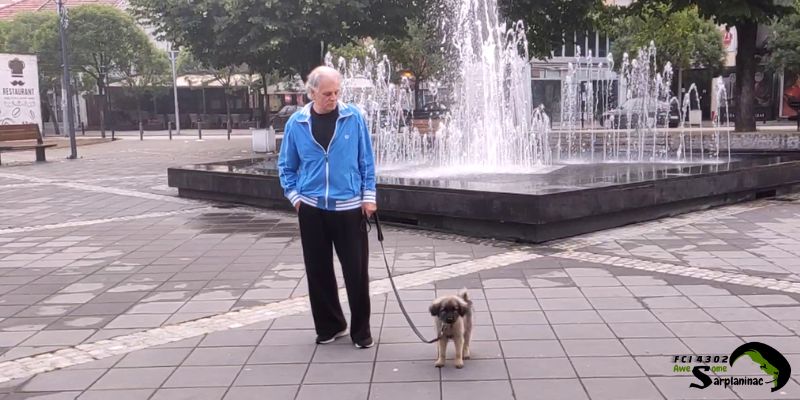
How to Recognize a Distrustful Dog?
A distrustful dog doesn’t react out of fear, but out of caution! It won’t rush up to unfamiliar people, keeps its distance, and watches everything closely before it moves.
In a familiar environment, it behaves confidently and steadily, but in an unfamiliar one, it becomes cautious.
Some dogs bark when someone gets close (not out of fear, but because they’re sizing the person up).
Now, here’s a video where you can see what distrustful behavior actually looks like. Pay close attention between the 10:11 and 11-minute mark – that’s when our Sarplaninac approaches a large tree stump in the mountain.
There’s another video on our YouTube channel titled ‘Wait For It… Puppy’s Reaction Is Priceless,’ but it’s only for paid members.
How Does a Fearful Dog React?
A fearful dog shows it through clear physical signs. They often retreat, hide, tuck their tail, tremble, or even refuse food when overly stressed.
Their fear isn’t always directed at people, it can be triggered by noises, objects, or even open spaces.
This fear can be something they’re born with, but it can also come from trauma, poor socialization, or bad experiences early in life.
Difference Between Distrustful vs. Fearful Dogs?
I think it comes down to two words.
The first is ‘distrust’ – wariness or suspicion, but without the panic.
The second is ‘fearfulness’ – real fear, often out of control, that comes with serious socialization problems.
The Right Way to Earn Their Trust
You need patience with a distrustful dog. Let them decide when they’re ready for contact.
Keep your hand movements slow and calm, and don’t raise your voice.
You don’t need force – once the dog feels no one’s a threat, trust starts to build on its own.
Fearful dogs need even “more gentleness” and attention. The first step is a routine – when things are predictable, the dog feels safer.
Forcing contact can make their fear worse and undo all your progress.
Reward even small steps forward – even if the dog just approaches an object they feared.
Don’t yell or punish them – the dog doesn’t understand that what they did was wrong, they’re just trying to survive in a world that feels terrifying to them.
Avoid These Common Mistakes:
- Coming up behind them without warning;
- Forcing socialization (“Just leave them, they’ll get used to it”);
- Touching them too much, or handling them before they’re ready for it;
- Punishment or yelling – this only breeds more distrust or fear.

Here’s a Behavior Even Experienced Owners Misjudge
Now I’ll tell you how our Sarplaninac Condor used to approach unfamiliar dogs he saw as potential prey.
You can see his picture as our profile photo on all our social media accounts.
He’d approach slowly, tail tucked between his legs. If he stopped about 2-3 meters away, tail still tucked, some “experts” would say he was afraid of the dog in front of him.”
However, once he got within about a meter of his target, he’d become a predator (tail raised high). So say what you want about Condor, but “fearful” was never the right word for him!
This raises the question – why? The reason is very simple.
He wanted to send a message to the other dog not to move until he arrived, and his “I’m very scared” signal was actually a tactical deception.
Conclusion
Fear and distrust in dogs can look similar (the lowered body, the hesitant movements, the avoidance). But as we’ve seen, these signals can mean vastly different things depending on the dog, the situation, and their intentions.
The fearful dog is shaking, freezing up, unable to think past the panic.
The distrustful dog is making calculated decisions – weighing risks, setting boundaries.
And then there are those special cases where what appears to be nervousness is actually focus, control, even strategy.
Thank you for your time and attention …