
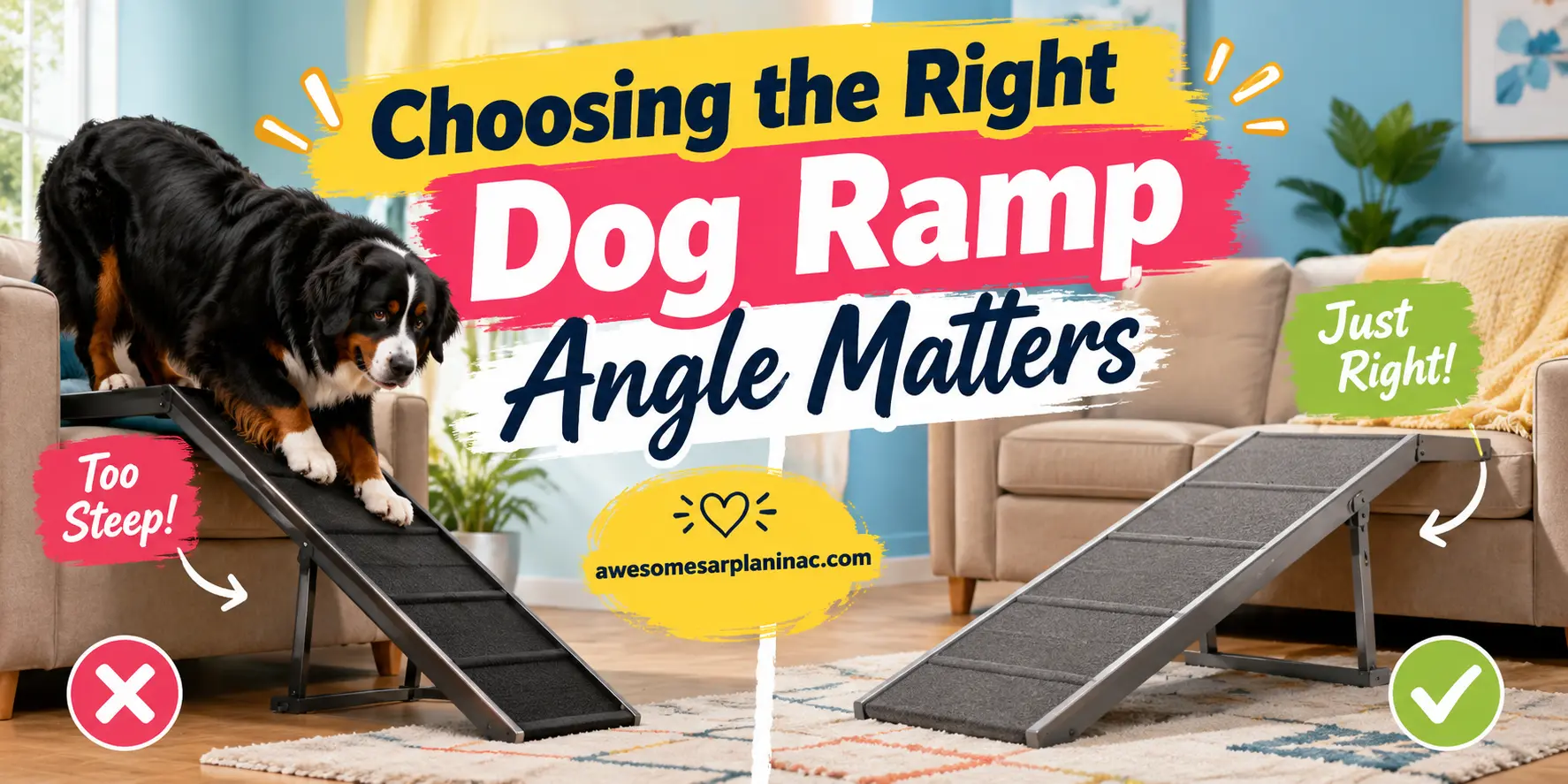

Steep dog ramps can be tough on large dogs, especially when the surface feels slick, narrow, or too steep to climb comfortably.
Even a ramp that looks fine at first can put extra strain on joints, paws, and balance.
That becomes a bigger problem for heavier dogs that already need more support getting into a vehicle, onto furniture, or over small steps around the house.
The angle of the ramp matters, but so do the width, grip, and overall stability.
Before buying a dog ramp online, it helps to know what actually makes one feel safe and easy for a large dog to use.
Why Steep Dog Ramps Can Be Unsafe for Large Breeds
Steep dog ramps can put extra strain on large dogs, especially on the hips and joints.
Smooth and narrow surfaces may also make climbing feel less secure, especially around taller vehicles or furniture.
The ramp may look fine in photos, but the angle, grip, and stability matter much more in daily use.
What Happens When a Ramp Angle Is Too Steep?
The ramp angle close to 22 to 26 degrees can make climbing harder for large breeds. The steeper it gets, the more pressure it puts on a dog’s back, hips, elbows, and spine.
Dogs may slip, lose balance, or avoid using it altogether. Some get nervous and try to jump off the side instead.
For dogs with arthritis, back pain, or IVDD, the steep ramp can make things worse instead of safer.
As a general rule, the ramp should be at least 2.5 times the height it needs to reach.
Best angle:
- 18–20 degrees: best for seniors and dogs that need extra support;
- 22–24 degrees: fine for most dogs;
- 26 degrees: only for young, healthy, agile dogs.
What Helps Large Dogs Feel Stable?
A safer dog ramp usually has:
- incline around 15–18°;
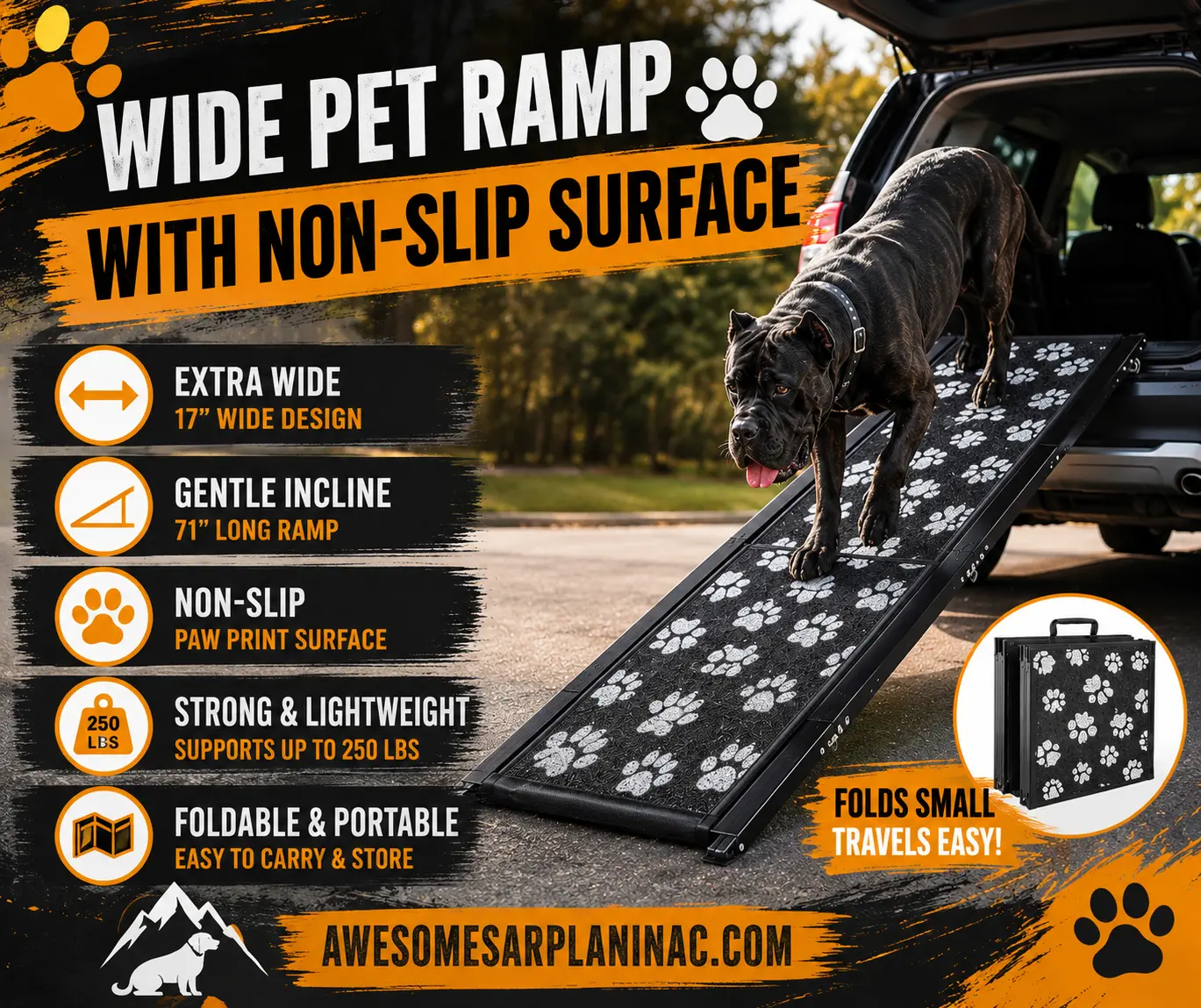
- at least 18–20 inches of width;
- a non-slip surface with real grip;
- solid support with little to no wobble;
- raised side rails for extra security.
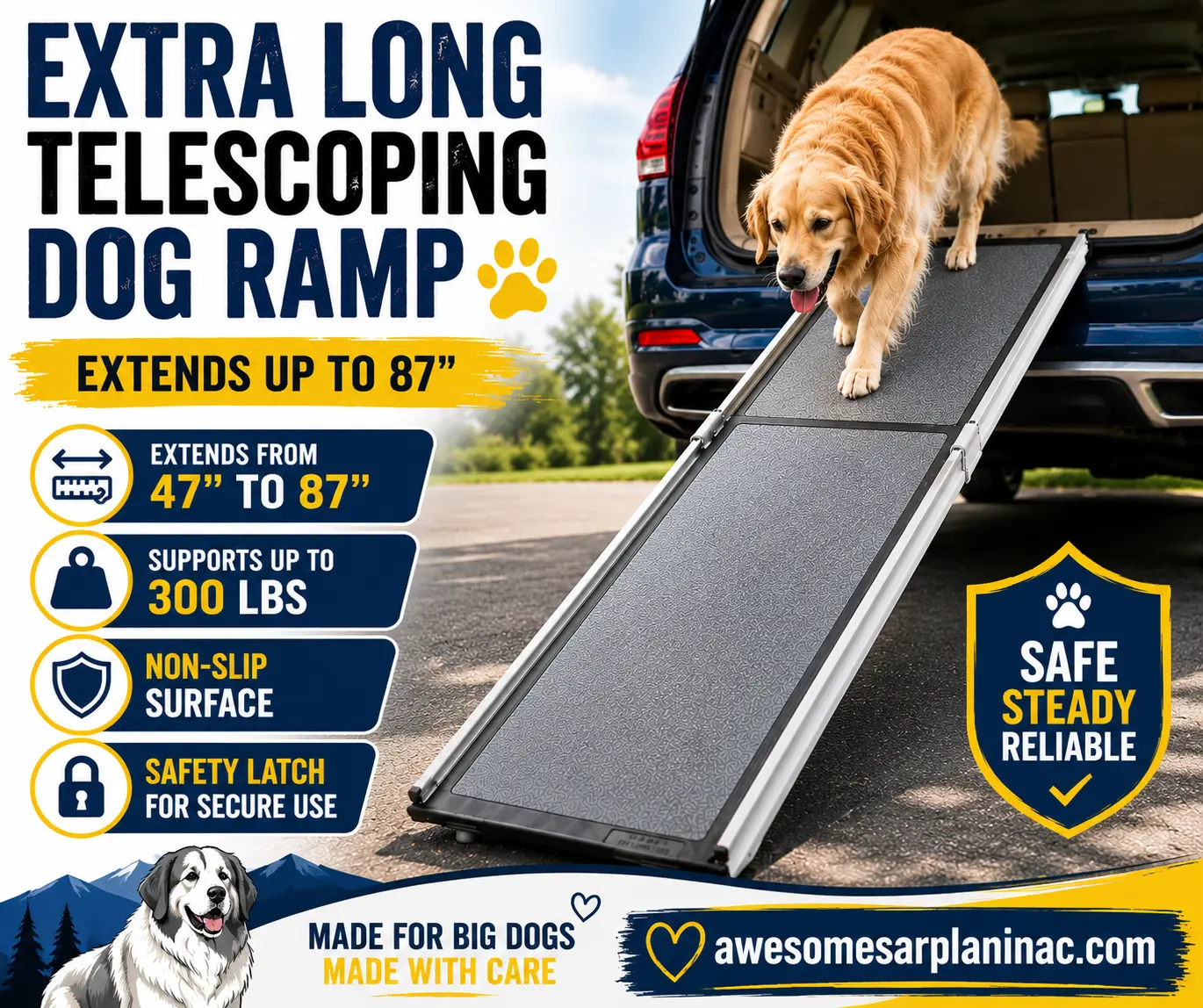
The ramp around 71–74 inches long usually gives large dogs an easier and safer way to get into SUVs, trucks, and taller vehicles.
Smooth carpet alone is often not enough. Rubberized materials or textured paw-grip surfaces usually help dogs keep a steadier grip, even in wet conditions.
Weight capacity – Many large breed ramps support 150–250 pounds.
Dog Ramp vs Dog Stairs
For large dogs, ramps are usually easier on the body than stairs.
The lower angle puts less stress on the hips and back, especially for older dogs getting into cars or climbing onto beds.
Stairs still work fine in smaller rooms where a long ramp would just get in the way.
Younger dogs usually use them without much trouble, but large breeds can have a harder time as they get older.
Wider ramps and stairs usually feel easier to use.
What to Check Before Buying a Dog Ramp Online
Before buying, pay more attention to the size, slope, and surface than the product photos:
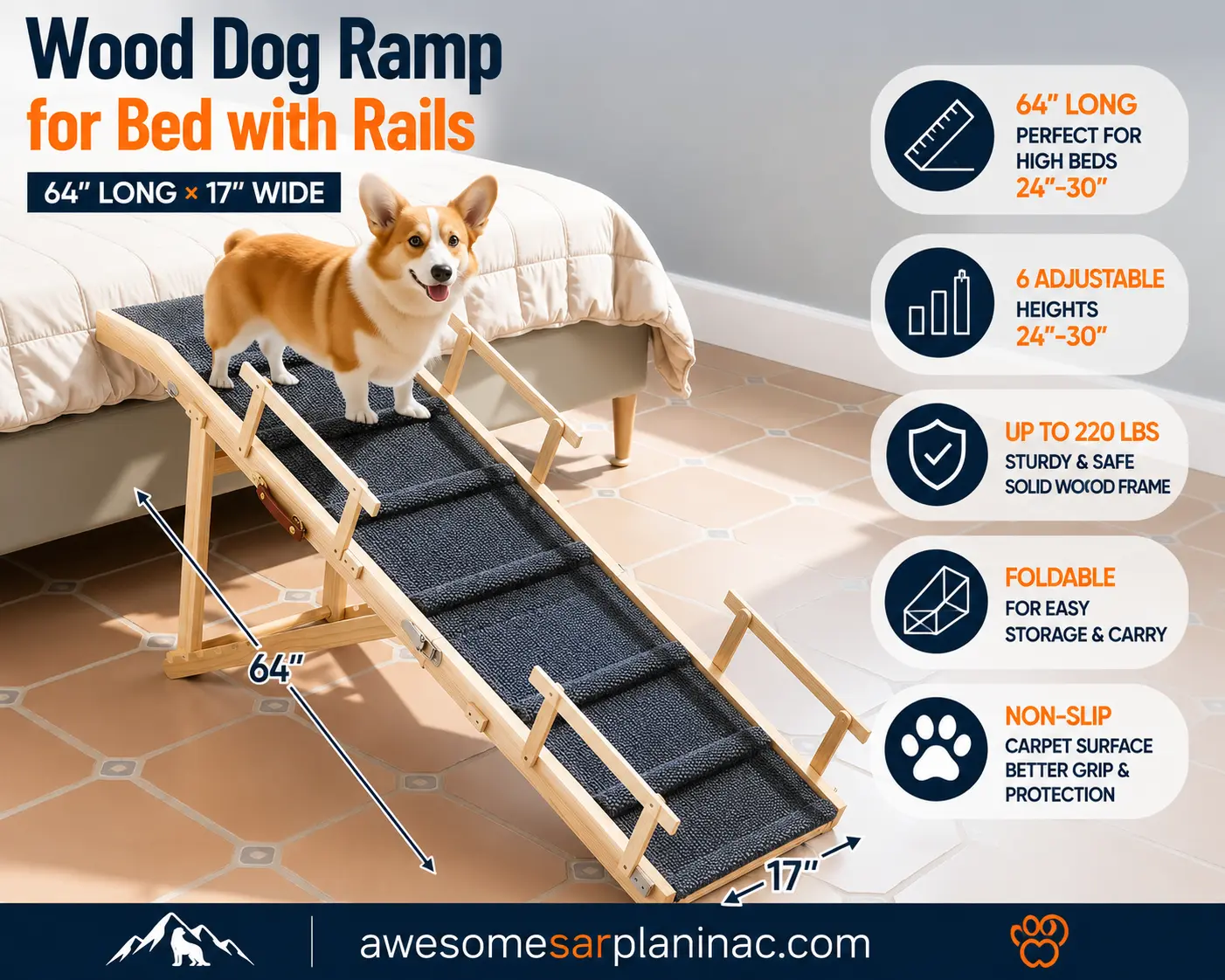
- measure the height of your SUV, truck, couch, or bed first;
- longer ramps are usually easier for dogs to walk on;
- many owners try to keep the angle between 18 and 25 degrees;
- small dogs may be comfortable with ramps around 11 to 12 inches wide;
- medium and large dogs often need closer to 22 to 24 inches;
- look for rubber or textured non-slip surfaces;
- avoid ramps that move, wobble, or bend under weight;
- check for weight limits around 150+ pounds for large breeds;
- side rails may help nervous or older dogs;
- folding and telescoping ramps are easier to store;
- carry handles help if you move the ramp often;
- check if the ramp is meant for indoor or outdoor use;
- make sure the height works with your vehicle, couch, or bed;
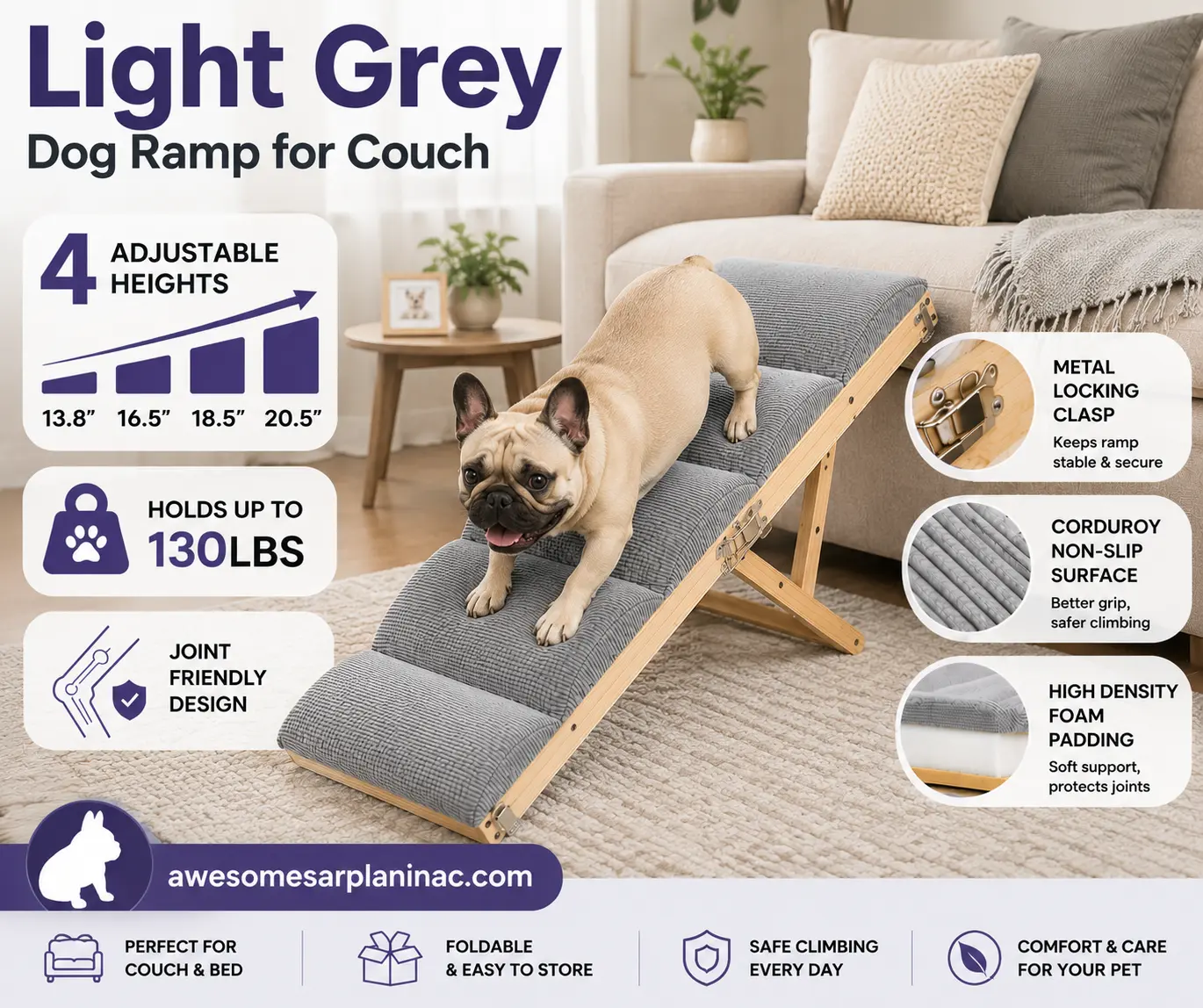
- more than one height option;
- easy-to-clean surfaces are useful for outdoor use;
- replacement grip material can be helpful later.
How to Train Your Dog to Use a Dog Ramp
Start with the ramp flat on the floor so your dog can get used to walking on it first.
Use treats and praise to encourage a few small steps instead of pushing the dog onto the ramp.
Once your dog starts using it comfortably, slowly raise the incline a little at a time.
Keep the training short and relaxed.