
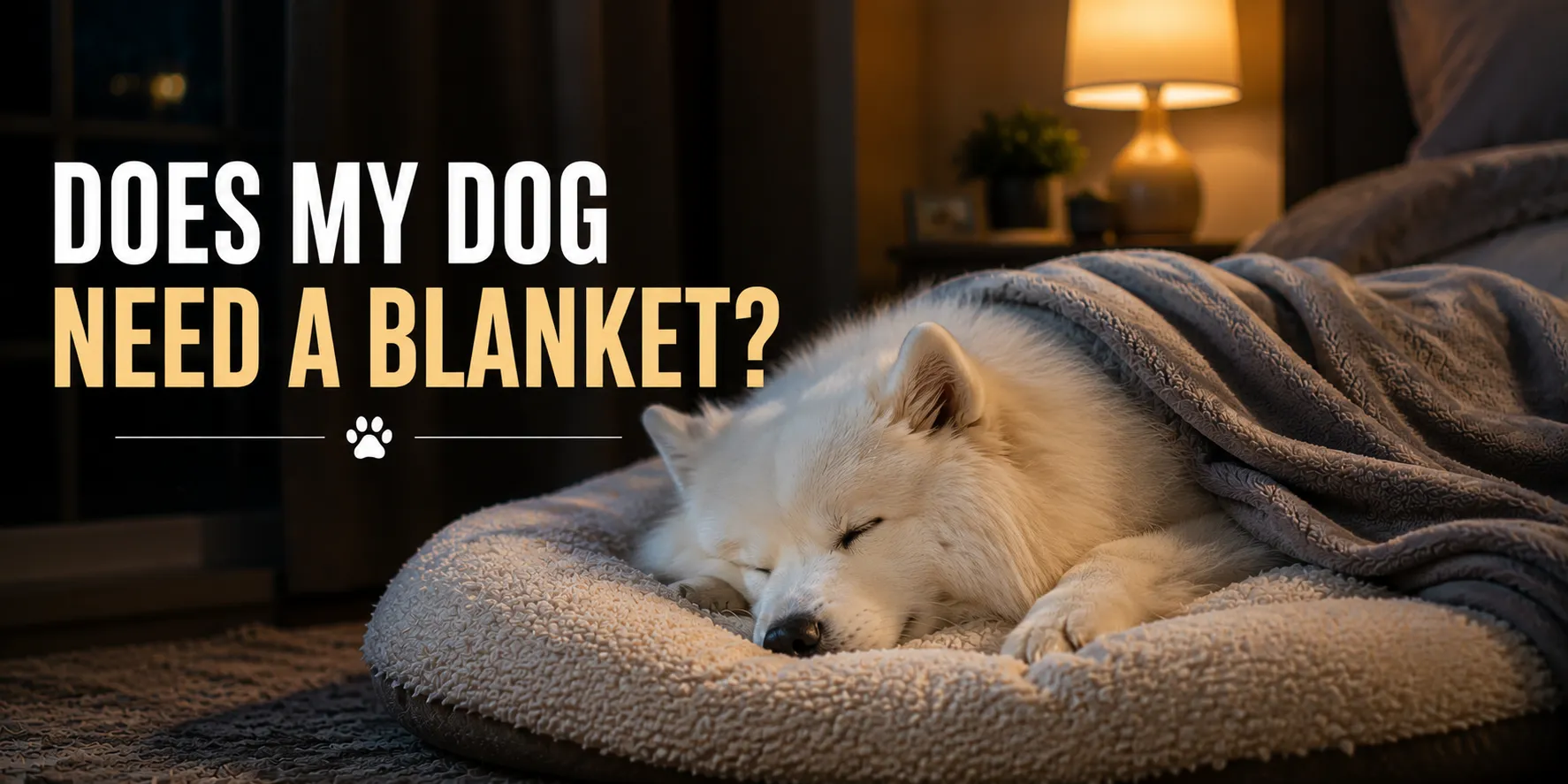

Not every dog needs a blanket at night. Coat type, age, and room temperature play a bigger role than most owners expect.
Dogs with short coats, puppies, and older ones “feel cold”, especially at night. In those cases, the blanket can make resting more comfortable.
At the same time, many dogs sleep perfectly fine without it, even in cooler rooms.
Which Dogs Need Blanket at Night Most
Puppies, senior dogs, and breeds with short or thin coats usually feel cold faster during the night.
Sleeping surface also matters. Tile, hardwood, or concrete floors can feel uncomfortable after several hours of rest, particularly during colder months.
In those situations, an extra layer often creates a more comfortable sleeping spot.
Older dogs with stiff joints often avoid cold floors and look for softer places to rest.
During colder nights, some start sleeping closer to padded beds, rugs, or blankets instead of open floor areas.

Coat Type Changes Everything
Cold nights feel very different depending on coat type.
As an example, I will use my Sarplaninac dogs. This breed has a thick double coat, so colder indoor temperatures rarely cause problems.
But these are mountain dogs, and they do best outdoors rather than inside a house!
A French Bulldog is a completely different story. Short coat and a smaller body can make cold nights more uncomfortable, especially on colder floors or in cooler rooms indoors.
A dog blanket is a must-have!
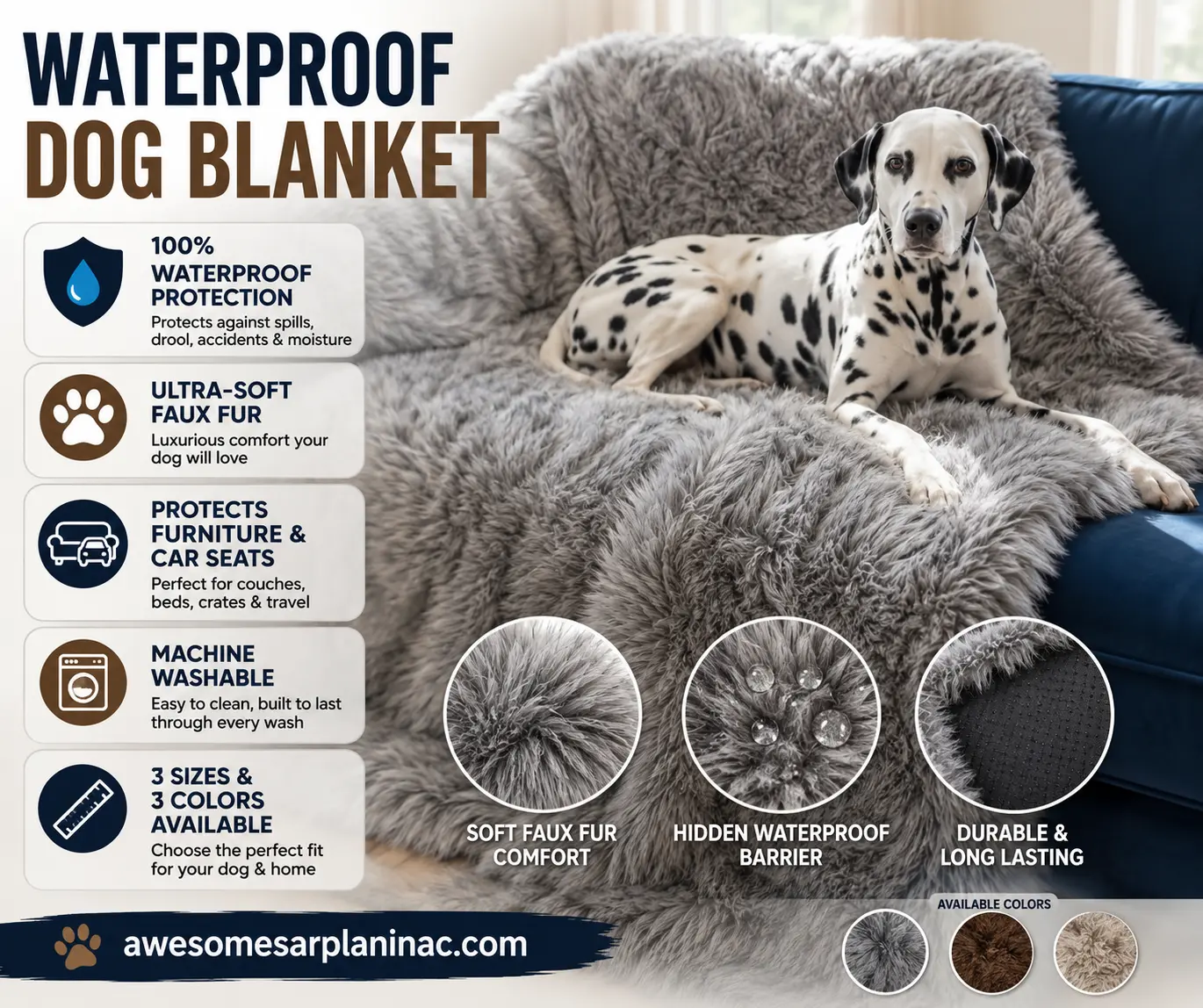
Why Dogs Want Blankets Even in Warm Rooms
Some dogs look for blankets even when the room feels warm enough.
Soft texture, familiar scent, and daily routine often turn the blanket into part of the sleeping area rather than something used only during colder nights.
Dogs move blankets around before lying down. Scratching, turning in circles, or pushing fabric into one spot is common behavior before sleep.

Dog Sleeping Under Blankets: Habit or Comfort?
Before sleeping at night, many dogs circle the bed, push blankets into one spot, or crawl underneath part of the cover.
That behavior usually lasts longer during nighttime rest than short daytime naps.
Others ignore blankets completely and sleep better on colder floors with more open space around them.

When the Dog Blanket Is Not Needed
Not every dog likes sleeping with extra layers.
Some push blankets away after a few minutes, move to a colder part of the floor, or keep changing position during the night.
Room temperature, coat thickness, and sleeping habits all matter. A thicker coat often keeps enough body heat without extra covering, especially indoors.
The material matters too. Heavy fabrics or blankets that hold too much heat can become uncomfortable after a while. Some dogs simply prefer cooler surfaces like tile, hardwood, or thinner bedding.
Sleeping position can also tell a lot. Dogs that stretch out across the floor may be trying to cool down, while curled-up positions usually hold warmth better.
Watching how the dog reacts over several nights usually gives the right answer.
Blanket Size | Recommended For | Weight Range |
|---|---|---|
40" x 30" (100 x 80 cm) | Small to medium dogs | up to 35 lbs |
50" x 40" (130 x 100 cm) | Medium dogs and smaller large breeds | 35–70 lbs |
60" x 50" (150 x 130 cm) | Large breeds and dogs that stretch out | 70–110 lbs |
80" x 60" (200 x 150 cm) | Giant breeds | 110+ lbs |
The Reaction Usually Says Enough
Placing the blanket near the sleeping spot often works better than covering the dog with it during the night.
Pushing it away, moving to a colder surface, or avoiding it usually shows that the extra layer feels unnecessary. Sleeping on top of it or going underneath it often shows that the fabric provides a sense of comfort.
Softer and lighter materials are a better option inside the house.