
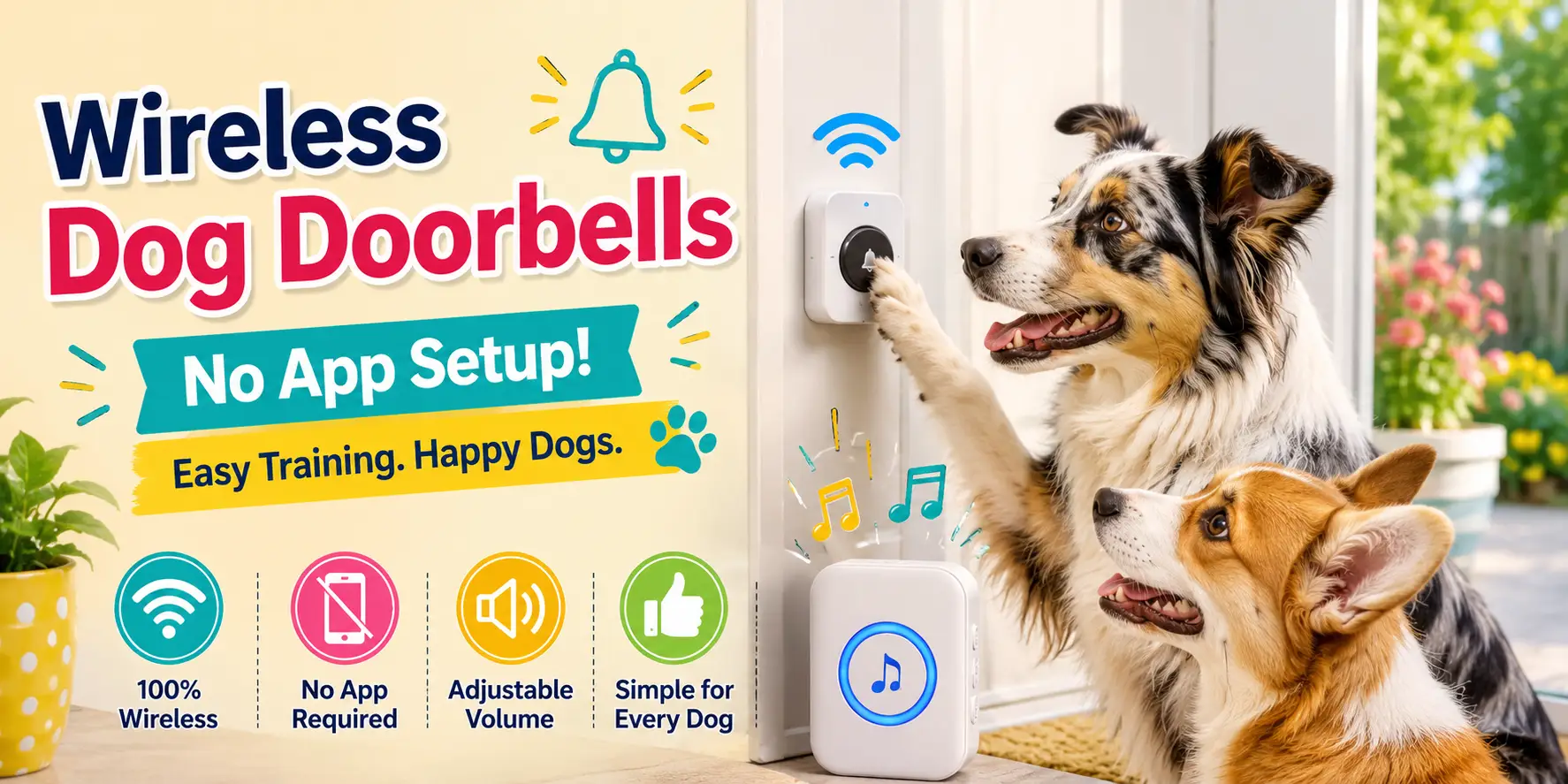

Wireless dog doorbells can make potty training easier, but many newer models now come with apps, phone pairing, and more setup than some owners actually want.
A plug-in receiver and a touch button near the door can be more practical for dog training than systems linked to mobile apps.
Potty training bells with a simple setup may also work better for older owners or homes where several people take the dog outside.
Why Some Dog Owners Prefer Dog Doorbells Without Apps
Many dog owners avoid extra apps for a simple potty training routine. App-free dog doorbells usually need less setup.
Phone alerts are easy to miss when the device stays muted, charging, or far from the door.
Smart dog bells connected through WiFi or Bluetooth can also stop working properly after updates or connection changes.
In many homes, wireless dog doorbells already work well for potty training and asking to go outside.

What Makes a Wireless Dog Doorbell Easy to Use
A few small details can make a wireless dog doorbell feel simple to use instead of frustrating during everyday training.
- Adjustable volume helps in smaller rooms and apartments, where a lower sound level may be enough, while louder settings are easier to hear in other parts of the home.
- A responsive touch button works better during training. Some dogs tap the bell with their nose or paw, so buttons that respond quickly are often easier to use.
- Simple pairing keeps setup straightforward. Wireless dog doorbells that work without app setup, account registration, or extra phone settings are usually faster to install.
- Receiver range matters when the button and receiver are separated by thick walls or several rooms. If the signal drops, the bell may be harder to hear at the right time.
- Many app-free systems use plug-in receivers that stay connected to a wall outlet instead of needing regular charging.
- Training bell placement also matters. Most owners place the button near the door the dog already uses for potty breaks or to go outside.
- Removable adhesive or simple mounting helps when the button needs to be moved during training.
- Simple battery replacement can save time once the button starts getting used every day.

Wireless Dog Doorbells or Hanging Bells?
Traditional hanging bells are simple, but the metal sound may bother nervous pets during training.
Missing the bells can also lead to scratching near the door.
Wireless models use a button and receiver, so the sound comes from another room and is easier to hear across the house.
Both options are commonly used for potty training, and most dogs learn after regular practice and rewards.
Homes Where App-Free Dog Doorbells Make More Sense
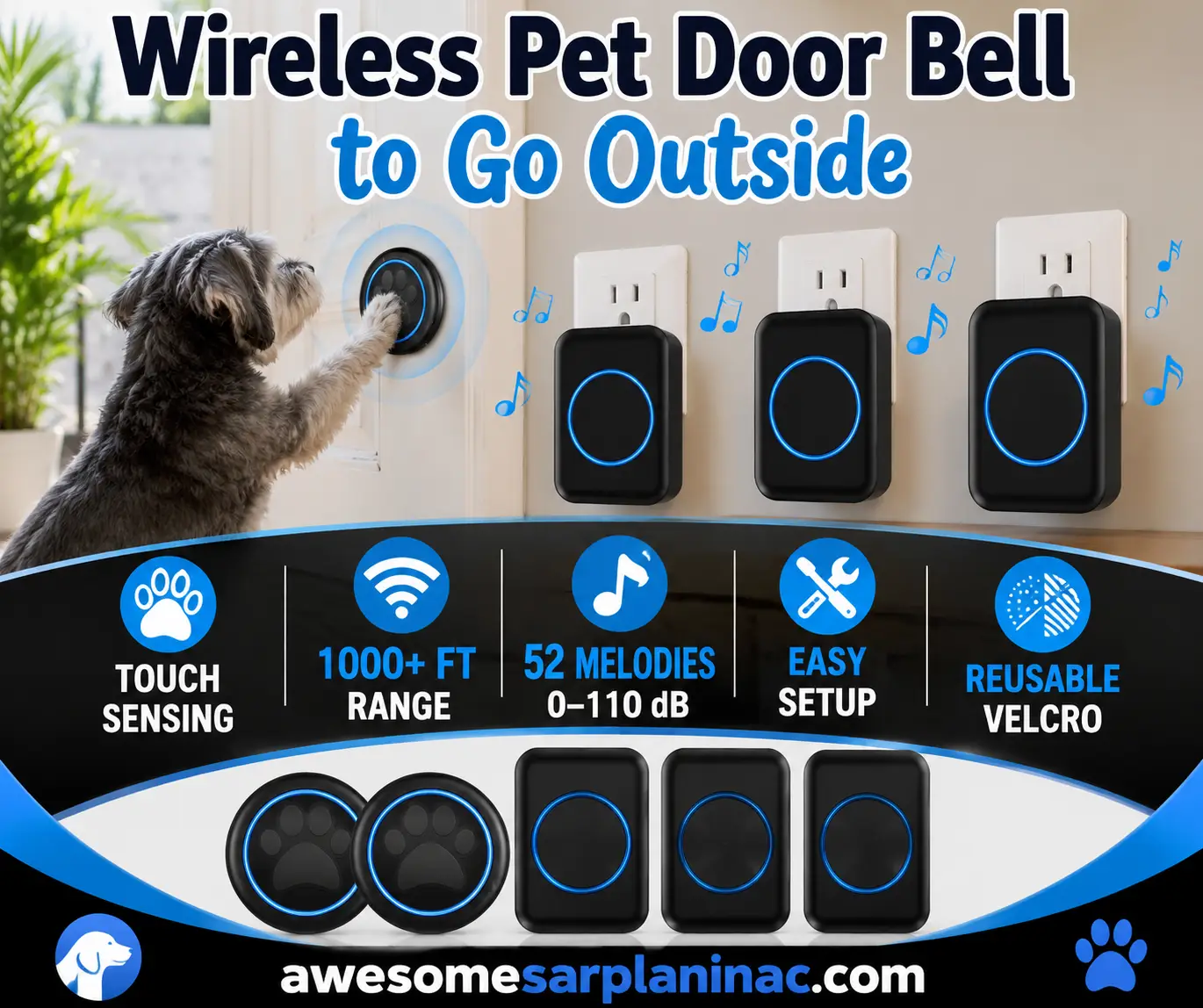
App-free wireless dog doorbells work well in apartments, large homes, and houses with back doors that are hard to hear from across the room.
They are also a simple choice for older owners, families with kids, and puppies learning potty routines.
When barking at the door becomes a problem, a wireless button and indoor chime can make the signal easier to notice without app notifications.
Common Problems With Smart Dog Doorbells
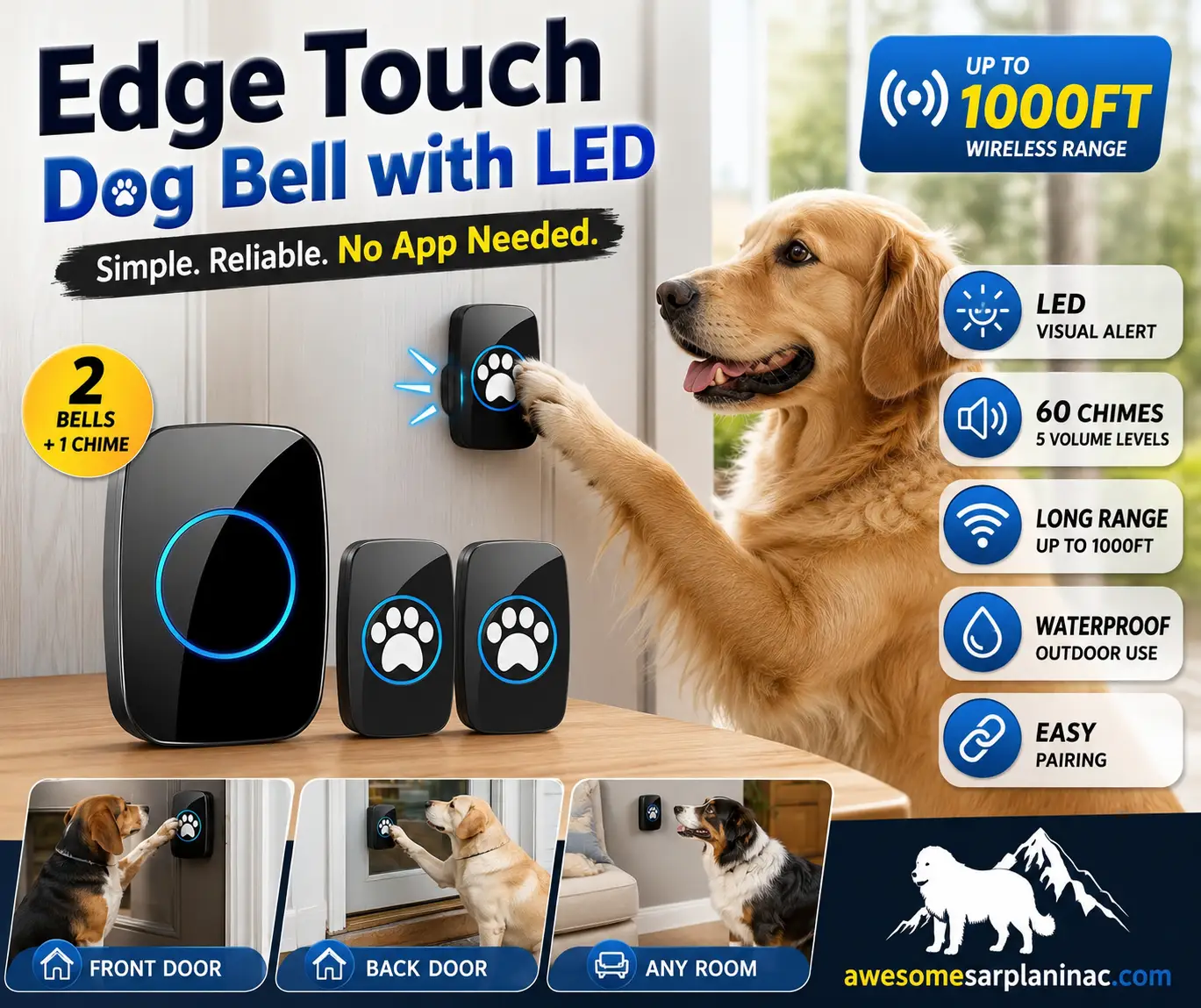
Bluetooth pairing, app notifications, permission settings, and charging can all get in the way when the device should just work.
Some app-based dog doorbells rely on the phone connection, so delayed alerts, reconnecting issues, or missed notifications can quickly become frustrating.
That is the main tradeoff: more features usually mean more things to check.
When the phone is on silent, notifications are blocked, or the connection drops, the doorbell becomes one more thing to troubleshoot instead of a simple signal for potty time.
Are Wireless Dog Doorbells Better for Puppies?
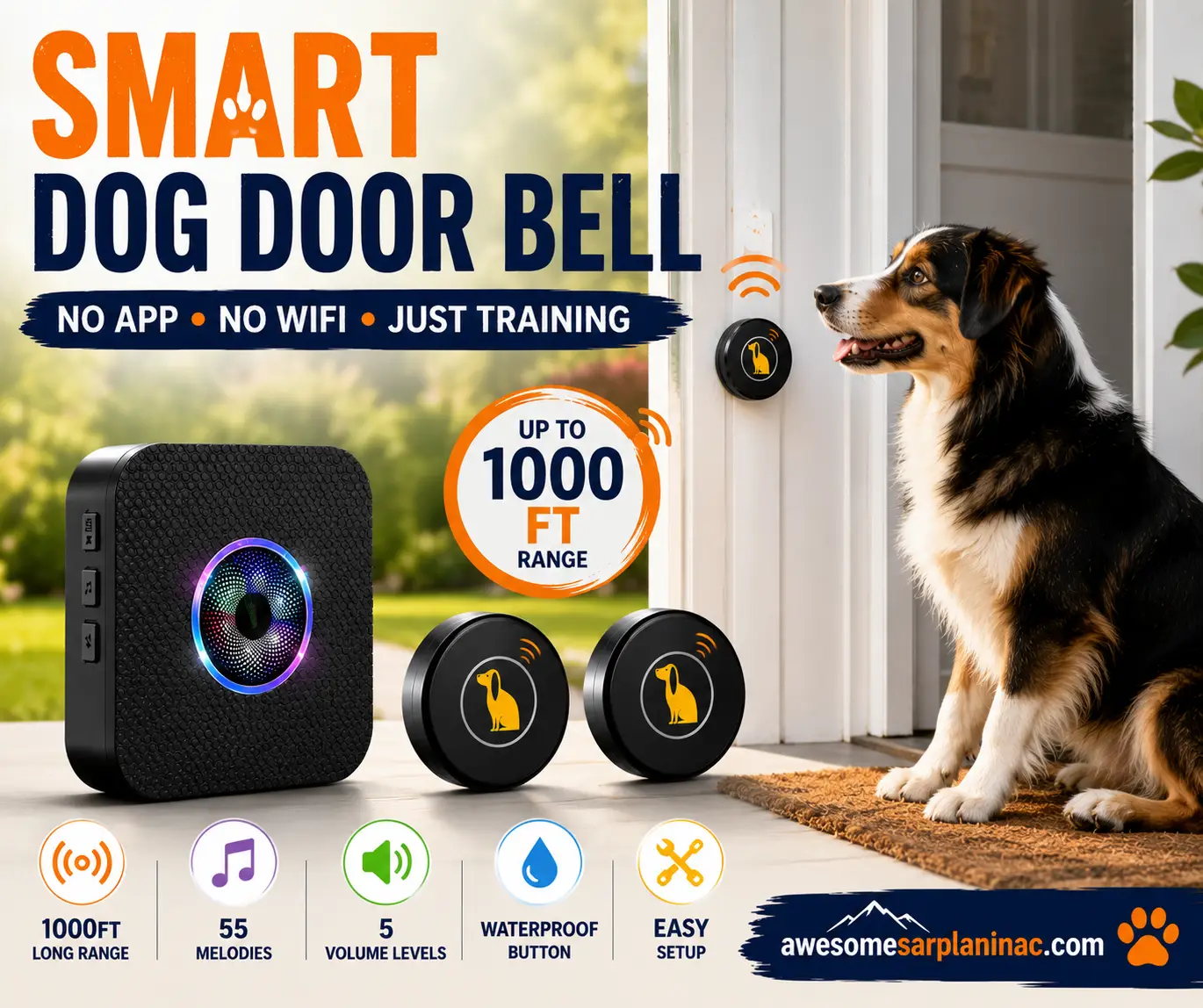
Wireless dog doorbells can help puppies learn a simple way to ask to go outside.
For potty training, a clear cue at the door is often easier to follow than barking or scratching.
Many puppies learn fast when the button stays in one place and each correct try gets praise or a treat.