

A dog wags his tail to express emotional arousal – whether that means excitement, fear, or aggression. Never assume a wag is a friendly greeting.
A high and stiff tail wag often signals a warning, while a low, tucked tail shows the dog is feeling stressed.
Look at how fast and which way the tail moves before you pet him.
These signs tell you if the dog is safe to approach or if you should back off.

The Danger of a Stiff Wag
A slow, stiff wag is a warning that the dog is suspicious – he is looking for a reason to defend his territory.
You will see this tension right at the base of the tail before he makes a move.
On the other hand, a rapid, relaxed wag shows the dog is excited – but look for a loose body to be sure he is ready to play.
If the dog stops a fast wag and suddenly goes stiff, he is about to react.
Physiology
Nerves and muscles connected to the spine move the tail. When the dog wags, the brain sends a direct signal to those muscles.
Just like humans, different parts of a dog’s brain handle different actions. Tail wagging works the same way.
It is a simple fact of nature: the right side of the brain controls the left side of the body, and the left side controls the right.
Why Dogs Wag Their Tails?
Dogs wag to show how they feel. Here are the primary reasons:
- Happiness and Excitement: A loose, wide wag means the dog is relaxed and joyful.
- Fear and Anxiety: A tail tucked between the legs with short, nervous wags signals fear. Watch the whole body to understand if the dog is scared.
- Seeking Attention: This wag is a request. He wants to play, go for a walk, or simply wants you to pet him.
- Communicating with Others: Dogs use the tail as a signal flag. A right-biased wag indicates positive, friendly intent, while a left-biased wag signals hesitation or avoidance.
- Dominance and Warning: A stiff, rapid wag indicates high arousal and potential aggression. A high, rigid, slow-sweeping tail is a dominance display – a clear warning to keep your distance.
- Greeting: A steady, relaxed wag upon contact indicates familiarity, trust, and a strong bond.

Sarplaninac Tail
When you meet a Sarplaninac for the first time, look at the head and the tail.
Anatomy is important, but “these two define” the breed and set it apart.
This is an unwritten rule among breeders – here is what the official standard says:
“The tail is long and reaching at least the hock joint. The topline of the croup is sloping gradually and evenly into the tail. Strong at the root, tapering to the tip, with feathering along the lower side.
Carried in a slight curve like a sabre; when the dog is excited, the curve is accentuated and the tail may be lifted above the line of the back.” [¹]
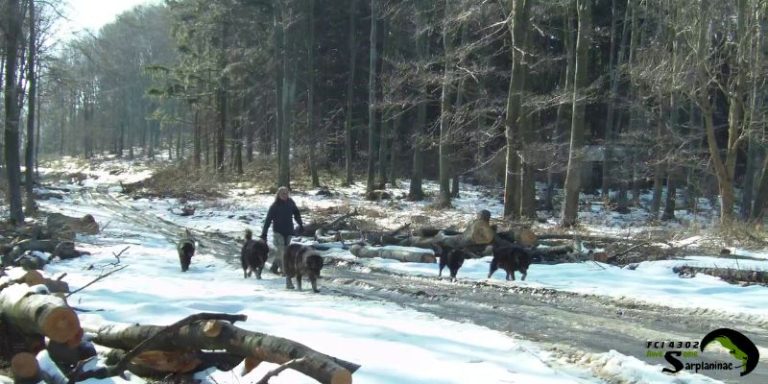
Look closely at the photo below. I will show you how the Sarplaninac carries its tail when calm, alert, or afraid.

Final Word
Tail wagging is more than a simple motion – it is a signal to other dogs and nearby people.
The dog may be excited, scared, or seeking attention – but never judge by the tail alone. Check his “body language” before getting close.
Most importantly, always ask the owner before petting the dog you don’t know. Trust me, asking beats getting bit every time.