
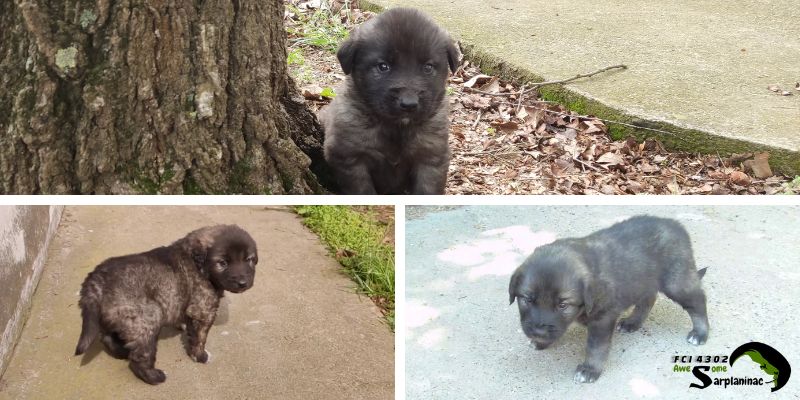

A growl isn’t the start of a problem; it’s the result of signals you’ve already missed. Most mistakes happen because owners pay attention to a wagging tail while ignoring a locked stare or a sudden ‘freeze’ in movement.
To know what a puppy is about to do, look at the tension in its neck and how it shifts its weight.
A dog that is stiff as a board isn’t playing, no matter what its tail is doing.
You have to see that tension to know if it’s just high energy or a fight waiting to happen.
Is it Play or a Fight Starting?
Real play is just loose energy. You’ll see the puppy bounce and wiggle, which is its way of saying “party time.”
The most common signal is the “play bow” (front end down, rear end up), but this only counts if the puppy is ready to spring away. A hard stare while frozen in place means it is cornering a target.
A “soft” face is also key – the mouth should stay loose and the eyes blinking. The moment the mouth closes tight and the blinking stops, the mood has shifted from friendly to “being on guard”.
This is where it stops being fun; you should step in before the puppy leans forward for a real snap.

Grimaces and Barking
You can tell it is just a game by the grimaces the puppy makes. A loose, open mouth and a scrunched-up nose mean there is no real aggression.
Along with these looks, high-pitched yips and short barks help keep things friendly.
However, the tone changes the moment the barking becomes deeper or more constant. Our Sarplaninac puppies usually react this way when a neighbor or a stranger appears at the gate while they are walking in the large yard.
It often happens that ‘misunderstandings’ occur among them, where the puppy starts baring its teeth as a defense mechanism.
This is a clear sign that we must pay attention; otherwise, this behavior can turn into a bad habit that eventually results in a fearful dog.
Signs Your Puppy Has Found Something!
If the puppy stands with a horizontal tail and a body tilted forward, it is clearly watching something nearby. This “fixed” gaze and forward lean show that the young dog intends to investigate whatever has captured its attention.
As an example, I’ll mention our Mila FCI 4302. I threw a small pebble in front of the puppy and she immediately started barking, then slowly approached to sniff it; after a few seconds, she finally relaxed, seeing there was no danger.
You should encourage this by taking the pups to different environments so they can get used to new sights and sounds.
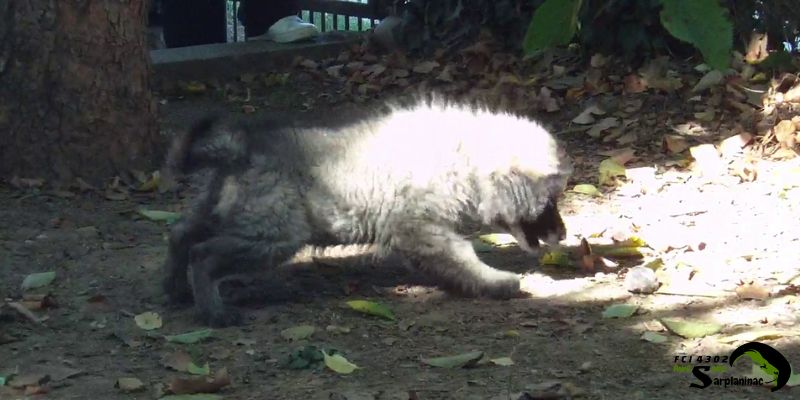
The Ways Puppy Shows Joy
When the puppies approach, the bodies often curve into a “C” or “S” shape, showing relaxation.
A wide, sweeping tail wag is a primary indicator; often, the movement is so intense that the entire hind end wiggles, commonly called a “wiggle butt.”
A relaxed, open mouth with a lolling tongue shows that the puppy is at ease.
The eyes appear bright but soft, with relaxed eyelids and gentle eye contact that signals trust.
The puppy keeps its ears in a neutral position, neither pinned back in fear nor pitched forward in high alert.
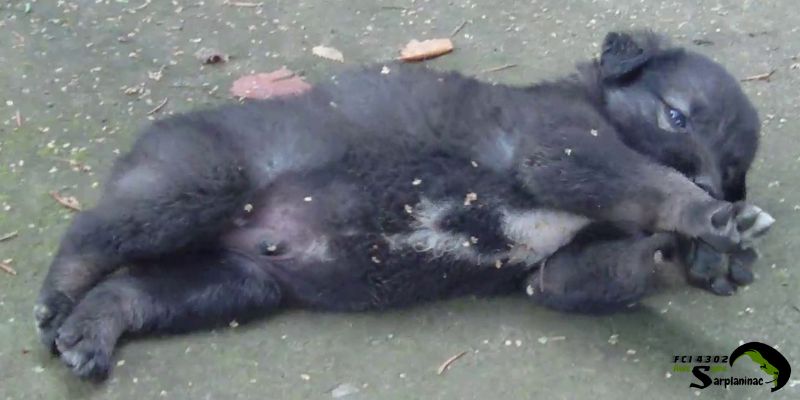
Total trust is shown when it rolls over to expose the belly.
Recognizing Fear
To help your puppy move past fear, you must recognize signs. Unlike the loose “S” curve of a happy dog, a fearful one will look stiff and tense.
If the puppy pins the tail or crouches, it is simply trying to avoid conflict.
Watch for the “Whale Eye” – this happens when the young dog keeps its head still but follows a threat with its eyes, showing the whites in a half-moon shape.
Physiological changes like sudden panting or shaking, when it isn’t hot, indicate a spike in cortisol and adrenaline. The pup will often try to turn their heads away or hide behind your legs to create distance.
Recognizing these signals is the first step in helping the puppy build real confidence.
I will tell you what we do in such situations. We immediately switch to individual training and take appropriate measures to successfully resolve the problem.
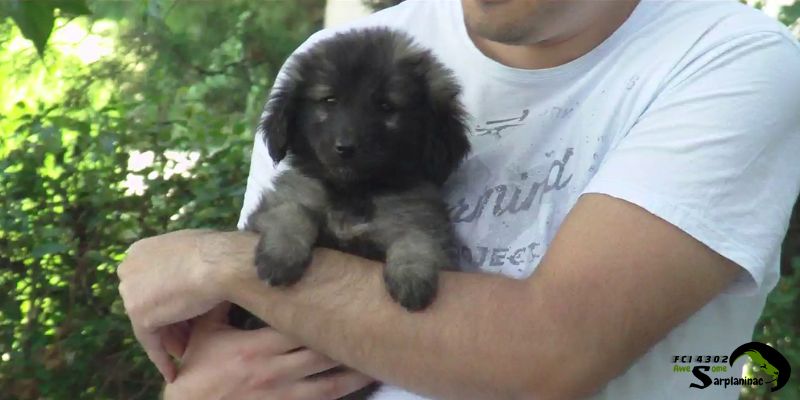
Conclusion
Understanding puppy body language is about seeing what is actually happening in front of you. A playful “S” curve or a lowered posture tells you exactly how to adjust your approach.
Recognizing these signs allows you to step in before fear turns into reactivity.
Thank you for reading. If you pay close attention to the puppy, it is always telling you exactly how it feels.


