
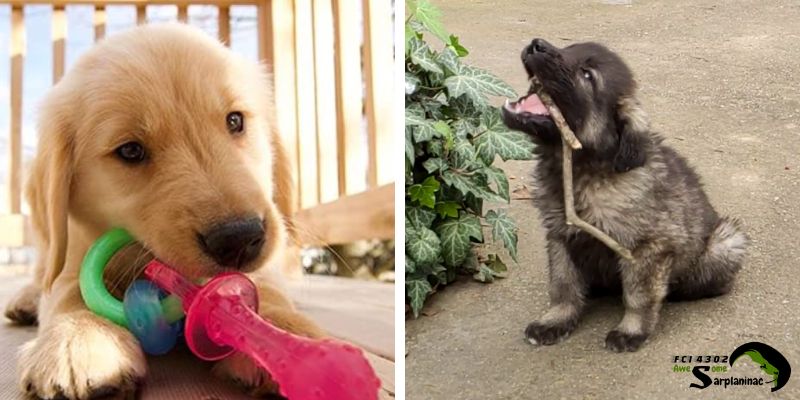

Coming home to a chewed-up couch or ruined shoes is a nightmare.
You buy a lot of toys, yet a puppy ignores them and goes straight for furniture or your favorite book.
This isn’t just a bad habit, it usually happens because of teething pain, boredom, or natural curiosity.
If you’re tired of the chewing, you need to know why it’s happening so you can swap the item for a toy.
Teaching Your Puppy “No”
If you catch the puppy chewing on your shoes or the sofa, say ‘No’ in a firm voice. You don’t need to shout, but you must be serious.
It’s hard to stay serious when the puppy looks at you with his big eyes, but if you give in, the rules will never stick.
Every time you stop the puppy from chewing something he shouldn’t, immediately hand over the toy.

Keeping Items Out of Reach
Puppies chew out of curiosity and to soothe sore gums, so the easiest way is to keep household objects out of reach.
Start by picking up everyday items that attract the puppy’s attention. Shoes, books, cords, and small belongings are “prime targets” while those new teeth are coming in.
Walk through each room and hide anything that could end up in his mouth.
For things you cannot move, like furniture legs, baby gates are great to protect them when you’re not there.

Why You Should Rotate Toys
If you leave a pile of toys on the floor, the puppy will quickly lose interest.
Once those toys become boring, the pupy will look for something new to bite, like furniture or shoes.
You can stop this by keeping most toys hidden and only offering two or three at a time.
Every few days, take the old ones away and bring out ‘new’ toys from the closet.
Choosing the Right Toys
Small puppies need soft plush or fabric toys while their gums are sore from teething, but you must watch them closely so they don’t tear the toy open and swallow the stuffing.
As the puppy’s jaw gets stronger, switch to tough rubber or nylon toys.
For high-energy dogs, puzzle toys and treat-dispensers are even better because they keep the pup occupied and away from your furniture.

Why One Toy Isn’t Enough
When choosing toys, look for different materials so the puppy finds “everything he needs” in the toy box.
Switching between hard rubber, braided rope, and textured dental toys gives the dog a different feel under the teeth, which keeps him interested.
You don’t have to drop everything on the floor at once (one by one).

Using Treats in Puppy Toys
A plain rubber bone usually isn’t enough to stop a puppy from looking for trouble.
To make the toy last, smear some Xylitol-free peanut butter or drop a few kibbles inside the grooves. [1]
This turns the rubber bone into a puzzle that keeps them busy much longer than a plain toy would.
Pro tip: Avoid doing this with rope toys, because they are tough to clean and hold bacteria. Stick to hollow rubber toys that you can toss in the dishwasher afterwards.
Conclusion
Training the puppy to choose toys over other objects takes time. When you see that focus on the right thing, make sure to reward him with praise or a small treat.
Those positive moments are exactly how he learns the difference between toys and your belongings.
Raising puppies is a “big job”, but seeing them grow into well-behaved dogs makes all the effort worth it.


