
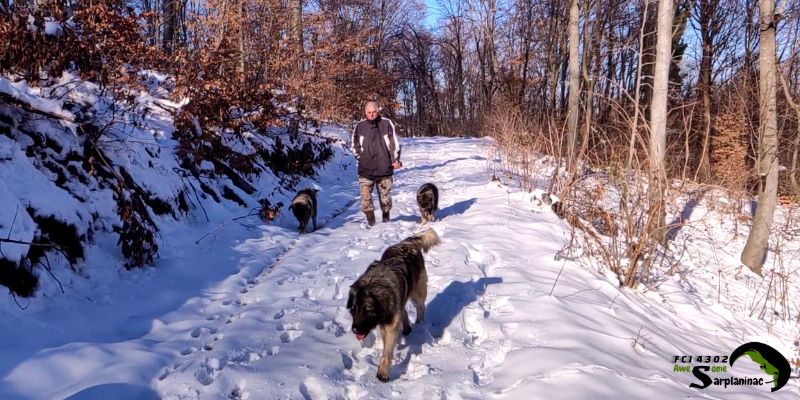

There’s no simple “yes” or “no” answer, it depends on several factors. But in our experience, if you have a healthy Sarplaninac in its prime years, long daily walks won’t harm them.
Still, a few things matter if you want to keep your dog happy and lower the risk of injury.
Below, I’ll break down what to watch for, when to change your routine, and how to make long walks good for your Sarplaninac instead of risky!
Pay Attention to the Following …
How much you should walk your dog depends on a few things:
- Breed and Size of the Dog;
- Age;
- Health Condition;
- Weather Conditions;
- Temperament.
Size of the Dog (Breed)
The Sarplaninac is a dog above average size, with minimum heights of 56 cm for males and 54 cm for females. There is no upper limit!
These are exceptionally intelligent dogs who make independent decisions about whether it’s time for action or not. They don’t like rules, especially when it comes to obedience training, and stubbornness just comes with the breed.
But they’re lazy, too!
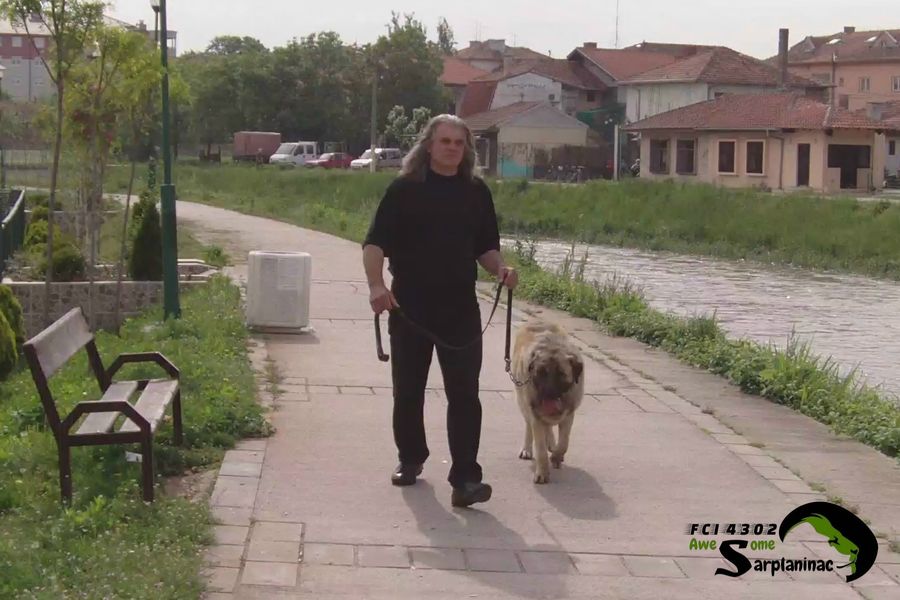
You can easily conclude that a true Sarplaninac won’t enjoy long walks without freedom (which means walks without a leash).
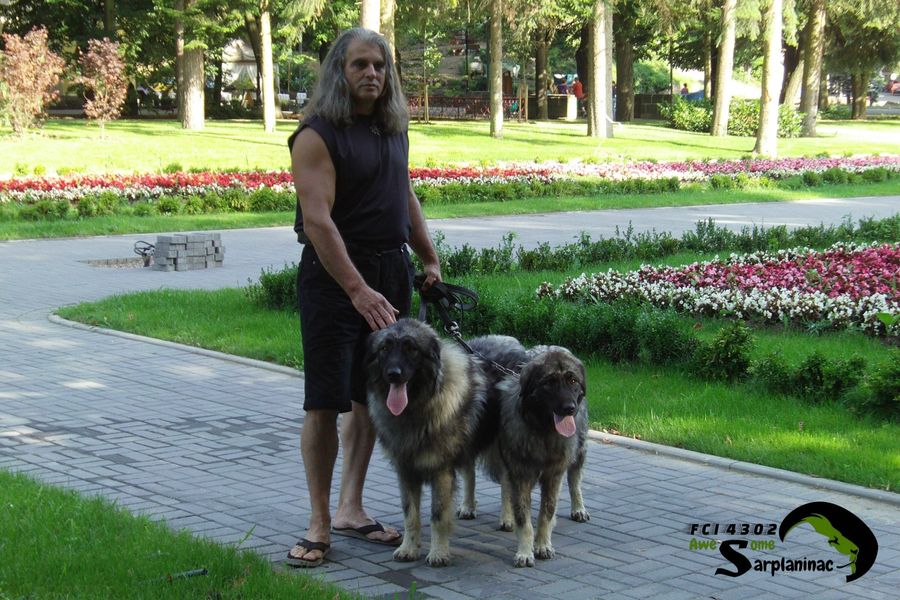
Age
Puppies (Under 3.5 Months): A Sarplaninac puppy should not leave your yard until they complete their vaccination schedule! During this time, stick to leash training – getting them comfortable walking beside you in the yard.
Young Dogs (3.5 Months – 1 Year): Daily long walks (5 km+) are not recommended at this stage. Why? Your dog is still growing, and excessive exercise (just like excess weight) can lead to elbow and hip dysplasia. Instead:
- Keep daily walks short (around 500 m).
- One longer walk per week is fine, but don’t overdo it.
Prime Conditioning (1 – 3 Years): This is when your Sarplaninac gets stronger and can go further each week. You’ll see their limits …
Adult Dogs (3+ Years): Once he’s grown, a healthy Sarplaninac with no joint issues can handle long daily walks (especially if they have excess energy).
Health Condition
Sarplaninacs have two areas that need extra care – elbows and hips. These dogs are strong, but their joints can be a weak point, especially while they’re growing.
Here’s something I often see: We all love those fluffy, chubby “teddy bear” puppies – but how many of us stop to think: “Can those little joints handle all that extra weight? And what about their pasterns?
It’s easiest for vets to prescribe some therapy and say it’s all genetics.
Weather Conditions
The Šarplaninac got its name from the Šar Mountains.
Their thick coat, muscular build, and endurance all came from surviving harsh mountain conditions!
So the winter weather and moderate continental climate are ideal for them.
Extreme heat is a different story, though. In tropical climates or during summer heatwaves (above 35°C/95°F), only take long walks in the early morning or late evening when temperatures drop.
If the ground is too hot for your hand to touch for 5 seconds, it’s too hot for their paws.
These dogs have a double coat, but when it’s very hot outside, their coat changes and gets short.
Temperament
The best way is to look at a single litter – take two male/female puppies, for example.
The first puppy is all about food and simply doesn’t want to waste energy. During the day, it mostly rests, watching its littermates closely but rarely playing with them.
The second puppy is full of energy! Its tail never stops wagging, it’s curious about everything, and as I like to say, it just can’t stay in one place for long.
When bored, it starts playfully nipping at its siblings, hoping they’ll join in.
We might call the second puppy “more temperamental,” but that just means training him takes a different approach compared to the first puppy.
The goal? A well-balanced dog in the end!
The first dog will walk calmly on a leash, almost reluctantly. The second dog will pull, eager to charge ahead.
My advice? In both cases, keep a relaxed pace until you reach your destination.
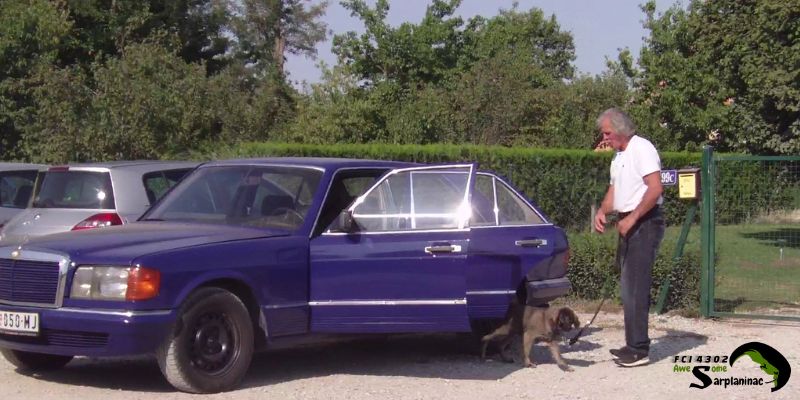
Long Daily Walks (5 km and more)?
The Sarplaninac’s main job is defense and protection – guarding livestock, their owner (property/ safety of family members).
They just watch closely and “step in” when something’s wrong.
Unlike a Border Collie or Belgian Malinois, they don’t need to chase or circle to do the job. Instead, they patrol and keep watch, staying close to their “flock” (whether that’s sheep or their human master).
Because of this, a 5 km walk isn’t a major challenge for them.
Sarplaninacs are lazy by nature, saving their energy for when it’s actually needed! The moment they sense potential danger, everything about them changes.
You’ll see their eyes lock on, ears perk up slightly, and it’s just a matter of time before they move into action.
That’s their instincts kicking in (proof that even on a walk, they’re always on duty).
Conclusion
Our Recommendation: Plan long walks 2-3 times per week, with at least one rest day in between, and keep the things we mentioned earlier in mind.
There’s no fixed (walking) time or distance that applies to all Sarplaninacs! As an owner, you need to watch how your dog’s doing and adjust from there.
If you check our YouTube channel, you’ll notice that our walks with the dogs are usually short and close to home.
Our dogs have two large yards to run around in, but I’ve rarely seen them playing for most of the day.
Their “playtime” usually starts the moment someone approaches our property, followed by the expected (and loud!) reaction.


