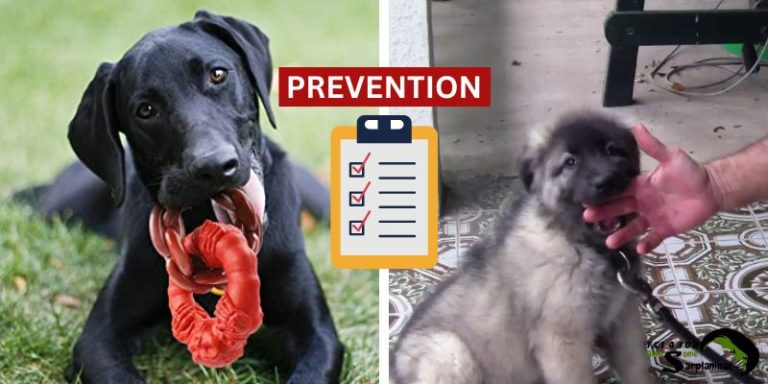

Many new owners rush out and buy expensive, fancy toys before they even pick up their puppy. But as a son of a breeder, I can tell you that buying expensive things before four months is just a waste of money.
In the beginning, your puppy is a “land shark” who chews on everything he can find. But the real trouble begins at four months when he starts teething.
That is when your furniture is in “danger” and when buying better toys actually makes sense.
I’ll show you what to use for those first few months to save your shoes, and why you should keep your wallet closed for a while.
Give Your Puppy a Job
Giving your puppy the right thing to chew on isn’t just about fun. It is about protecting your home and teaching him the rules from day one.
Saves Your Furniture: It’s simple. If the puppy has a bone he actually likes, your table legs are safe. Giving the toy means giving him a job to do.
Soothing the Gums: Teething hurts and makes the puppy feel bad. When he bites down on a firm toy, that pressure helps stop the pain in his gums.
Chewing: It really tires a dog out. Ten minutes of chewing wears the puppy out more than a long walk.
Playing: The right toys keep the puppy busy on his own. It is the first step in letting him know that he doesn’t need you around all the time.
Dog chew toys take away the pain from teething and save the furniture. Chewing on them tires the puppy out and rubs the gunk off his teeth at the same time.
In the end, your shoes stay safe and he finally learns how to calm down alone.

Safe Puppy Toys and Home Protection
Anything left on the floor is a target. Move shoes to closed closets, secure trash cans with locking lids, and lift any tablecloth or curtain within reach.
A playpen is the easiest way to prevent trouble from the very beginning.
Since you can’t just forbid biting, you need other options. Use solid rubber toys because they won’t break into small pieces.
The “swap” method is the best way to train your puppy. If his teeth go for a chair leg or a sleeve, don’t just shout.
Give him the toy.
Avoid Old Shoes and Fraying Ropes
Never give the puppy old shoes or slippers to play with. He can’t tell the difference between an old sneaker and a new one, so you’re just teaching him to chew your new things.
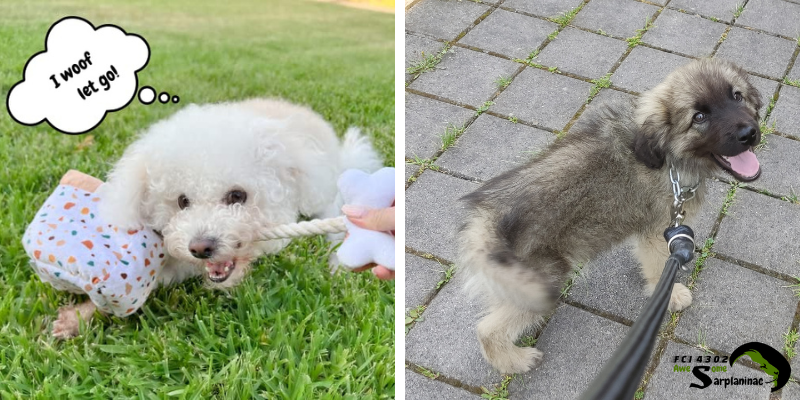
Cotton rope toys are great, but they aren’t safe to swallow. If the puppy rips the rope and eats the threads, it can block his stomach. Always watch him and take the rope away if it starts to break.
Don’t skip playtime, but keep it consistent. Use only their toys for games so they don’t learn that your bedding or curtains are fair game.
If you come home and see a chewed-up sofa, save your breath. Don’t punish him later, because by then, he won’t even know why you’re mad. [1]

How to Choose the Right Toys?
Choosing toys is not just about fun. It is about safety and protecting your house.
When the puppy has nothing to chew, he will find his own “toys,” like your furniture or power cables. To keep him safe and make sure the toys don’t break, you must be careful about what you buy.
Get the size right. Avoid anything small enough to be swallowed.
Buy things that last. Forget cheap plastic or thin cloth. Look for solid rubber or toys with strong seams that won’t rip when he chews on them.
Conclusion
- Months 2–3 (The Arrival): Use soft plush toys to make him feel safe and simple puzzles to keep him busy.
- Months 4–6: This is when teething begins. New teeth cause gum pain, making the puppy chew everything. Switch to good rubber toys.
- After 6 Months: His bite gets much stronger. Don’t use thin plastic and soft materials that the puppy can now break and swallow.
I hope these tips help you choose the right toys for your puppy.
Sources:
- O igračkama – Štene (more information).