


Loose leashes and a pouch with treats usually stop the pulling and charging before a reaction starts.
Offering a reward the second a dog spots a target keeps the focus on the owner instead of the street.
Meanwhile, quick turns with a “Let’s Go” command create enough distance to turn away before the leash snaps tight. Do not yell or jerk the lead; this sends tension to the dog.
Train in quiet areas first to pass busy sidewalks without dog barking.
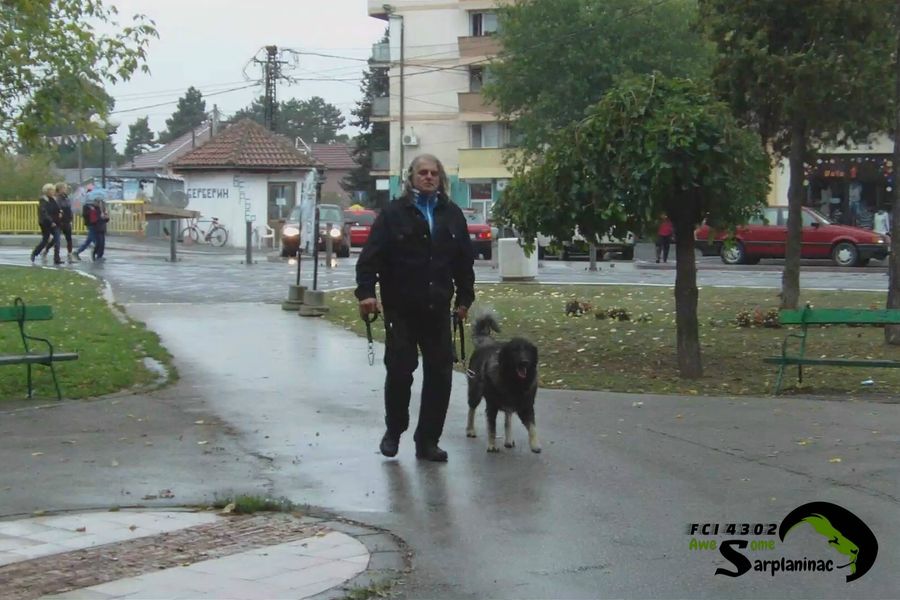
Training
Without walks, boredom behind the fence often leads to unwanted barking. It is much harder to teach “Quiet!” or “Wait!” if the pup has been charging at the gate all day.
A short walk on soft grass is ideal before training. Protecting developing hips and elbows is the priority during these early months.
You must establish yourself as the authority from day one. Once you have the pup’s attention away from the street, you can start the lesson. Reward silence during walks with food or praise.
Keep Walks Short
Increase the distance only when the dog stays quiet on the leash. If the barking starts again, the street is too busy or the walk is too long.
Find an empty field or a dead-end street if the barking gets worse. A park is the worst choice – it is full of smells and other dogs that trigger a reaction.
You need a spot with no distractions so the dog can actually “hear” your commands.
Working in a secluded area prepares the dog for busy streets later. This teaches them to ignore the environment and follow your lead.

Use the Right Gear
A harness is for pulling, while a collar is for control. If the dog is already barking and charging forward, the harness only gives them more power to pull you towards the street.
You need a proper collar that allows you to guide the head and stop the reaction immediately.
An E-Collar works when your voice no longer “reaches the ears”. Use the pulse to break the stare at a passerby or another dog. Once the head turns and he moves with you, let go of the button.
Always reward the good behavior. As soon as the barking stops and the dog follows your lead, use a treat. This shows that staying calm is the only way to get a reward.

Change the Route
Moving to a different street will not stop the barking, but it lets you see how your dog reacts when he is not on his own turf.
A different road reveals if the dog is curious about his surroundings or just scanning for a ‘target’.
Watch the tail – high and stiff or tucked low? This position shows confidence or a lack of it in a new area.
If the neighborhood is too busy, change the time of your walk. Go out late at night or very early in the morning to avoid the mess of other people and dogs.
Stop and Stand Still
If the dog starts to bark, stop walking and wait. Don’t pull or yell; just stay in one spot. Standing still shows that barking gets him nowhere.
Don’t move an inch as long as he is focusing on a target.
Wait for the leash to go slack before you move again. Once the noise stops, start walking. If he starts up again, you stop.

Avoid Punishment
Don’t hit or yell at the dog. Harsh punishment only adds more tension to the leash and makes everything worse. You are just losing your temper while he is locked onto a target.
If you ignore this, you are heading for trouble. Today, everyone has a phone, and “Big Brother” is everywhere. If a passer-by sees you hitting the dog, they will record you and call the police.
You can end up with a huge fine, or they can even take your dog away just because someone shouted “poor dog.”

Get a Second Dog
The second dog can change the energy during a walk. With two on the leash, they stop locking onto every stranger.
Having a partner to follow makes them less reactive to what is happening on the street.
Start by walking them separately, then join them together.
The big question is the combination: Two males or two females? Male and female?

Be Prepared for Setbacks
Progress isn’t always a straight line. There will be days when the barking returns despite your work. Don’t waste time being discouraged; just get back to the basics and stay in control.
If standard methods fail, the problem is usually a lack of clear leadership.
That is why it is important to have a balanced dog! Our kennel does serious training of Sarplaninac puppies and dogs so that future owners don’t have such problems.

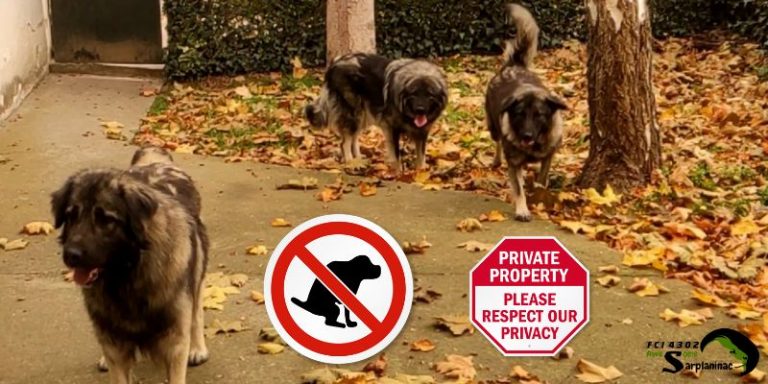

Socialization
The dog that never leaves the yard becomes reactive to every person and animal passing by. Prevent this through socialization by building familiarity from the start:
Rewarding silence during walks leads to a well-balanced dog. Punishment like leash jerks during a barking fit usually backfires.
You must start working with the pup from the beginning. It takes time and daily work to teach a young dog to pass people and other animals without reacting.