


A visible ID tag is the first line of defense if a dog ever gets lost.
While I rely on microchipping for permanent security, a readable tag is often the fastest way to ensure a quick return without needing a vet or a scanner.
It is the most direct link between a finder and the owner.
However, after looking at countless options, I’ve realized that choosing the right one can be frustrating.
Many tags are poorly made, hard to read, or simply don’t last under real-world conditions.
I have narrowed the selection process down to 10 practical steps, focusing on durability, legibility, and what actually works in the field.
This guide is designed to help you cut through the marketing noise and pick identification that lasts.
1. Consider Your Dog’s Needs
The first step is to match the tag to your dog’s size and activity level.
High activity requires a secure attachment that withstands constant movement and environmental exposure.
Weight is also a factor; smaller breeds need lightweight options to avoid discomfort, while larger ones can handle thicker metal plates.
If your dog is bothered by the sound of metal hitting a collar or water bowl, look for noise-reducing options like silicone silencers or soft fabric tags.

2. Pick the Right Material
Material selection determines the lifespan of the identifier. Here is how the most common options compare in real-world use:
Stainless Steel: The gold standard for durability. It is highly resistant to scratches and corrosion, making it the best choice for dogs that swim or spend a lot of time outdoors.
Solid Brass: Extremely tough and long-lasting. While it develops a dark patina over time, many owners prefer its classic look and natural antibacterial properties.
Aluminium: Often sold in many colors, but it is a soft metal. The attachment hole tends to wear down and thin out over time, which can lead to the tag snapping off and being lost.
Nylon or silicone tags are lighter and eliminate noise, making them suitable for dogs sensitive to jingling.
If you walk your dog in low-light conditions, reflective coatings or materials increase visibility.
While enamel designs and custom shapes allow for personalization, ensure they do not compromise the legibility of the engraved information.
The priority is a balance between a material that lasts and a design that remains clear under daily wear.

3. Decide What Information to Include
The goal is to provide enough information for a quick return without cluttering the surface.
The phone number and the dog’s name are the absolute essentials. Adding too much detail, like a full address, can make the font smaller and harder to read from a distance.
If space allows, a second contact number or a “Microchipped” note can be useful.
The key is to keep the text large and clear!
Deep engraving is the only reliable method, as handwritten information or cheap prints will quickly fade and become useless.

4. Correct Size
It should be large enough for clear reading from afar, ensuring their safety and swift identification if they ever get lost.
But it shouldn’t be so cumbersome that it weighs them down or becomes a snag hazard.
The key is finding the right fit, proportional to your dog’s size.
Specific Dimensions by Breed Size
To ensure the information is readable without the metal becoming a nuisance, follow these standard sizing guidelines:
Small Breeds (up to 10kg): Sizes between 20mm and 25mm (0.8″ – 1″) are ideal. These are lightweight and won’t interfere with the dog’s movement or comfort.
Medium Breeds (10kg – 40kg): A 30mm to 32mm (1.25″) provides enough surface area for a large, clear font while remaining proportional to the collar.
Giant Breeds (40kg+): Widths of 38mm (1.5″) or larger are recommended. For very large dogs, “slide-on” plates that sit flat against the collar are often better than hanging tags, as they eliminate jingling and the risk of snagging.
5. Think About The Engraving
The technique used to mark the metal is just as important as the material itself.
Mechanical Deep Engraving: Deep-cutting tools carve into the metal at a depth of 0.3mm to 0.5mm. Even if the surface gets heavily scratched or worn, the physical indentation ensures the text remains readable for years.
Laser Etching: High-powered beams burn the information onto the surface. While the result is very sharp, high-contrast black text, the laser cut must be deep enough to prevent friction from fading the marking over time.
Shallow or surface-level marking should be avoided, as it can wear down quickly and become impossible to read.
The focus should be on a method that creates a permanent, physical indentation in the metal.
6. Prioritize High Contrast
Contrast is essential for readability. The text must stand out clearly against the background of the material to be useful in an emergency.
A classic combination is a light-colored metal with dark, deep-filled text, or a dark-coated tag with light, laser-etched lettering.
Avoid combinations where the text color is too similar to the material, as these become nearly impossible to read under poor lighting or if the tag gets scratched.
If the identification is reflective, ensure that the contrast remains sharp when light hits the surface.

7. Get Two Tags
Having two tags is a practical way to make sure a dog stays identifiable if one gets lost or the attachment breaks.
This is particularly useful during travel or in areas where equipment might easily snag and pull off.
A better approach than putting both pieces on the same ring is to place one on the collar and another on a harness.
If one piece of gear fails or is removed, the contact information is still there.
It’s a simple precaution to ensure the pet isn’t left without any ID.

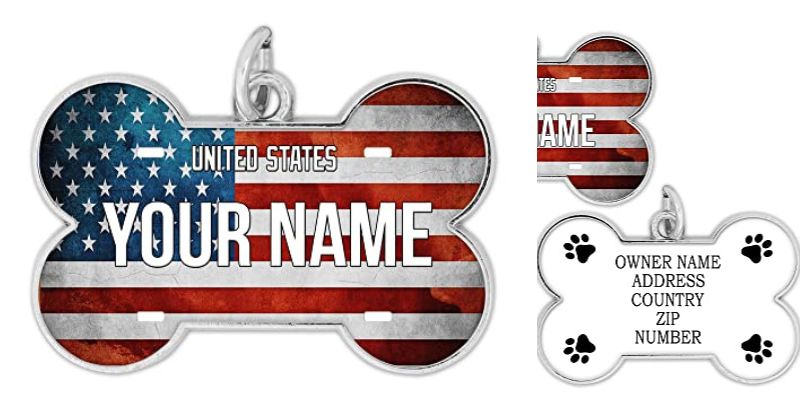
8. Use Both Sides
Ensuring the information is engraved on both sides increases the chances of it being seen immediately.
If a label flips over during movement, the most important details, like a contact number, should still be visible without someone having to handle the dog to turn the metal over.
For additional data, some versions include a QR code. This allows for a digital profile that can hold more information than a standard surface.
A quick scan can provide immediate access to contact details, which helps speed up a return if the dog is found by someone with a smartphone.
9. Cost vs. Durability
The cheapest options often rely on thin materials or surface-level printing that wears off within months.
While a high-quality version might cost more upfront, it is usually a better long-term choice because the engraving remains legible and the metal does not bend or break.
It is more practical to invest in a durable material like stainless steel once, rather than frequently replacing low-quality alternatives.
A priority should be the longevity of the identification and its ability to withstand daily wear.

10. Check Real-World Performance
Before making a final choice, it is helpful to look at how specific materials perform over time.
Online reviews and feedback from other owners can provide a clearer picture of whether the engraving stays readable or if the attachment points are prone to breaking.
While retail descriptions focus on aesthetics, long-term users often highlight practical issues, such as how the metal reacts to water or if the surface scratches easily.
Using these perspectives helps in selecting a product that has been proven to last, rather than relying solely on a manufacturer’s claims.
What to Include on the ID Label?
While it is tempting to add many details, keeping the layout clean is essential for readability. Focus on the most important information first.
The Essentials:
Dog’s Name: Helps the finder calm the dog.
Phone Number: Ideally a mobile number that is always reachable.
Alternative Contact: A second number in case the primary one is unavailable.
Optional but Useful:
Medical Needs: A brief note like “Needs Meds” or “Deaf” can be critical.
Microchip Status: A small “Microchipped” note encourages a vet scan if the label is damaged.
Reward Notice: A simple “Reward” mention can sometimes speed up the return.
Spayed/Neutered: This can act as a deterrent against theft for breeding.
Avoid adding email addresses or social media handles to the metal surface. These details are better suited for a digital profile linked via a QR code, as they take up too much space and reduce the font size of the emergency phone number.

Conclusion
To be completely honest, my Sarplaninacs rarely wear ID tags.
Since they are guardian dogs living in a secure environment, they often roam without them.
That said, I don’t take unnecessary risks.
Even though my pack doesn’t wear them daily, I keep durable, engraved tags ready for travel, vet visits, or emergencies.
Use these steps to find a tag that actually works for your dog, whether they wear it every day or just when you’re on the road.


I plan to buy engraved pet tags for my two dogs this year as a gift for them this Christmas. They will not understand the essence of it, so I might include a toy or treat in my gifts for them. And I appreciate it when you explained that we need to choose durable materials when buying those items to ensure that it will withstand wear and tear, especially when they are active.
There is no doubt that your furry friends will be delighted with the gifts!