


Using treats is a great way to start, but food shouldn’t be the only reason the puppy pays attention to you.
In our kennel, we use rewards to show the dogs what we want, but we don’t want them to listen only when they see a snack.
If the dog only obeys for a biscuit, you aren’t really training; you are just trading food for focus. We want the puppies to listen because they trust our guidance!
The goal is to get the dog understands what to do even when your hands are empty.
Easy Training Through Play
The best way to teach the puppy is through short bursts of play. Since puppies lose interest in seconds, you need to keep things moving so they don’t get bored.
You want the puppy to think it’s just playing while you are actually teaching it.
When you challenge them with simple tasks, they start to think and solve problems instead of just waiting for a snack.

Training Takes Time
Training is a long-term process that requires you to be consistent. You cannot expect the puppy to understand every command immediately, because learning happens in stages.
Don’t let a bad day ruin your overall training plan.
Getting frustrated only makes things worse because the dog picks up on your tension.
Sticking to the same routine makes it much easier for the puppy to figure out the rules.
You get real results by doing the same things over and over in a same place where they can learn.
Reward Good Behavior
Catch the puppy being quiet and reward it. Most people only react when something goes wrong, but you should reward the calm moments instead.
Keep treats in your pocket (not in a crinkly bag) and hand one over the second the puppies settle down. It doesn’t always have to be food! You can use a favorite toy, a quick scratch behind the ears, or just a “good boy.”
If the dog is already sniffing the rug or looking out the window by the time you find a snack, you missed your chance. That treat needs to land the second they actually do it.

Giving Commands
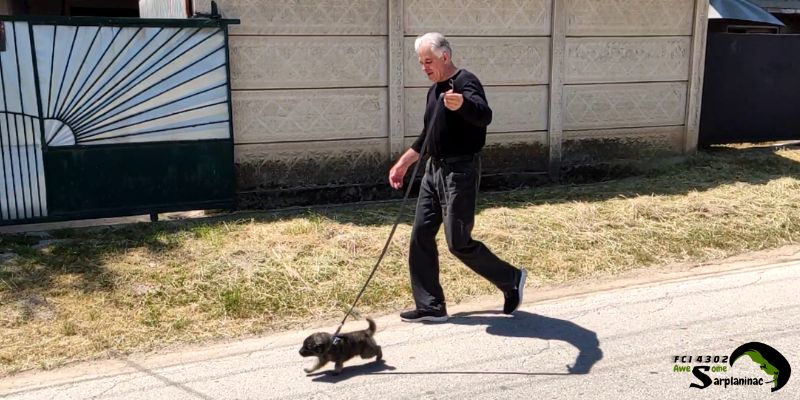
Training requires a firm tone and consistent rules. You don’t need to shout, but you must show authority. If you keep changing the rules, the puppy will never understand.
Use short one-word commands like “Sit” or “Come,” and always follow up with a simple “Good dog.”
It is vital that everyone in the house uses the same words; otherwise, you will only confuse the puppy.
Be a Leader
You must be a leader, not a bully. Dogs don’t react well to anger or frustration, but they do need a firm hand and clear boundaries.
The puppy thrives when it knows exactly where the limits are.
Set the rules and stick to them. When you give a command, make sure he finishes it.
A predictable routine is the fastest way for them to learn what’s expected.
Stick to a Puppy Training Schedule
If you don’t have a fixed time for feeding, walks, and training, you’re just wasting time. You can’t change the timing every day and expect the puppy to understand his place.
Be disciplined if you want results. No surprises with food or training – that’s how you get a balanced dog.
Without a plan, your training fails before it even starts.
One Command at a Time
Don’t try to teach the puppy everything in one day. If you throw a bunch of different commands at him all at once, he’ll get confused and just stop listening to you.
It’s not about how many things he can do, but how well he does them.
Focus on one exercise and don’t move on until he gets it right. For example, the puppy needs to know “Sit” perfectly and do it every single time before you even think about starting with “Stay” or “Come.”
If you rush, you’ll end up with the dog that only half-obeys or waits for you to repeat yourself.
Be patient and stick to one command.

Conclusion
This is the basis for working with the puppy, but we use “shortcuts” that come from huge experience with Sarplaninac dogs. This is something you won’t find by reading books, articles, or watching YouTube podcasts.
Our goal is to focus on a few things:
Leash.
The “Place” command.
Food – being able to suddenly take food away during a meal without any aggression.
We want our puppies to have “plenty of fire” in them. Some might say they’re a bit wild, but never forget – the Sarplaninac is a guardian dog, not a toy.
Put the theory aside and start working with your puppy.
I wish you a lot of success.


Socialization
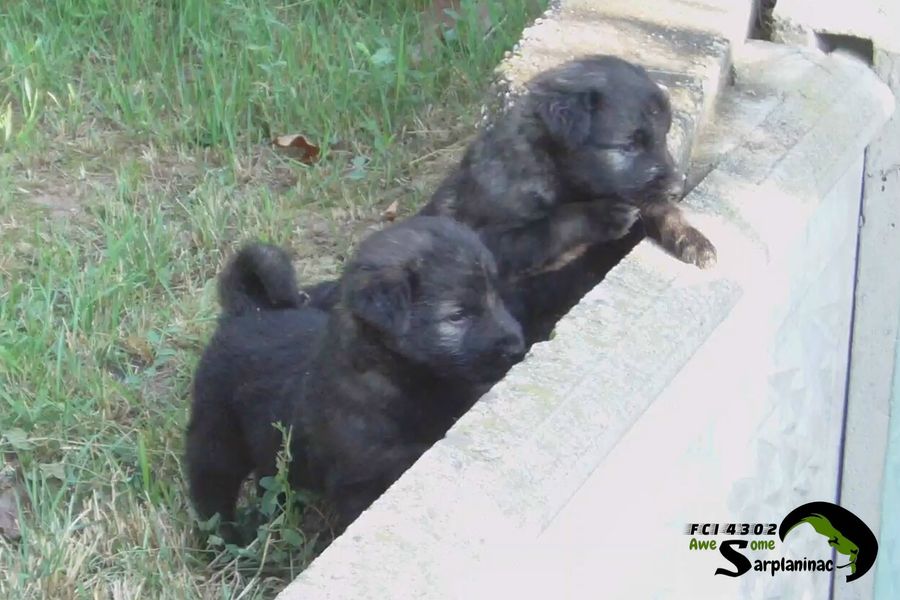
You can’t train the dog that is terrified of its surroundings.
Socialization is about the world: skyscrapers, city noise, moving through different territories using all types of transport and etc …
The puppy needs to see other dogs and animals. That is the point.
With our litters, we stick to this strictly and adapt to each puppy. If one can’t handle the hierarchy in the group, we pull him out and work with him alone.
The puppy doesn’t leave the property until the vaccinations are done!