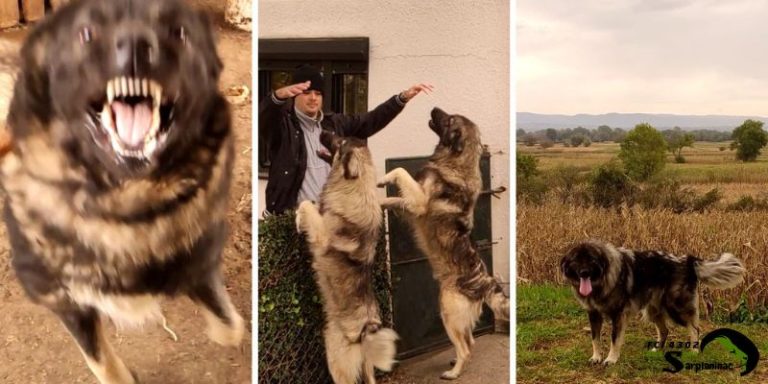


DNA profiling for dogs isn’t just about curiosity—it serves distinct purposes for owners and breeders. A pet owner might test their dog to uncover breed mix-ups or potential health risks. For a dog breeder, it’s a tool to verify bloodlines and protect the integrity of the breed.
I’ve analyzed studies, breeder insights, and real-world cases to break down how DNA testing applies to each group. At the end, I’ll share the official stance of our dog kennel on this topic.
Let’s get straight to the facts.

What Exactly Is a Dog DNA Test?
A dog DNA test is a scientific analysis of your dog’s unique genetic code, extracted from cells in their saliva.
You collect a simple cheek swab at home, mail it to a specialized lab, and scientists get to work examining hundreds of thousands of genetic markers across their genome.
What it Actually Tells You?
- Breed Ancestry: This is the headline act. The test compares your dog’s DNA against massive reference databases containing profiles from thousands of purebred dogs worldwide and established mixed-breed populations. Algorithms estimate the most likely breed combinations and their percentages back through recent generations (usually 3-5). Accuracy is generally high for recent purebred ancestry, but becomes more probabilistic the further back or more mixed the lineage.
- Genetic Health Screening (Optional but Common): Many tests screen for known genetic mutations associated with specific inherited diseases (like PRA blindness, MDR1 drug sensitivity, or degenerative myelopathy). This doesn’t diagnose current disease, but tells you if your dog carries risk variants.
- Traits: Curious about why your dog has a curly tail or blue eyes? Tests often report on genes influencing physical characteristics like coat color, texture, and certain body features.
- Relatives (Bonus!): Some services maintain databases where you can potentially find genetic relatives of your dog – a fun surprise for many owners.
These tests provide educated answers about their biological heritage and potential health predispositions.
It’s not infallible, especially for very rare breeds or complex mixes!



Purebred or Mixed?
For some owners, the answer matters deeply. Those with rescue dogs want to solve the mystery of their mix.
Others paid top dollar for a purebred puppy but notice similarities to another breed (like a Sarplaninac and Caucasian Shepherd) and want scientific confirmation.
Then there are owners who prioritize health. A DNA test can reveal genetic disease risks—though it doesn’t mean the dog will develop them.
These, in my opinion, are the key reasons people test their dogs (write your opinion in the comments below).
No products found.
Marketplace Test
When CBC Marketplace tested two mixed-breed dogs (Molly and Loki) across four DNA companies, the results were shockingly different.
Wisdom Panel listed 19 breeds for Molly, while Embark called her a “100% Arabian village dog.” Loki’s results were just as erratic – Wisdom Panel detected 23 breeds, while Embark labeled him a “West Asian village dog.”
Even a purebred Great Dane, Quinn, was misidentified as part Staffordshire terrier (DNA My Dog) or even 100% Chihuahua (Accu-metrics), despite weighing 52kg.
Human DNA? No Problem for Some Tests
Two companies (DNA My Dog and Accu-metrics) went a step further by assigning dog breeds to human DNA.
A CBC reporter’s sample was identified as “part beagle and basenji,” while Accu-metrics labeled another human sample as “Central Asian shepherd and mastiff.”
Only Embark and Wisdom Panel correctly flagged human DNA as invalid.
No products found.
Why the Huge Discrepancies?
Experts point to three key problems:
- Incomplete databases – Many tests lack genetic references for rare breeds or village dogs, forcing unreliable guesses.
- Flawed algorithms – When no clear match exists, tests default to the “closest” breed, creating fictional results.
- Suspicion bias – Accu-metrics’ absurd Chihuahua result for a Great Dane suggests some companies may skew results based on user guesses.
While premium tests (Embark, Wisdom Panel) correctly identified the purebred dog and rejected human DNA, their mixed-breed results still varied drastically.
Budget tests (DNA My Dog, Accu-metrics) were completely unreliable.
The takeaway? Breed identification remains an imperfect science – useful for general ancestry clues but far from definitive.
For health insights, stick with reputable tests backed by veterinary research. For breed analysis, take the results with a grain of salt.
DNA database
Now, let’s focus solely on the Sarplaninac breed. I’ve previously written about one of our dogs, purchased as a puppy from another kennel, which turned out to be a Šarplaninac + other breed.
As responsible breeders, we did not allow this dog into our breeding program and instead found him a new home.

But imagine this: that same dog remained with us, became a champion through dog shows, and eventually entered the official breeding database through DNA profiling??
Šarplaninac in the 1990s
The 1990s presented serious challenges for maintaining the Šarplaninac breed’s purity. Many “quick-breeders” began crossing Šarplaninac with other breeds to produce larger dogs, completely disregarding the breed standard.
The tragic consequence was the emergence of pseudo-breeds that only visually resembled true Šarplaninac, while being genetic hybrids.
Unfortunately, such “hybrids” couldn’t bypass our kennel either.
Now I’ll show you one of our puppies (end of the 90’s) where the mixed heritage was immediately apparent. If you’re wondering “why” – just refer to the official breed standard.
Pay particular attention to the section describing the head.

Fun Facts: The puppy was sold for 700 German marks and grew to over 85 cm at the withers.
Conclusion
For most breeders, DNA tests are an essential choice, primarily in safeguarding health (screening for potential hereditary diseases) and through DNA profiling, which largely prevents falsified pedigrees and helps detect inbreeding.
However, when it comes to pet owners, the issue lies with DNA databases that claim to determine breed ancestry. If we’re talking about the Šarplaninac breed, dogs that fall far outside the breed standard cannot form the foundation of such a database (let alone dictate what percentage of a dog belongs to the breed or not).
Until key changes are made (strict controls and transparency) our kennel will not be part of this system.
Are DNA Tests Mandatory in Every Country? – No! As an example, let’s look at the American Kennel Club requirements. AKC mandates DNA profiling only for:
- Stud dogs used for semen collection (both frozen and fresh extended use)
- Frequently Used Sires (for litters born after July 1, 2000)
- Imported breeding stock registered after March 1, 2006 [1]
Everything depends on agreements within a kennel club or whether a National Cynology Association mandates DNA testing (as a requirement for pedigree issuance).