


In recent days, through conversations with our neighbors, we found out that jackals had appeared in our area.
People started complaining that they couldn’t sleep at night because of these eerie cries – like the sound of a child crying, only much louder and far more unsettling.
Mount Juhor sits just above our kennel, and the Morava River flows only a few kilometers across from us.
Wild boars are around, and while I can’t say much about bears or wolves, I kept wondering – where did these jackals come from?
Biology Behavior and Risks
The jackal (Canis aureus) resembles both the fox and the wolf but is smaller in size. Adults measure up to 120 cm in length, with around 30 cm belonging to the tail, stand about 50 cm tall, and weigh close to 10 kg.
The coat is a mix of gray, yellow, and reddish shades, and the tail ends with a distinct black tip.
It lives in northwestern Asia and northern Africa, while in Europe it can be found in the forests of the Balkans as well as in the Pannonian Plain. It is considered a very harmful and bloodthirsty species.
They are omnivorous!

Weak or young animals often become prey, yet carrion, fallen fruit, or even rotting wood can keep them alive when food is scarce.
They’re most active at night, though it’s not unusual to spot them during the day.
During daylight hours, jackals usually remain hidden in thickets, rocky terrain, or caves.
They communicate mainly through barking and howling.
Jackals form monogamous pairs and guard their territory hard, marking the boundaries with urine and droppings.
They hunt alone sometimes, or in groups that drive prey toward each other. A single jackal rarely threatens humans, but a pack can endanger livestock and, in rare situations, unattended pets.
Rapid and successful reproduction is the main reason why their numbers are constantly growing. Breeding occurs in February or March, with a gestation period of 60–63 days.
Litters usually number five to eight pups, born in April or May. Mothers nurse and protect them for about two months, and by the third month the young begin seeking food on their own.
They’re fully independent by the fourth month, reach sexual maturity after a year, and can live up to 15 years. [1]
Jackals Pushed Too Close to the Kennel
We told our neighbors that if what they were saying was true, we’d do something about it.
We also warned them that if they saw any of our dogs in their yard in the morning, they shouldn’t be afraid (we would come to bring them back).
One evening, my father heard terrifying cries outside. He stepped out to see what was happening. The jackals had come around 1 a.m., right near our kennel (September 4th).
Our dogs started barking loudly, and one of them separated from the rest. He started howling, showing us he wanted to leave his territory and go after them.
It almost felt like a state of war.

My father chose five dogs (1 male and 4 females), opened the back gate leading to the hill, and let them go.
The dogs ran straight toward the jackals, and after a short while, everything fell silent.
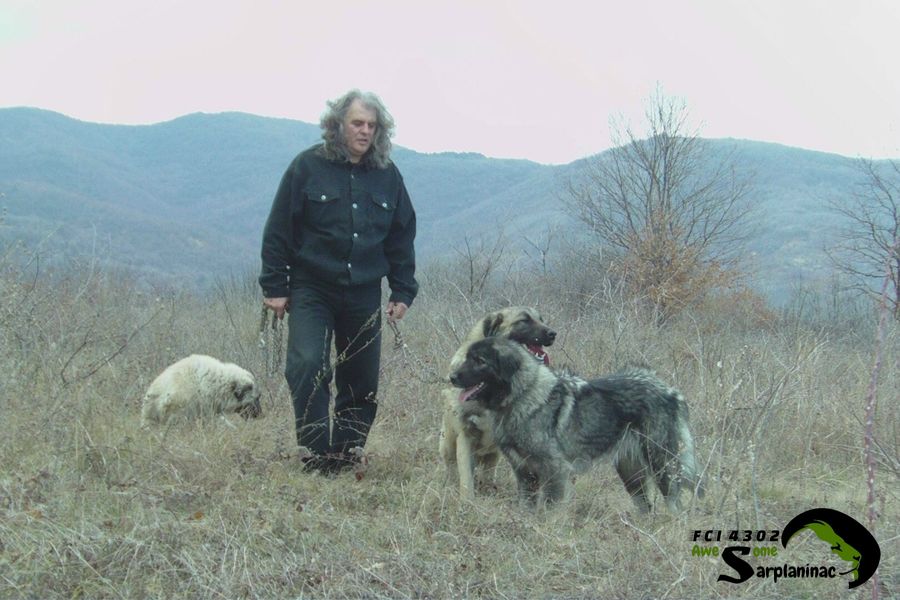
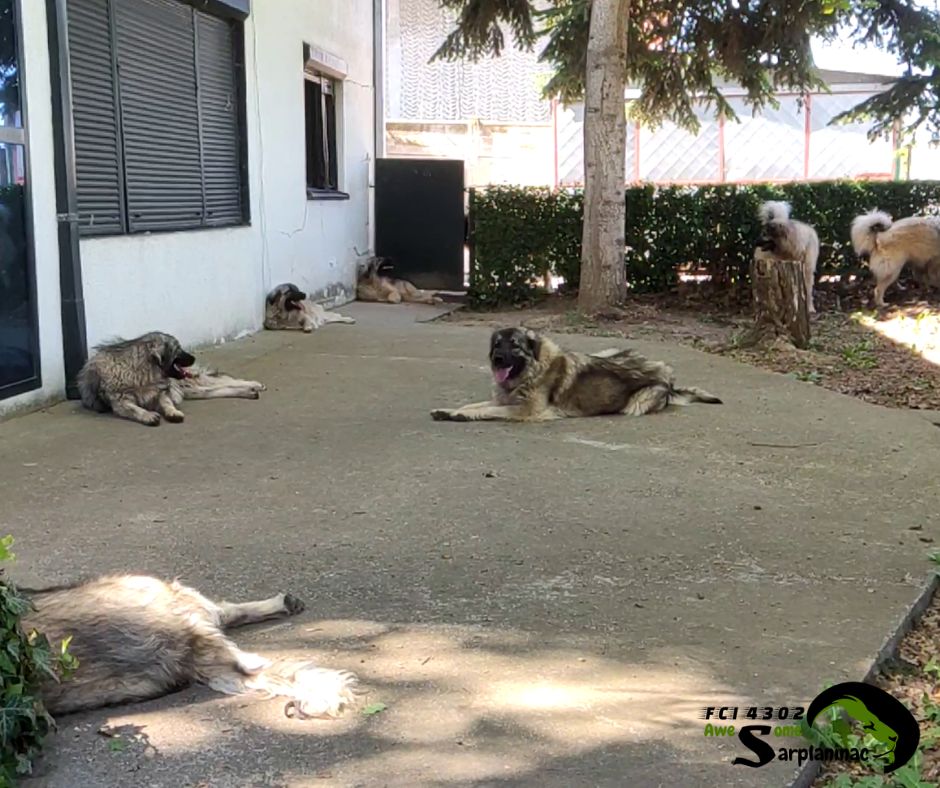
Two hours later, around 3 a.m., our Sarplaninac dogs returned home – not a single scratch on them!
Silent Fields After the Dogs Stepped In
We thought the worst was behind us and that things would finally settle down. But on September 13th, the “uninvited guests” showed up again.
This time the jackals came from the Morava River, crossing the fields instead of coming down from the hills like before.
They arrived around 10 p.m.
This time, we sent out just one dog. Sarplaninac Ris FCI 4302, who had already led the defense during the previous encounter, treated this as nothing more than a simple walk through the fields.
The moment he stepped out of our yard, he crossed the road and went straight after the jackals.
An hour later, he came back – job done.
Conclusion
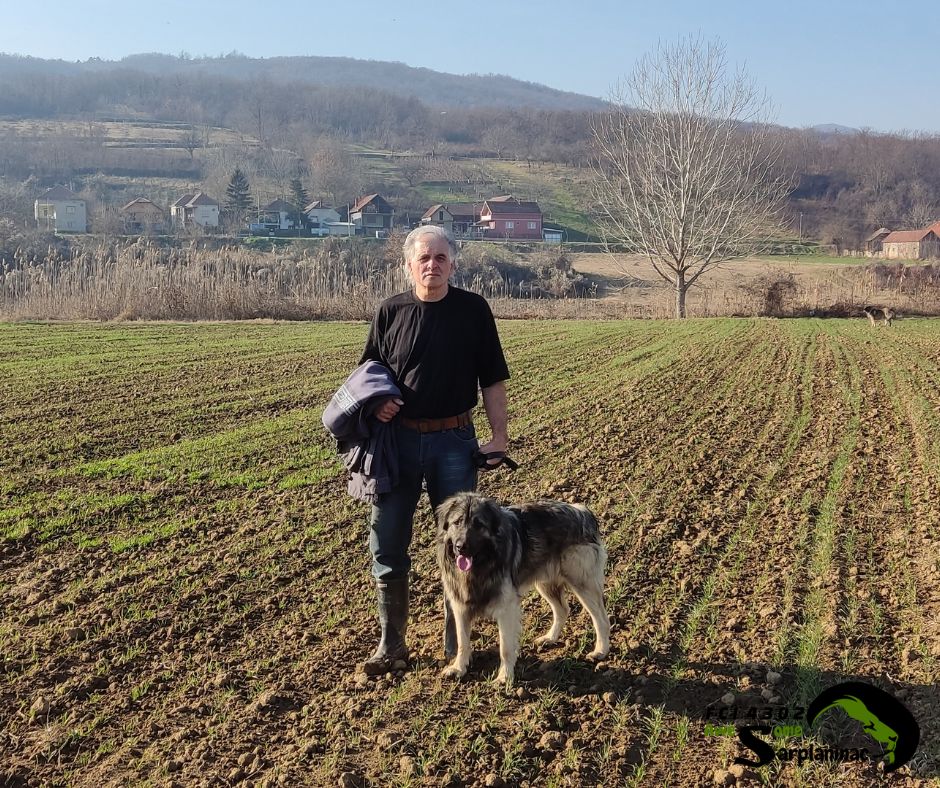
We’re proud of our dogs. They’ve proven again and again that they’re ready to defend their territory no matter what.
They never back down, and they’d give everything for us.
We didn’t pay attention to whether there was one jackal out there or several.
We accepted the risk, knowing there was always a chance that one of our dogs might wander into a neighbor’s yard.
Yet, that never happened!
Instead, they chase away the jackals off and came straight home once it was over.
Peaceful sleep has no price …
Share your own experiences and thoughts about these predators in the comments below.
Thanks for reading.
Sources:
Karakteristike, opis i način života šakala – more information


