
Dogs bring toys to start a game, get attention, or trade the toy for a treat. This is an instinct or a learned habit.
Carrying a toy is a way to communicate and bond.
When the dog drops a toy in your lap, watch the next move. Nudging a hand with a ball means he wants to fetch.
Holding the toy stiffly is a sign of tension, not trust.
Here are 7 reasons dogs hand over their toys and how to respond.

Showing Respect to the Pack Leader
The dog drops the toy at your feet to show respect. This confirms you are the leader.
He is offering his prize to the head of the house.
Never take the toy by force. You control the game by deciding when play starts and ends.
Simply wait for him to let go before you start the next round.
Your Smile is the Reward
The dog watches your face when he brings the toy. A smile and a pat on the head are his reward. This tells him he did the right thing by approaching you.
Praise the dog the moment he drops the toy. This makes him want to come back to you every time.
He learns that bringing the toy leads to a good moment with you, not just a game of fetch.

Trained to Bring the Toy Back
Bringing the toy to you is the clear result of consistent training. Adult dogs and puppies follow the same rule: carry the toy straight to your hand without dropping it halfway.
A young puppy learns quickly that dropping the toy is the only way to start the next round.
He brings the toy right to you because he wants to keep the game going.
Instinct
Dogs carry toys to you because of a natural drive to hunt and bring back prey. This action shows the dog knows the “prey” belongs to the leader.
He is not just carrying the toy; he is following an instinct to hand it over to the one in charge.
This shows exactly how the dog sees the hierarchy.
When he brings a toy and places it in your hand, he confirms his place in the pack.

Introducing a New Toy
New toys bring out immediate drive and focus. Use this energy to work with the dog while he is “most active”.
When the dog gets a new toy, he is eager to bring it to you and start the next round.
Grab the toy to start a game of fetch or tug-of-war.
This shows him that every activity starts and ends with your command.

Trading the Toy for a Treat
Many dogs learn faster when letting go of the toy brings a different reward.
Giving food the moment the dog brings the toy back is the easiest way to teach the “drop” command. This is not a bribe; it is a trade where the toy is given up for a treat.
He must look at your hand to get the food immediately. This stops him from running away or starting a game of keep-away.
Problem-Solving (Puzzle Toy)
When food is stuck inside a puzzle toy, the dog often brings it to you for help. He knows you can open it.
Instead of tearing the rubber apart or shredding the toy in the yard, the dog drops it at your feet.
Opening it and handing it back shows that bringing the toy to you is the fastest way to get to the food.
And who can resist a cute dog asking for help?

Do Sarplaninac Dogs Bring Toys?
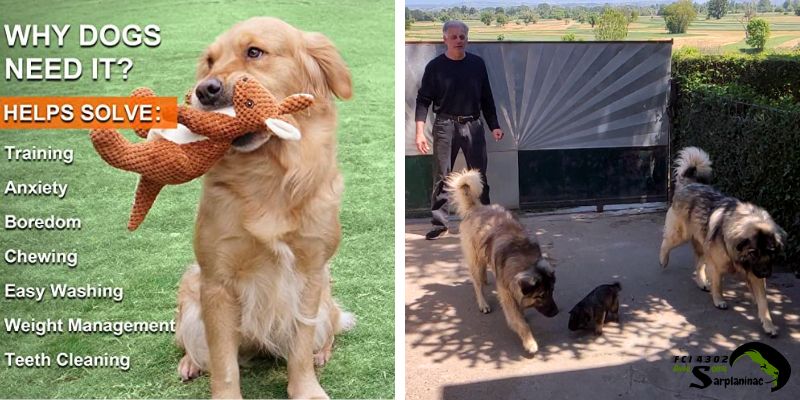
A Sarplaninac is not a retriever, and training this dog to fetch is usually a waste of time.
They quickly lose interest in chasing a ball because running back and forth has no purpose. The focus is on the fence and the yard, not on a piece of rubber.
I never train them to work like hunting dogs. If the Sarplaninac feels a task has no clear point, he ignores the command and simply walks away.
Instead of throwing toys, focus on long walks and guarding.