

Constant shedding isn’t just a cleanup hassle—it’s often a sign that your dog’s health needs attention.
Many owners spend a fortune on brushes and tools while ignoring why the hair falls out so easily.
The truth is, coat quality comes down to the condition of the skin.
A brush only removes dead hair, but proper nutrition and a steady routine determine how much hair stays on the dog in the first place.
Here’s how to reduce excessive shedding and keep the coat healthy.
Why Brushing Is Actually Skin Therapy
Brushing isn’t just about removing loose hair – it massages the skin and boosts blood flow underneath. Every stroke with the right brush boosts blood flow to the follicles, delivering the nutrients needed to keep the hair rooted.
If your dog’s circulation is poor, the follicles weaken and the coat thins out.
Brushing also spreads your dog’s natural skin oils across the coat. These oils keep the skin from drying out and getting irritated – two major triggers for heavy shedding.
Using the wrong brush can do more harm than good by scratching the skin surface and causing inflammation.
Daily grooming doubles as a full-body inspection. Running your hands over the skin lets you feel hot spots or dry patches long before your dog starts scratching and biting.
Nutrition – Building the Coat from Within
What your dog eats directly determines how strong each hair strand is. Since a dog’s hair is nearly 90% protein, a lack of high-quality animal protein quickly leads to a brittle, thinning coat.
When the body doesn’t get enough protein, it prioritizes vital organs, leaving the follicles undernourished and prone to premature shedding.
Essential fatty acids, particularly Omega-3 and Omega-6, nourish the skin’s lipid barrier. These healthy fats keep the skin elastic, holding the hair root firmly in place.
A lack of these fats leads to dry, flaky skin (the primary trigger for heavy shedding).
Bioavailable nutrients like Biotin and Zinc drive keratin production.
A nutrient-dense diet provides these essential nutrients rather than just filling your dog’s stomach.

Cortisol Link – Stress and Sudden Shedding
Emotional or environmental stress forces hair follicles into a premature resting phase. When a dog’s system is flooded with cortisol, the body diverts resources away from “non-essential” functions like coat maintenance.
This hormonal shift often results in a sudden, heavy shed known as telogen effluvium, where hair thins out rapidly across the entire coat.
Maintaining a consistent routine is the most effective way to stabilize a dog’s cortisol levels.
Sudden environmental changes, constant loud noise, or prolonged isolation create chronic tension that leads to skin sensitivities and brittle fur.
Stability at home keeps the endocrine system balanced, allowing the coat to follow its natural growth cycle.
Running, playing, and targeted massage do more than just “affection.”

How Water Intake Affects Dog Shedding
The dog’s skin relies on hydration to maintain its elasticity.
Dehydration weakens the follicles and makes the hair brittle, leading to ‘dry shedding’ where the coat snaps or slides out prematurely.
Adding water to dry food is an easy way to boost hydration and help the body absorb key nutrients.

Vacuuming for a Hair-Free Home
If you have the dog, a regular vacuum is a toy. Most machines don’t have the power to pull fur out of carpets, and the brush gets clogged after five minutes.
To keep your home clean, you need a tool built for the job.
I recommend the Frecaer 550W Cordless Vacuum (50KPA suction power). Why it works for pet owners:
- LED Touch Display: You can see exactly how much battery you have left;
- Large 1.5L Container: You won’t have to empty it every two minutes;
- Smart Auto Mode;
- 70 minutes of cleaning time in Eco Mode;
- 6-stage filtration system (including a HEPA filter).

Furniture Covers
Dog hair gets into every fiber of a sofa, making it nearly impossible to clean.
Instead of ruining your furniture with constant scrubbing and harsh chemicals, use protective covers.
It is much easier to wash a cover once a week than to deep-clean a sofa once a month. When the hair and dirt pile up, you just throw the cover in the wash.
Your furniture stays clean, and you don’t spend your weekend picking hair out of the upholstery with tweezers.

Seasonal Shedding
Twice a year, nature forces a total coat reset. You can’t stop this process, but you can get ahead of it. If you don’t change your approach during spring and autumn, your house will be buried in fur within days.
During these peak months, brushing once a week is a waste of time – you have to do it daily to catch the loose undercoat at the source, before it hits your floors.
Don’t confuse a seasonal shed with an actual health issue. If the dog is scratching or has red, irritated skin, that isn’t just shedding – it’s an allergy.
Scratching rips out hair that should stay on the body.
Treating the underlying skin irritation is the only way to stop this kind of abnormal shedding.
Summer Baths
Summer heat makes shedding worse, but a bath lets you flush out loose fur before it ends up on your sofa.
Water and a good massage during a bath release the dead undercoat far better than any dry brush.
But don’t use human shampoo – it strips the skin’s natural oils and causes more shedding.
Use a shampoo made for dogs or stick to plain water!

Vet Visits: It’s Not Always Just the Season
Sudden, massive hair loss is rarely just about the weather. When the dog starts losing fur in clumps, it’s usually the first sign of a medical issue.
Bald spots, thinning patches, or skin with a foul odor are immediate red flags. These aren’t grooming failures – they are symptoms of hormonal imbalances, parasites, or infections.
No amount of brushing will stop shedding if it’s caused by a thyroid problem or a missing nutrient.
Stop wasting money on random supplements and “miracle” shampoos that don’t work.
A vet visit tells you exactly what’s wrong so you can stop guessing.

Grooming the Sarplaninac
Let’s see what the breed standard says…
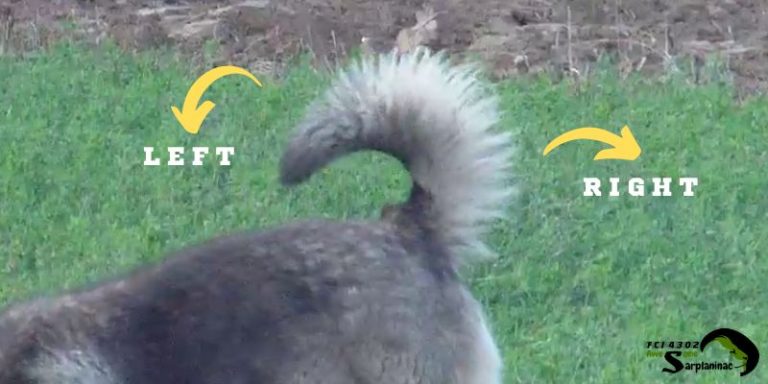
The head, ears and front side of the legs are covered with short hair. Around the neck, on the rump, at the rear side of the legs and on the tail the hair is long, almost flat and somewhat coarse.
Under the guard hair the abundant undercoat is short, dense and of fine texture. At the withers the hair should measure between 10 and 12 cm; it should not be shorter than 7 cm.
The next question is … bathing? Bathing a heavy double-coated breed like the Šarplaninac requires caution.
Over-bathing strips the coat of its natural protective oils and traps moisture in the dense undercoat.
Our advice is to limit bathing to the summer months and special events like dog shows (a month before the competition).
A nutrient-dense diet, daily brushing during peak shed, and routine skin care do the rest.
If you want to see how we brush our dogs, I suggest you watch the following video …
Final Word
I’ve seen it over and over: controlling the shed isn’t about a magic trick – it’s about a consistent routine.
Once the nutrition is right and the daily brushing is done, most of the battle is won.
For the hair that still hits the floor – and it will – don’t waste time with weak vacuums that can’t pull fur out of the carpet.